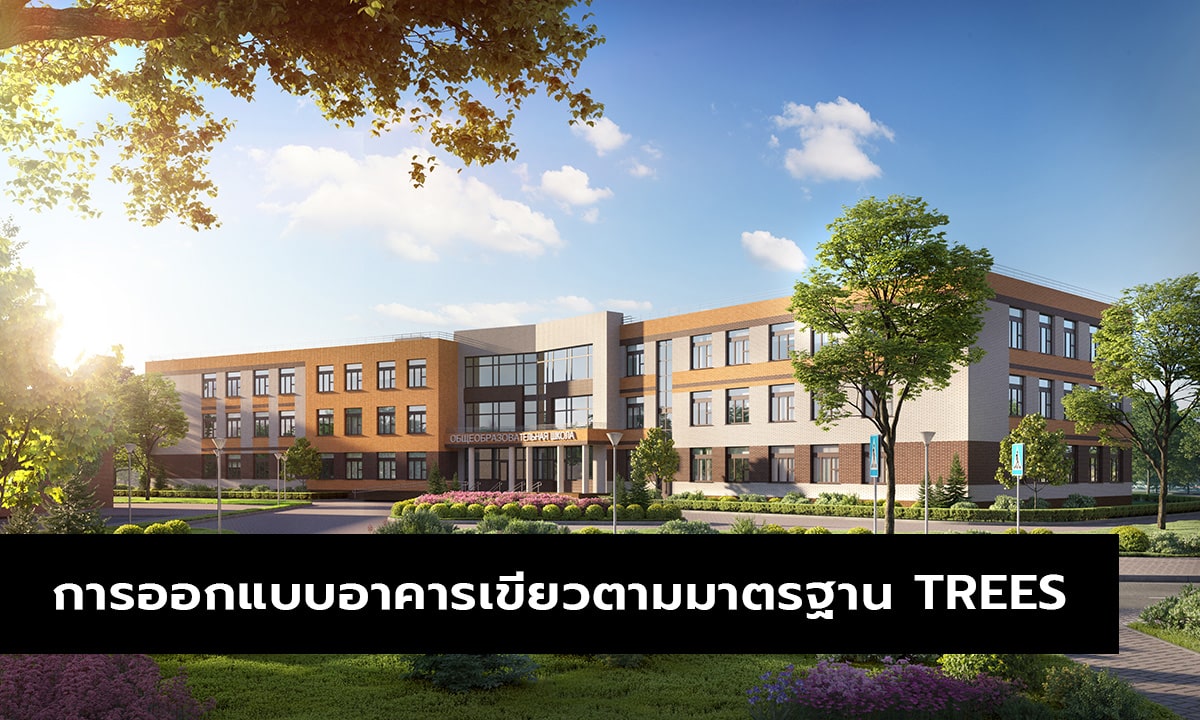
Green Building Design According to TREES Standards
What is TREES Standard?
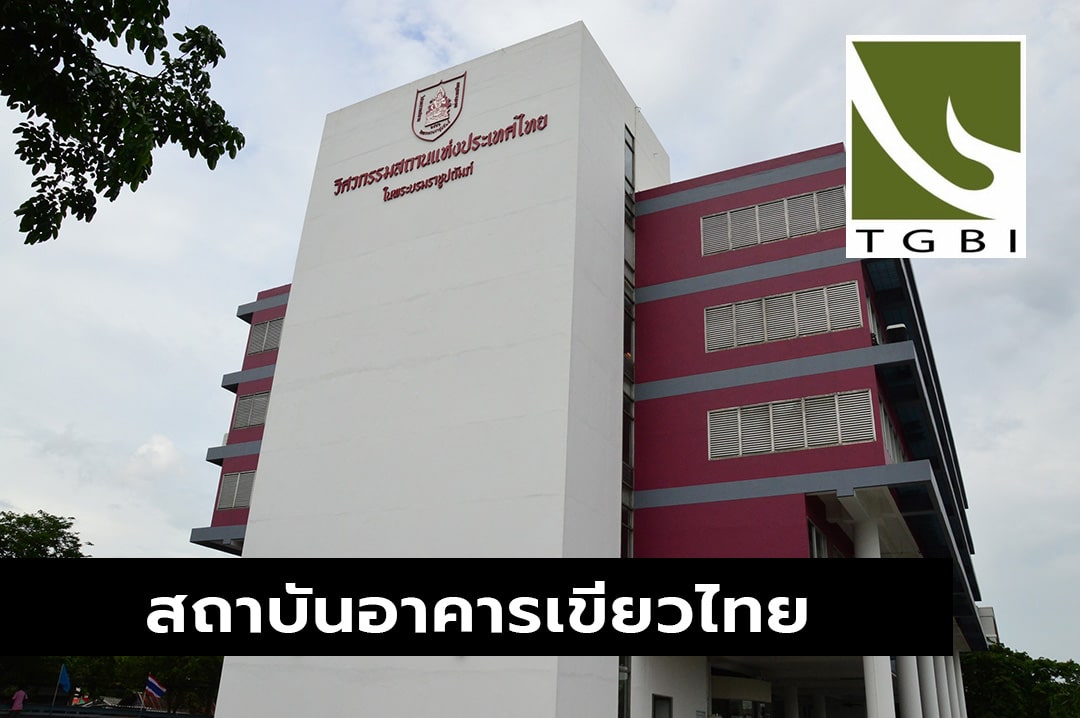
In 2009, the Association of Siamese Architects and the Engineering Institute of Thailand jointly established the Thai Green Building Institute to initiate and promote the development of green buildings for environmental sustainability among building owners.
Types of TREES Green Building Certifications
1. TREES-NC/CS (New Construction and Major Renovation / Core and Shell Building) Assessment criteria for new construction, major renovations, and core and shell buildings
2. TREES-EB (Existing Building Operation and Maintenance) Assessment criteria for buildings during operation
How does TREES evaluate buildings?
Green building assessment according to TREES standards has a total of 100 points, divided into 8 categories as follows:
-
- Building Management (BM)
- Site and Landscape
- Water Conservation (WC)
- Energy and Atmosphere (EA)
- Materials and Resources (MR)
- Indoor Environmental Quality (IE)
- Environmental Protection (EP)
- Green Innovation (GI)
| Topic | Details | Points |
|---|---|---|
| BM | Section 1 Building Management | 3 (1) |
| BM P1 | Green Building Preparation | Required |
| BM 1 | Public Relations | 1 |
| BM 2 | Building User Manual and Maintenance Training | 1 |
| BM 3 | Monitoring and Evaluation During Design, Construction, and Post-completion | 1 |
| SL | Section 2 Site and Landscape | 18 (2) |
| SL P1 | Avoiding Unsuitable Building Sites | Required |
| SL P2 | Reducing Impact on Areas with Natural Abundance | Required |
| SL 1 | Project Development on Previously Developed Sites | 2 |
| SL 2 | Reducing Private Vehicle Use | 6 |
| SL 3 | Sustainable Site Development | 3 |
| SL 3.1 | Maintain ecological open space of at least 25% of the building footprint | 1 |
| SL 3.2 | Have 1 permanent tree per 100 square meters of open space (no transplanting trees from elsewhere) | 1 |
| SL 3.3 | Use appropriate native plants | 1 |
| SL 4 | Water Absorption and Flood Prevention | 4 |
| SL 5 | Reducing Urban Heat Island Effect from Project Development | 3 |
| SL 5.1 | Install roof gardens, vertical gardens, or use high solar reflective materials | 2 |
| SL 5.2 | Hardscape areas receiving direct sunlight must not exceed 50% of project area | 1 |
| WC | Section 3 Water Conservation | 6 |
| WC 1 | Water Conservation and Efficient Water Use | 6 |
| EA | Section 4 Energy and Atmosphere | 31 (2) |
| EA P1 | Building Quality Assurance Have third-party system inspection and adjustment plan |
Required |
| EA P2 | Minimum Energy Efficiency | Required |
| EA 1 | Energy Efficiency | 20 |
| EA 2 | Renewable Energy Use Generate renewable energy of at least 0.5-6.5% of building energy costs |
7 |
| EA 3 | Verification and Testing to Confirm Energy Savings | 3 |
| EA 4 | Non-ozone Depleting Refrigerants in Air Conditioning Systems No use of CFCs and HCFC-22 |
1 |
| MR | Section 5 Materials and Construction Resources | 13 |
| MR 1 | Building Reuse Maintain 50-70% of existing building floors or roof surface area |
2 |
| MR 2 | Construction Waste Management Reuse or recycle 50-75% of waste by volume or weight |
2 |
| MR 3 | Reused Materials Selection Reuse construction materials worth 5-10% of total value |
2 |
| MR 4 | Recycled Materials Selection Use materials worth 10-20% of total value |
2 |
| MR 5 | Local or Domestic Materials Use Use materials that are extracted, produced, assembled, or local/domestic materials for at least 10-20% of total construction material value |
2 |
| MR 6 | Materials with Low Environmental Impact | 3 |
| IE | Section 6 Indoor Environmental Quality (Indoor Environmental Quality) |
18 |
| IE P1 | Indoor Air Ventilation Rate Ventilation rate meets standard requirements |
Required |
| IE P2 | Indoor Lighting Minimum lighting levels meet standards |
Required |
| IE 1 | Pollution Impact Reduction | 6 |
| IE 2 | Selection of Non-polluting Materials | 4 |
| IE 3 | Indoor Lighting Control Separate artificial lighting circuits every 250 square meters or as needed |
1 |
| IE 4 | Natural Light Usage in Buildings Design regularly occupied rooms to have adequate natural light or sufficient views of the outdoors |
4 |
| IE 5 | Comfort Conditions Temperature and relative humidity in air-conditioned areas meet HVAC standards |
3 |
| EP | Section 7 Environmental Protection (Environmental Protection) |
5 (2) |
|---|---|---|
| EP P1 | Construction Pollution Prevention Have plan and implement pollution and construction disturbance prevention |
Required |
| EP P2 | Waste Management Preparation of waste separation areas |
Required |
| EP 1 | Use of Environmentally-friendly Chemicals in Fire Protection Systems No use of Halon, CFC, or HCFC in fire protection systems |
1 |
| EP 2 | Heat Rejection Equipment Location Positioning heat rejection equipment away from neighboring properties |
1 |
| EP 3 | External Glazing Usage Glass with reflection value not exceeding 15 |
1 |
| EP 4 | Building-related Disease Control Comply with Department of Health announcement regarding Legionella control in cooling towers of buildings in Thailand |
1 |
| EP 5 | Install Electric Meters for Wastewater Treatment Systems or Develop Systems Exceeding Standards Monitor energy usage of wastewater treatment systems or develop systems exceeding standards |
1 |
| GI | Section 8 Green Innovation | 6 |
| GI 1-5 | Techniques not specified in the assessment form | 5 |
| GI 6 | Having TREES-A NC as project consultant | 1 |
For all assessment levels, assessors must pass all 9 mandatory requirements. If unable to score in any mandatory item, the project cannot participate in the assessment.
Details are according to TREES-NC-v2 standard
Additional information can be found at the Thai Green Building Institute
Buildings participating in the assessment are certified in 4 levels according to the following scores:
PLATINUM 80 points or more
GOLD 60 – 79 points
SILVER 50 – 59 points
CERTIFIED 40 – 49 points


