Thermal Insulation for Residential Homes
As temperatures continue to rise daily, installing thermal insulation has become a necessity, and there is very limited information available for decision-making. We wrote this article to provide information for general individuals and homeowners experiencing hot house problems and high electricity bills to help them make decisions about installing thermal insulation, along with recommending suitable products for use.
What is Residential Thermal Insulation?
The main insulation systems are divided into residential buildings and industrial applications, which have different usage requirements. Residential buildings focus primarily on heat and sound protection, while industrial applications focus on maintaining product temperature from manufacturing processes.
Definition of Residential Thermal Insulation
Thermal insulation for residential homes, including commercial buildings, hotels, and shopping centers, is insulation that can prevent heat from entering the building, maintain temperature in air-conditioned rooms, and help reduce external noise.
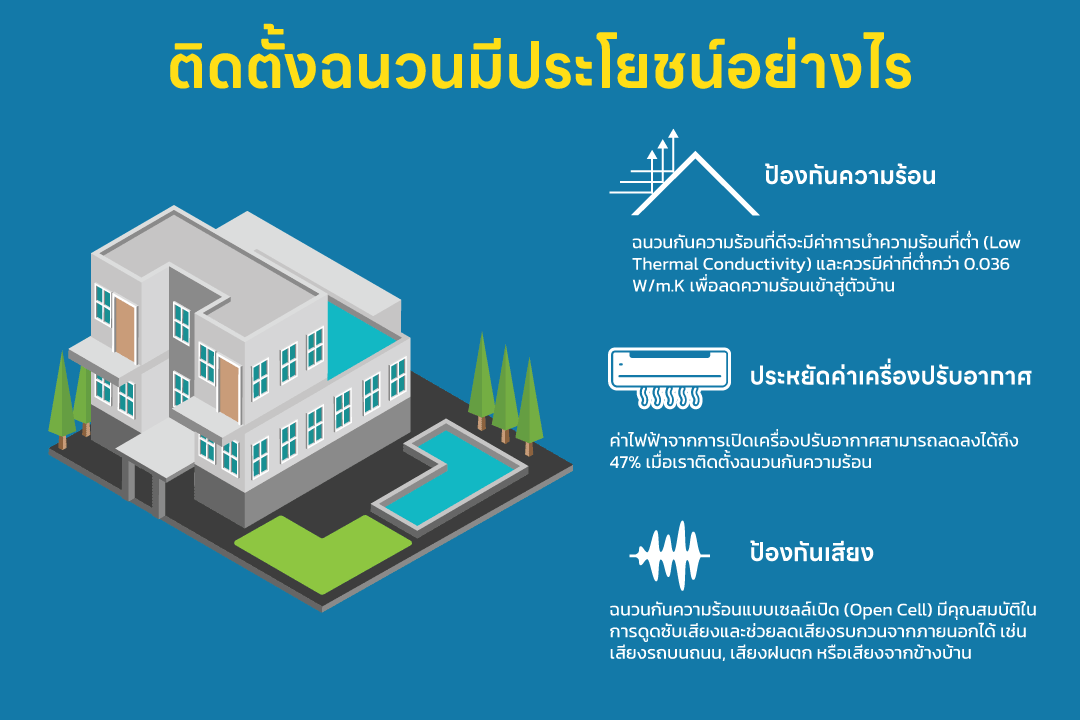
Image - Buildings with thermal and sound insulation installation
Why Should We Install Thermal Insulation?
The main reason we install thermal insulation is obviously because “the house is too hot.” During the day, metal sheet roofing can reach temperatures of up to 60ºC (measured with a laser thermometer). For homes with ceiling installations, it’s slightly better, with temperatures under the ceiling around 35 – 37ºC
Thermal insulation has therefore become necessary, not just an optional home addition. Installing thermal insulation doesn’t just make your house cooler – it has 2 additional benefits as well.
Reduce Electricity Bills (from Air Conditioning)
High electricity bills!!! It’s shocking nowadays that some houses’ electricity bills have increased 2-3 times from what they used to pay. Besides the Ft rate for electricity, the actual units used have increased significantly. More than 60% of the increased electricity units come from air conditioning use.
As it gets hotter, we need to use air conditioning – that’s normal. But if the room temperature can be reduced from 35ºC to 32ºC (or lower), this 3ºC difference makes the air conditioner work 47% less, and installing thermal insulation will reduce electricity bills.
Thermal Insulation Helps Block Noise
Many people are curious and frequently ask if thermal insulation can prevent noise. The answer depends on the type of insulation.
Open-Cell Insulation such as glass wool, rock wool, or polyester fiber has a porous structure that absorbs sound energy and doesn’t let it pass through. Therefore, fiber-type thermal insulation can help prevent noise.
Close-Cell Insulation such as black rubber insulation and polyethylene cannot absorb sound energy. The closed-cell structure blocks sound from passing through the insulation material to the other side.
What types of thermal insulation are available for residential homes?
There are many materials used for thermal insulation, but we will focus on the 5 most popular types.
Glass Wool Insulation
Glass wool insulation is made from recycled glass or silica sand, melted at high temperatures and sprayed into fibrous blankets. It has a low thermal conductivity of only 0.034 W/m.K and features an open-cell structure, making it an excellent sound insulator as well.
Yellow insulation (MicroFiber brand) and green insulation (SCG brand). The material is water-resistant – when water drops on it, it beads up rather than being absorbed. When exposed to air flow, the water droplets evaporate naturally. It has low density (12-48 kg/m³) and is ideal for ceiling applications due to its light weight. Thickness can be increased to 3 inches (75 mm) or 6 inches (150 mm).
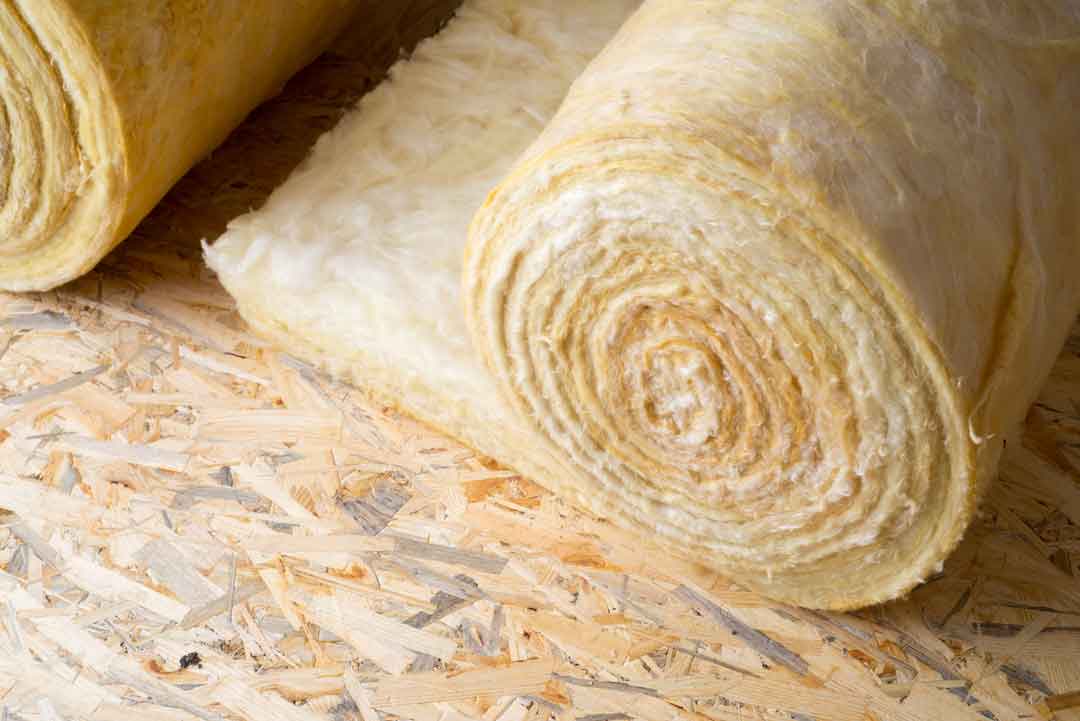
Image - Glass Wool Insulation
Rock Wool Insulation (ROCKWOOL)
Rock wool insulation is manufactured from volcanic rocks like dolomite and basalt, melted at high temperatures and sprayed into fibrous blankets. It has a low thermal conductivity equal to glass wool at 0.034 W/m.K and features an open-cell structure, providing excellent sound insulation.
The brownish-green material is water-resistant – water beads up on the surface and evaporates with air flow or heat exposure. Its high density (40-100 kg/m³) makes it ideal for wall insulation or under-roof installation for heat protection.
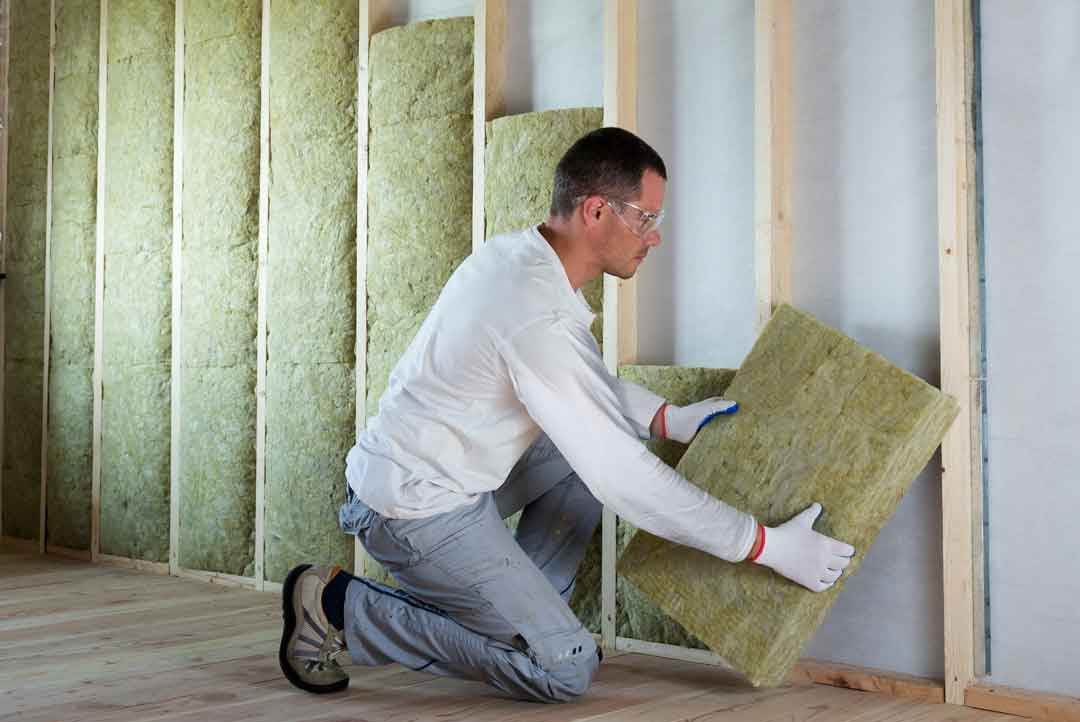
Image - Rock Wool Insulation
Black Rubber Insulation
Black rubber insulation is a soft, matte black rubber sheet made from polymer rubber. It has a low thermal conductivity of 0.033 W/m.K and features a closed-cell structure. When installed on ceilings or under false ceilings, it helps reduce rain noise.
The advantage of plastic foam or black rubber insulation is that it’s fiber-free, eliminating irritation during installation from glass or rock wool fibers. Over long-term use, it won’t generate dust from fiber breakdown.
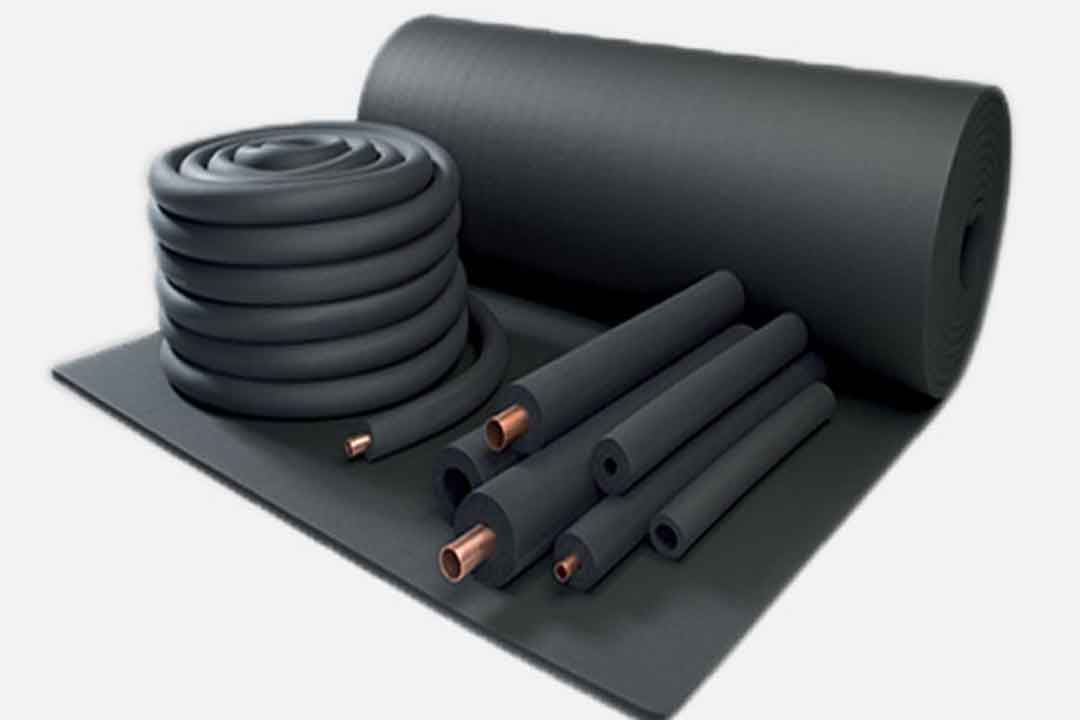
Image - Black Rubber Insulation
PE (Polyethylene) Insulation
PE (Polyethylene) insulation is a plastic foam with a very low thermal conductivity of 0.032 W/m.K. Due to this low thermal conductivity, PE insulation has a maximum thickness of 25 mm, as this thickness is sufficient for effective use.
Gray foam with aluminum foil surface reflects 95% of heat radiation, making it most suitable for under-roof installation, as roofs have the highest heat radiation rate compared to ceilings or walls.
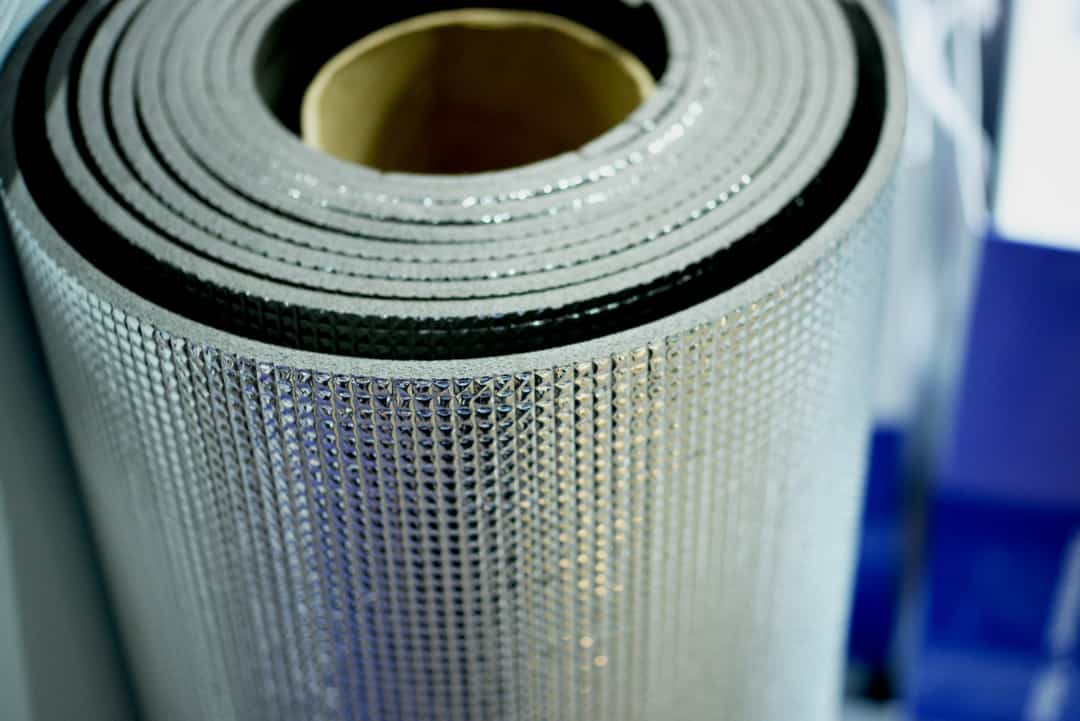
Image - PE (Polyethylene) Insulation
Heat Reflective Sheets, Heat Reflective Foil (Aluminum Foil)
Aluminum foil heat reflector is a heat reflective sheet made of pure aluminum, reinforced with tri-directional fibers in a diamond grid pattern to enhance the aluminum foil’s strength. There are two common types of aluminum foil used:
- 5-layer aluminum foil with 95% heat radiation reflection (aluminum foil on one side), used in combination with other types of insulation to increase heat insulation efficiency.
5-Layer Aluminum Foil Heat Insulation
-
- Aluminum Foil
- Polyethylene adhesive
- Tri-directional reinforcement fibers, Diamond Grid
- Polyethylene adhesive
- Kraft Paper
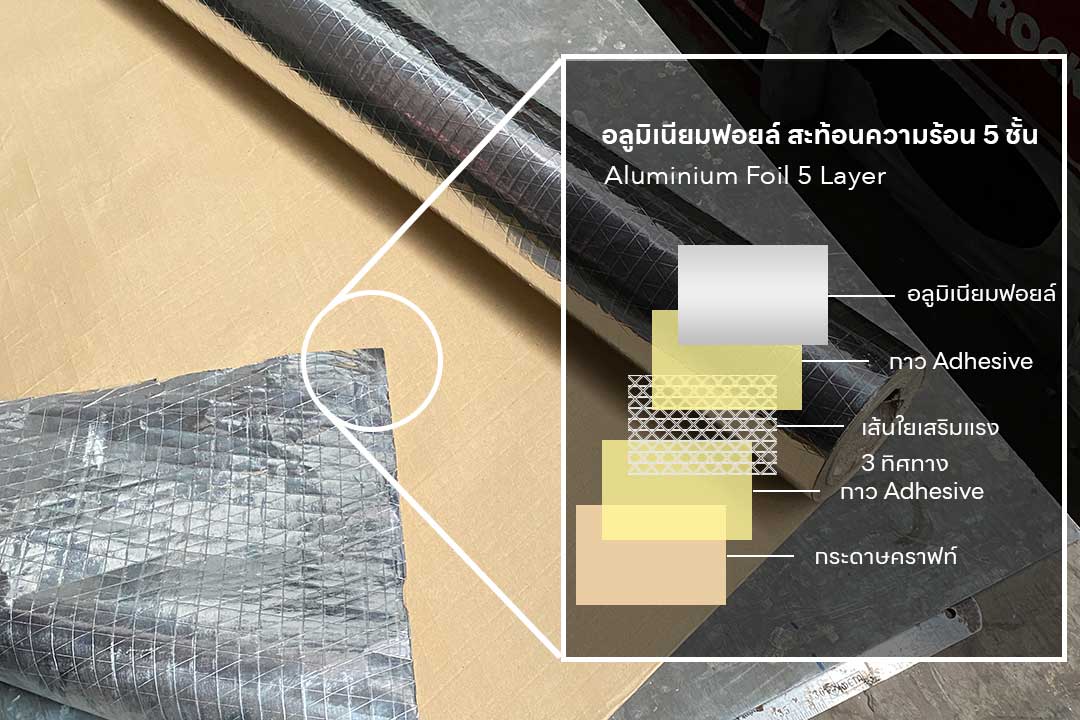
Image - Heat Reflective Aluminum Foil (Single Side)
2. 7-layer aluminum foil with 97% heat radiation reflection (aluminum foil on both sides), used for under-roof insulation to reflect heat radiation.
7-Layer Aluminum Foil Heat Insulation
-
-
-
- Aluminum Foil
- Polyethylene adhesive
- Tri-directional reinforcement fibers, Diamond Grid
- Polyethylene adhesive
- Kraft Paper
- Polyethylene adhesive
- Aluminum Foil
-
-
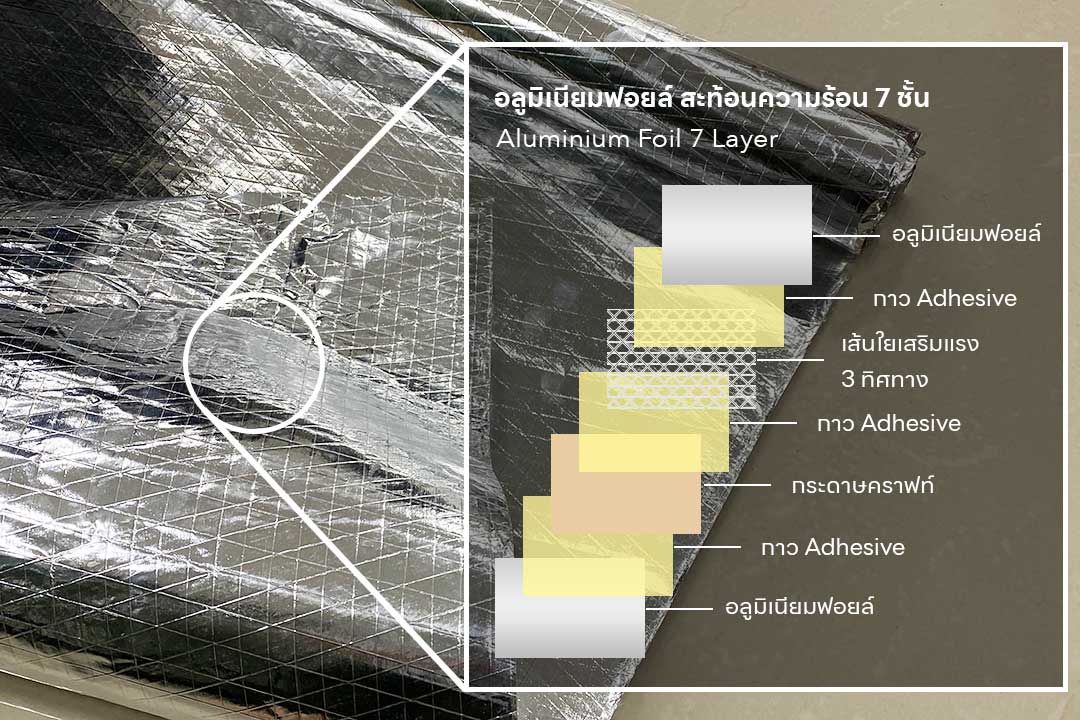
Image - 7-Layer Heat Reflective Aluminum Foil (Double Side)
What are the different ways we can install thermal insulation?
For building and residential thermal insulation, we can install it in 3 areas:
- Under-roof insulation installation
- Installing Ceiling Thermal Insulation
- Wall insulation installation
For typical homes with false ceilings, we recommend installing insulation above the false ceiling as this is sufficient. Installing insulation above the ceiling is easier than installing it under the roof.
Wall insulation for heat and sound is typically installed in specific rooms such as bedrooms requiring high privacy, home theaters to prevent sound from escaping, and air-conditioned living rooms that are used during daytime.
Under-roof insulation is recommended for carports or extensions with metal sheet roofing that emit high heat. Installing insulation under the roof can reduce temperature from 60°C to 35°C.
3T Recommendations
Insulation doesn’t actually reduce temperature by 25°C – rather, metal sheet roofing can reach temperatures of up to 60°C during the day, and insulation prevents this heat from transferring down. The temperature under insulated roofing stays around 35°C.
If we install a false ceiling under the roof, the temperature will also be around 35°C. However, if we add insulation above the false ceiling, the temperature can be reduced to 32°C.
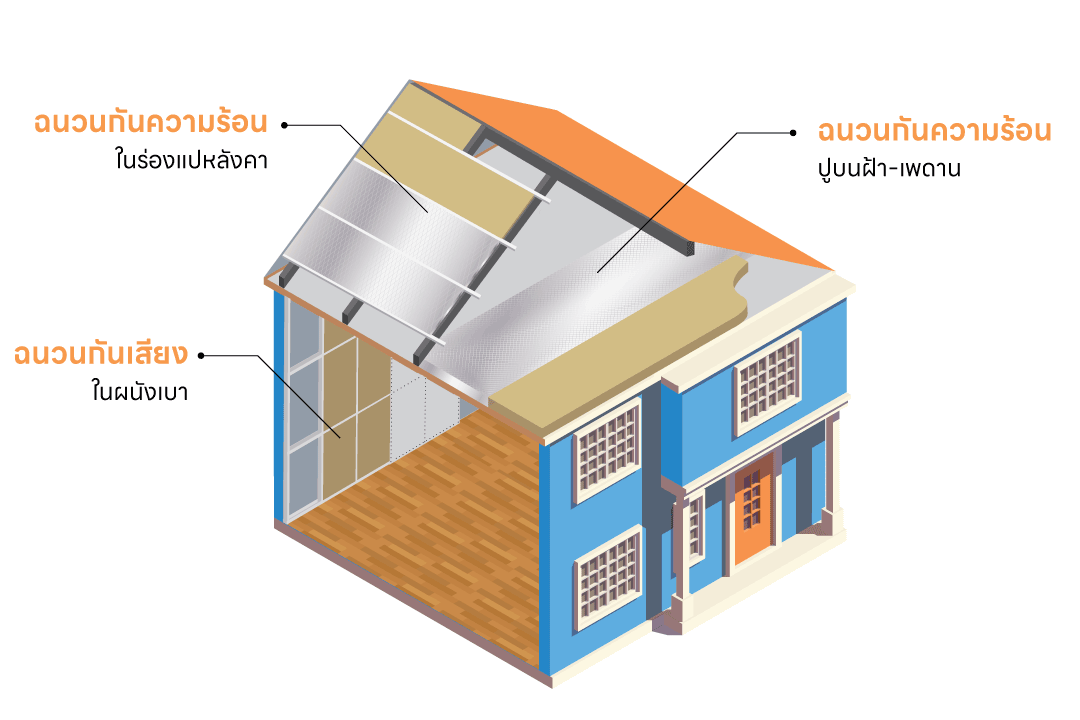
Image - Residential Insulation Installation Pattern
Roof Insulation
Roof insulation installation can be divided into 2 types:
- Insulation installation for new roofs (before roof installation)
- Insulation installation for existing roofs (after roof installation, when adding insulation)
Insulation installation for new roofs (before roof installation)
This type of installation can use any type of insulation as it’s easier than installing after the roof is in place. Equipment needed includes chicken mesh attached to rafters to support the weight of the insulation to be laid.
Installation method using chicken mesh
1. Attach chicken mesh (1/2 inch mesh size) to rafters using screws (or weld to rafters)
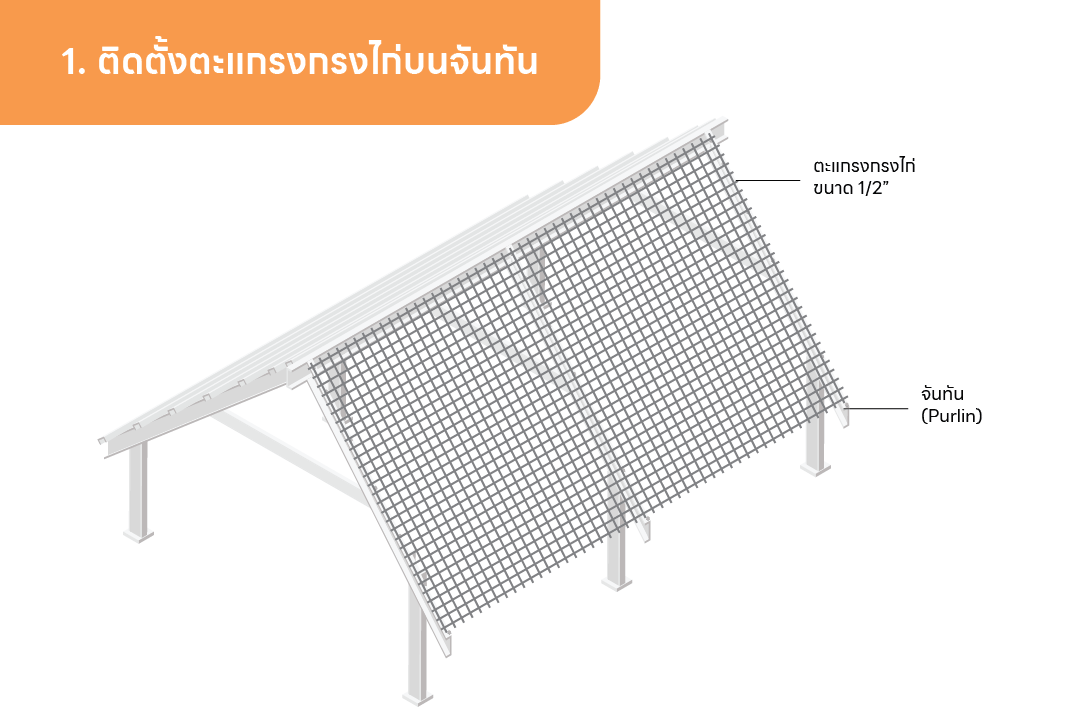
2. Attach purlins to rafters with screws at 1.2-meter intervals, installing over the chicken mesh
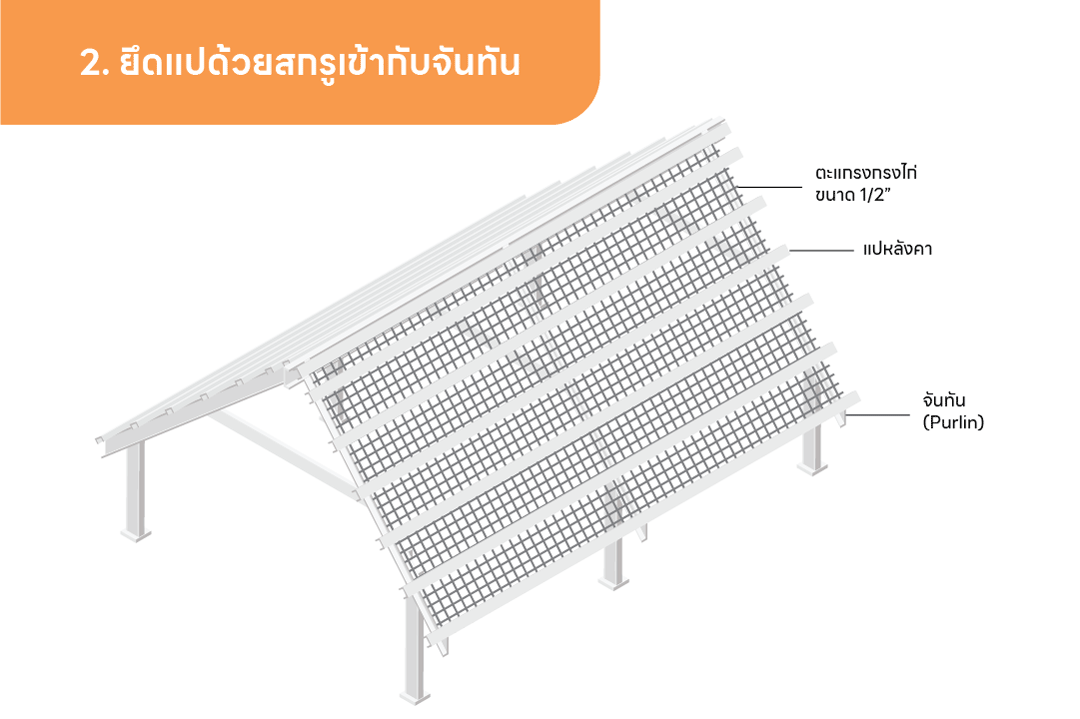
3. Place insulation in the spaces between purlins
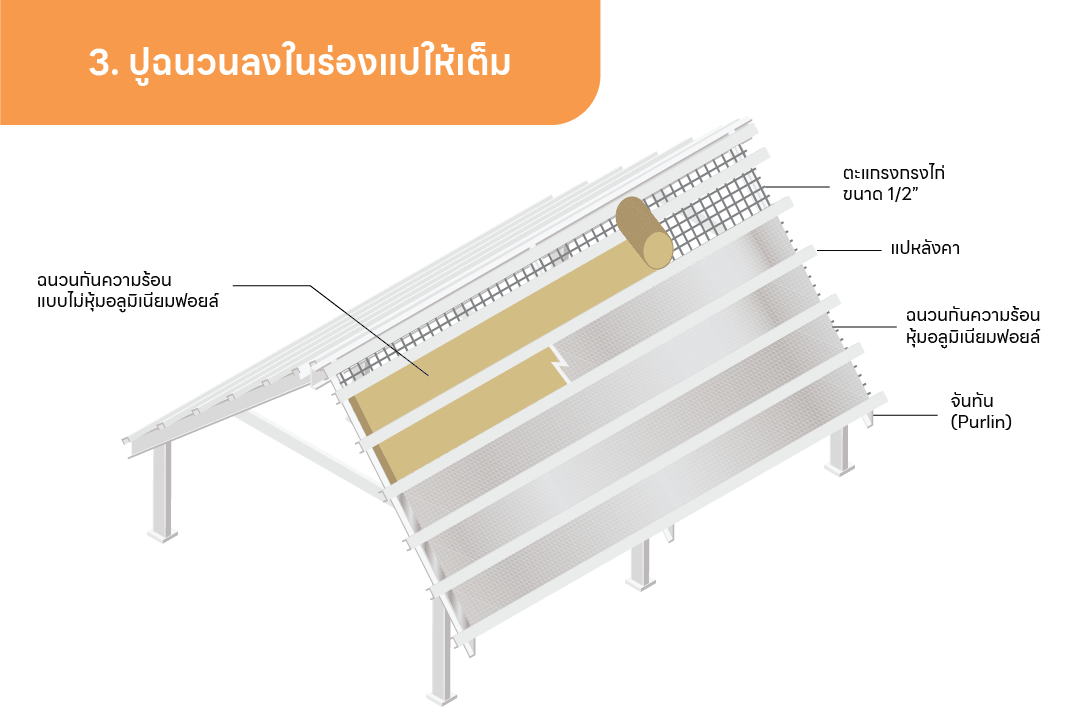
4. Install roofing and secure to purlins
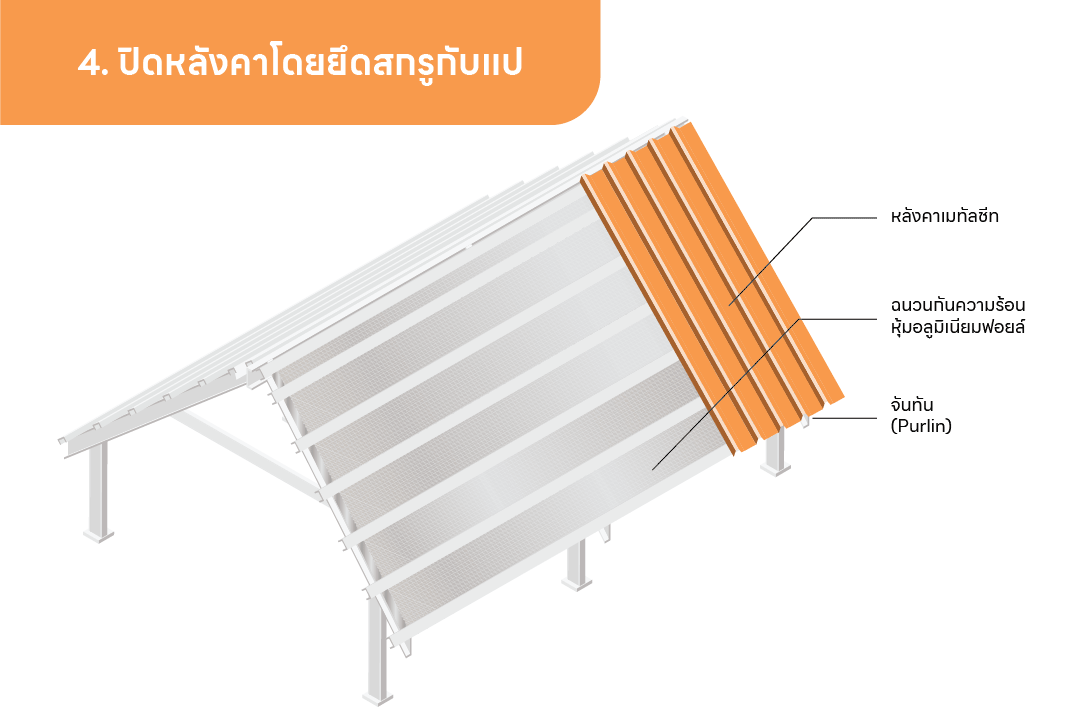
* For glass wool or rock wool insulation with one-sided aluminum foil, place the foil facing downward
** For PE or black rubber insulation with one-sided aluminum foil, place the foil facing upward
*** Check that the purlin spacing is appropriate for the insulation thickness. Prefabricated purlins (25mm thick) cannot accommodate rock wool or glass wool insulation.
3T Recommendations
- If using aluminum foil heat reflective sheets with rock wool or glass wool insulation, lay the heat reflective sheets over the chicken mesh first, then place the glass or rock wool insulation between the purlins. This method prevents the aluminum foil from wrinkling, unlike when it comes pre-attached to glass or rock wool insulation.
- For glass wool or rock wool insulation, we recommend using types wrapped in aluminum foil heat reflective sheets on all sides. This is because glass and rock wool have fibers that can break down over time, creating dust. Full aluminum foil wrapping helps slow fiber breakdown, maintains insulation efficiency, and contains any broken fibers within the foil wrapping.
Insulation installation for existing roofs (after roof installation, when adding insulation)
Installing insulation after the roof is already in place is more complicated than installing before roofing. The most suitable insulation for under-roof installation should have low thermal conductivity (low K-Value) and be thin enough to be stretched taut and secured directly with screws and washers.
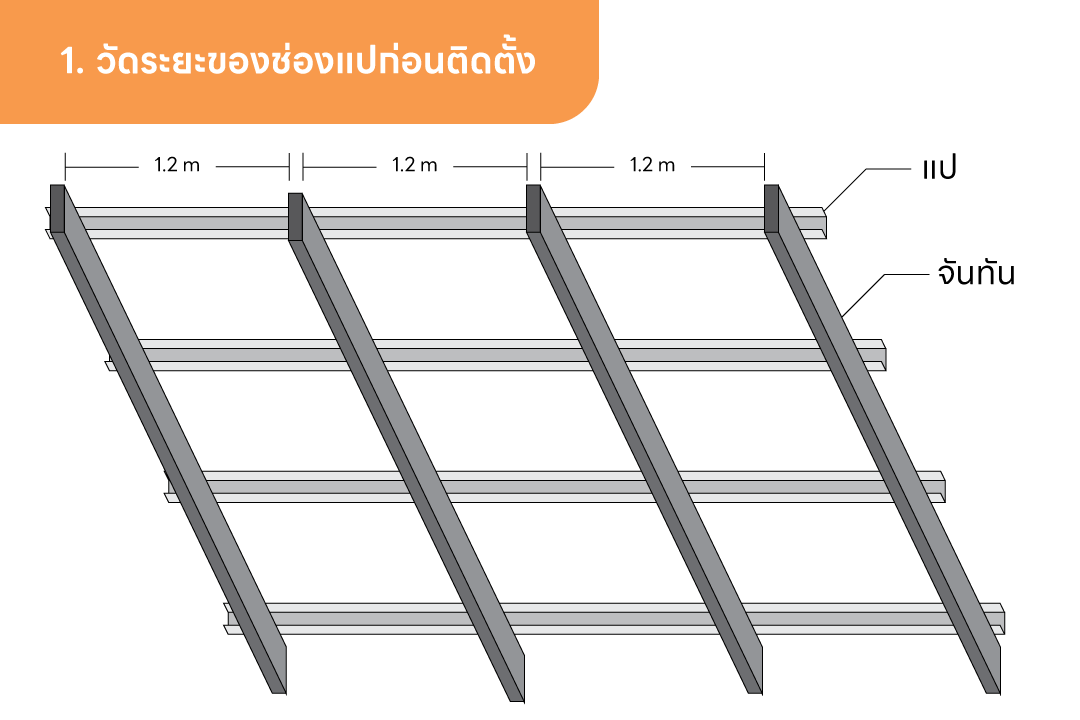
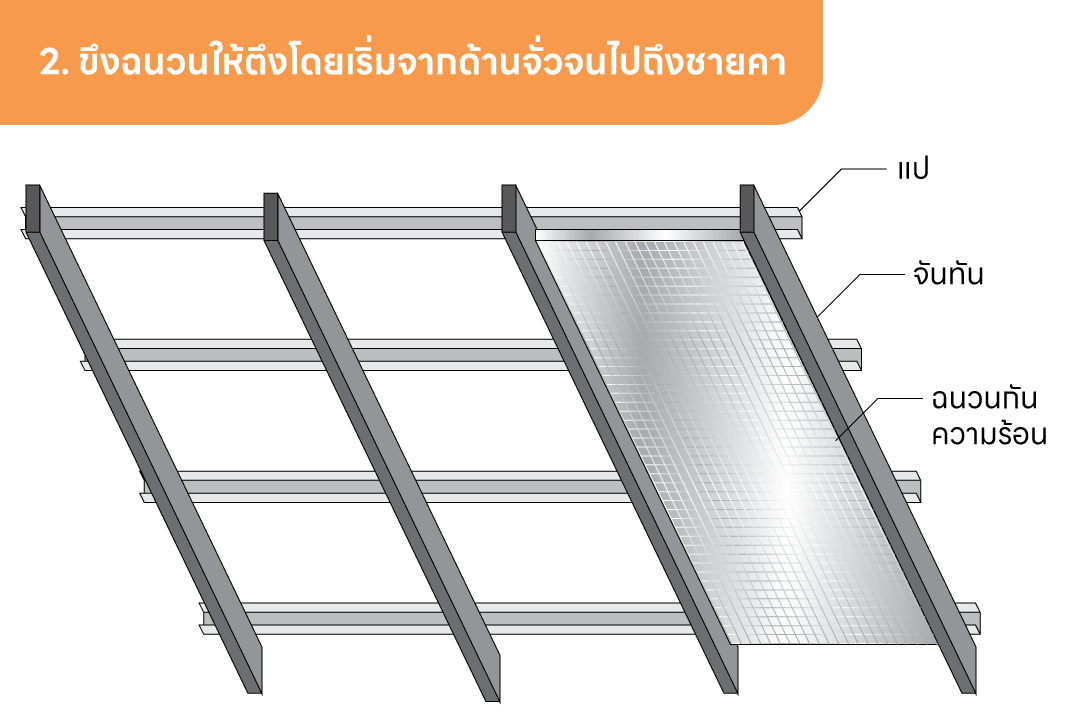
Installation method using under-purlin screw mounting
- Stretch insulation taut, working from the gable to the eaves
2. Use screws with washers to secure insulation to purlins
3. Cut off excess insulation and seal with aluminum tape
4. Repeat steps 1-3 to cover entire area
* This is the easiest method requiring minimal equipment, but cannot be used with thick insulation. This method is suitable for PE or black rubber insulation up to 10mm thick.
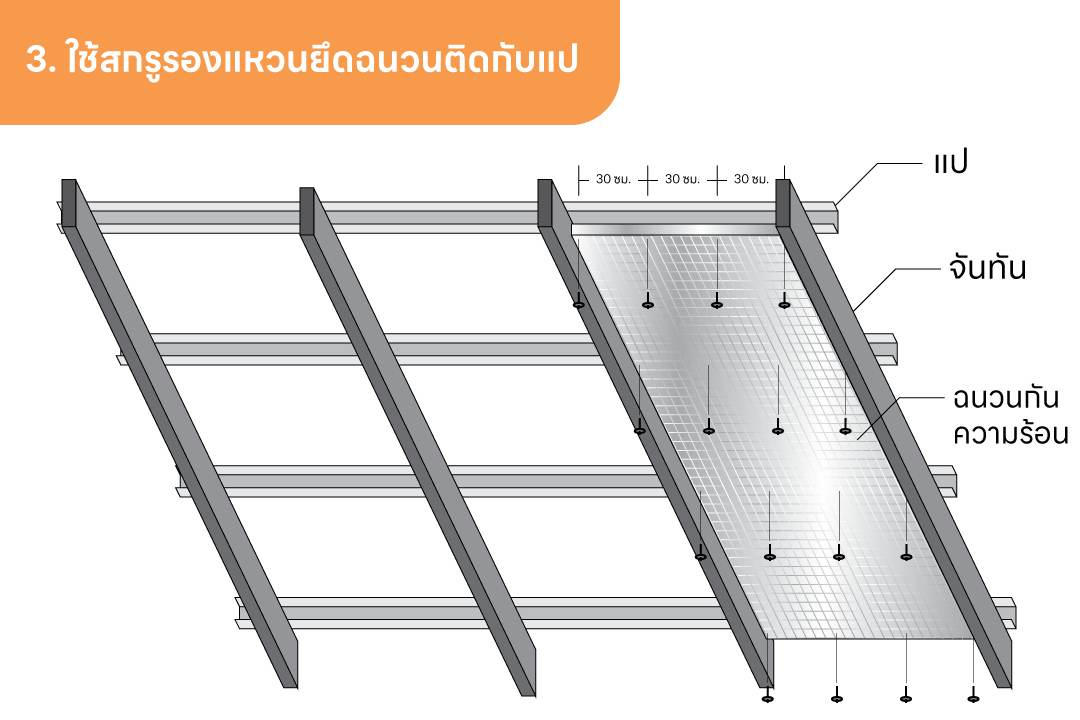
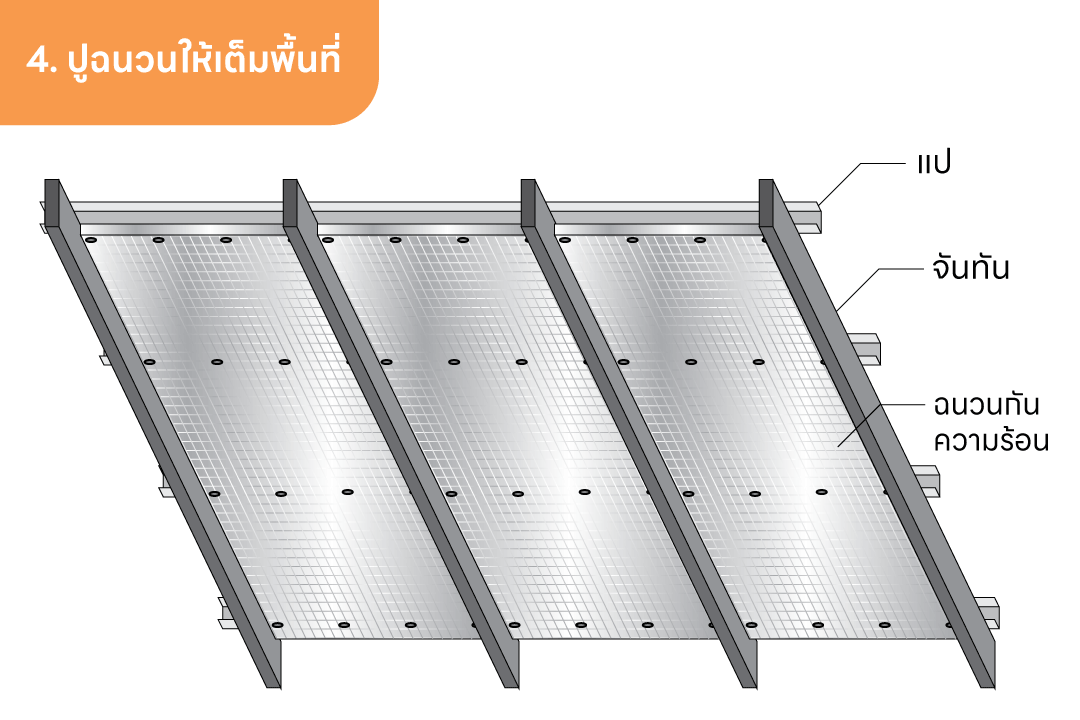
Installation method using chicken mesh
- This method is used for heavier insulation types like glass wool or rock wool. Measure purlin spacing before installation.
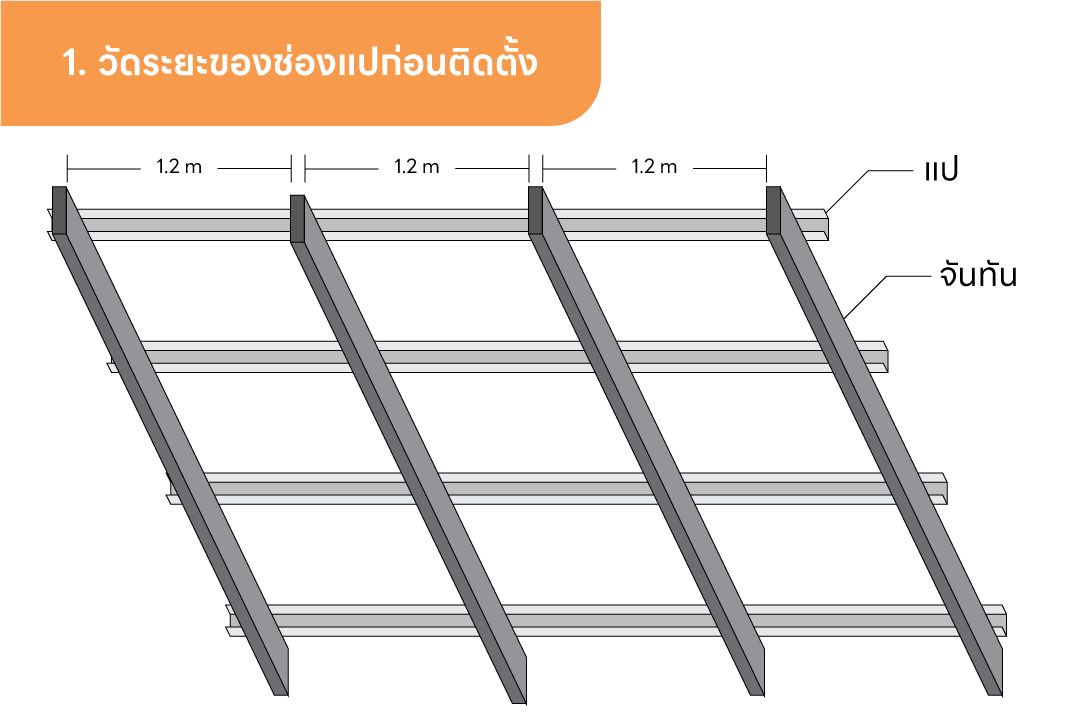
2. Stretch chicken mesh from gable to eaves using screws with washers
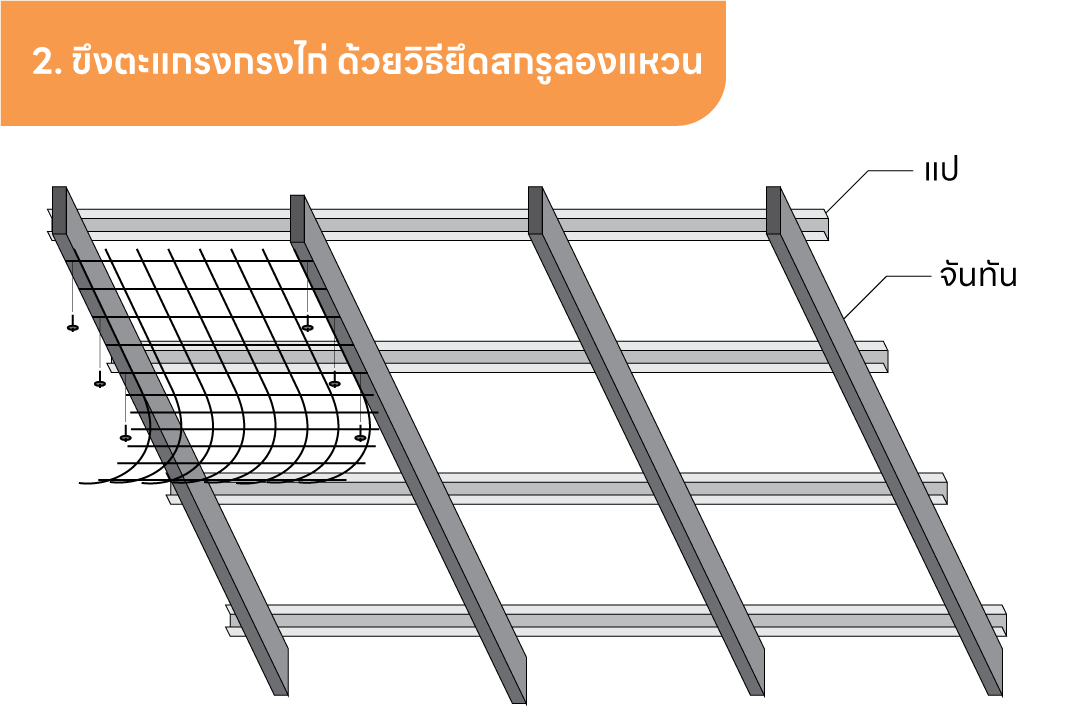
3. Insert insulation sheets over chicken mesh between purlins to fill mesh area
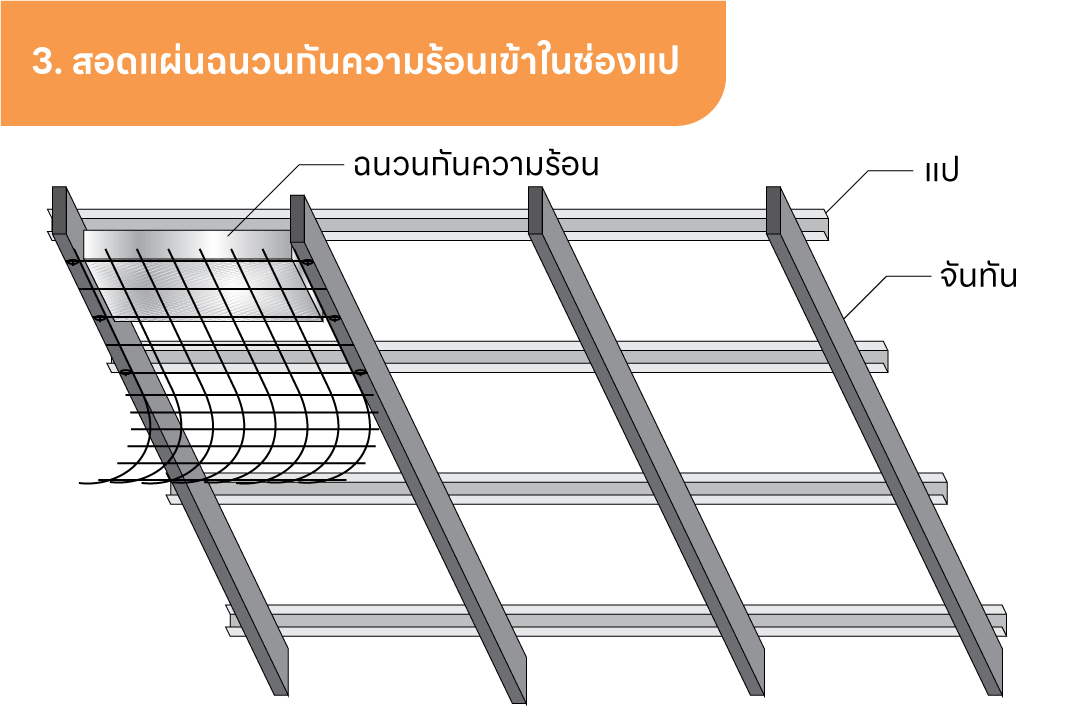
4. Insert insulation sheets along entire purlin length across roof
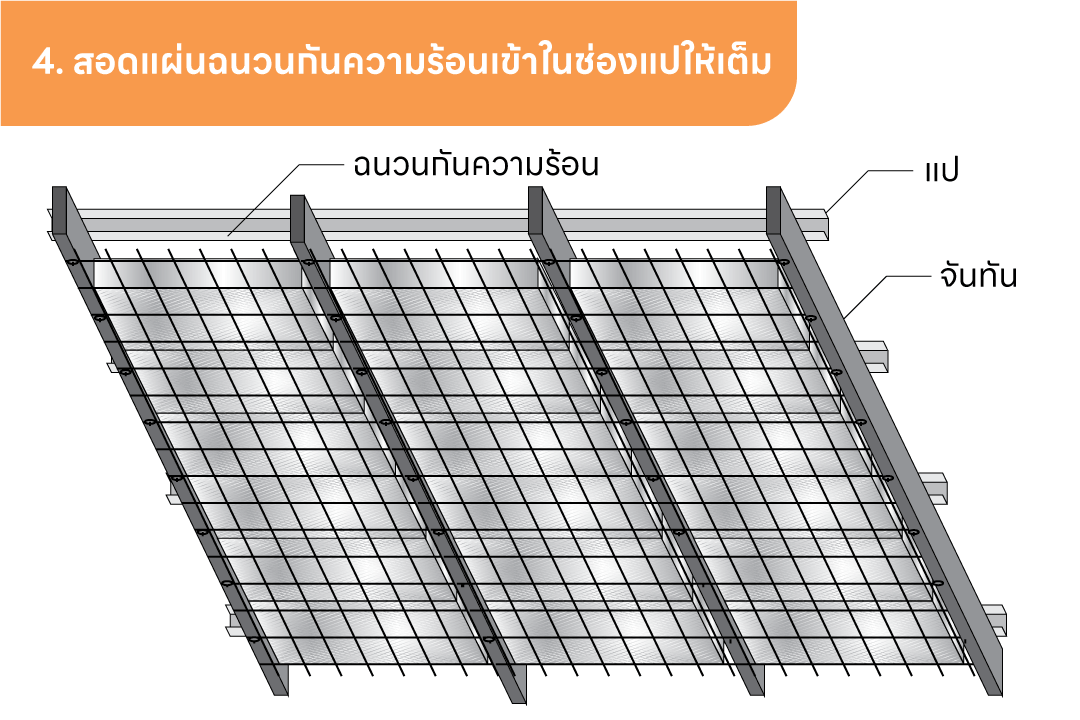
* This method provides strong support that can handle heavier insulation and allows use of thicker insulation.
** We recommend using glass wool or rock wool insulation wrapped in aluminum foil on all sides, in sheet form, size 60cm x 1.20m.
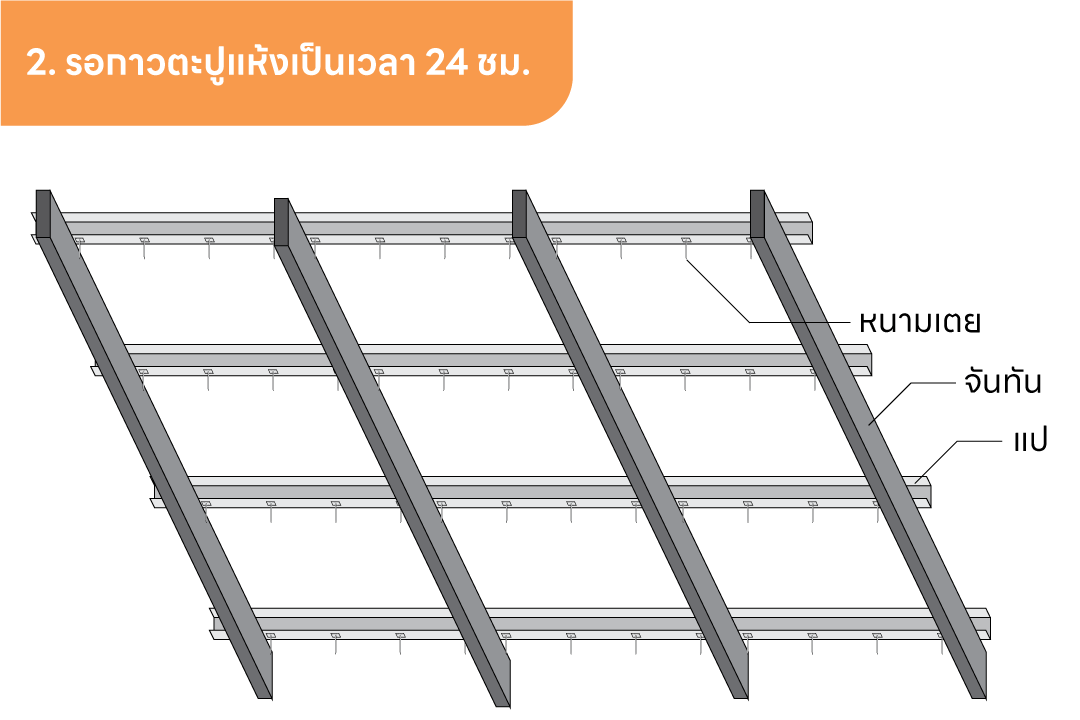
Installation method using insulation pins
- Apply nail adhesive to pin bases thoroughly and attach under purlin beams at 25-30cm intervals.
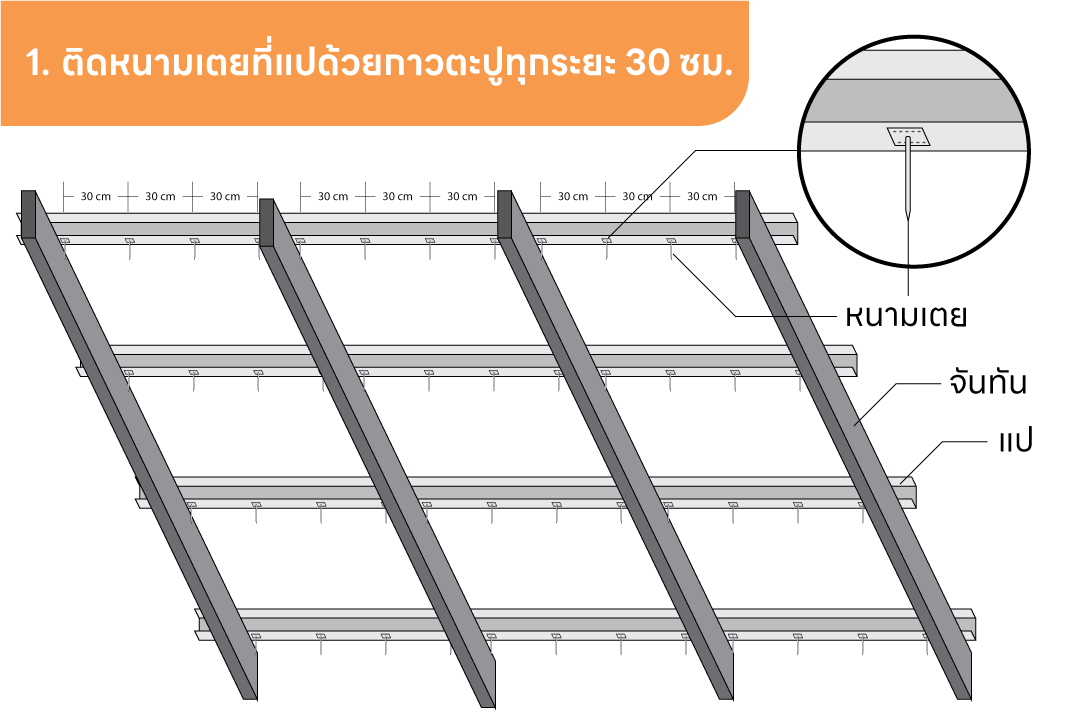
2. Allow nail adhesive to dry for approximately 24 hours
3. Install insulation by piercing onto pins, working from gable to eaves
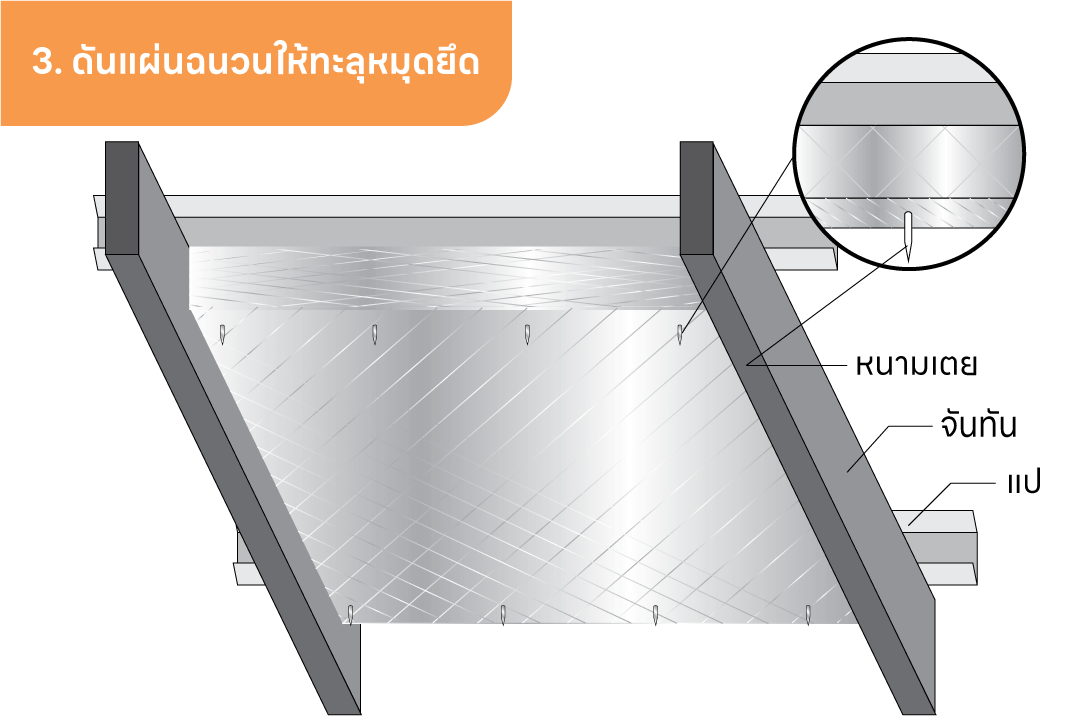
4. Place dome washers on pins to secure insulation to purlin beams
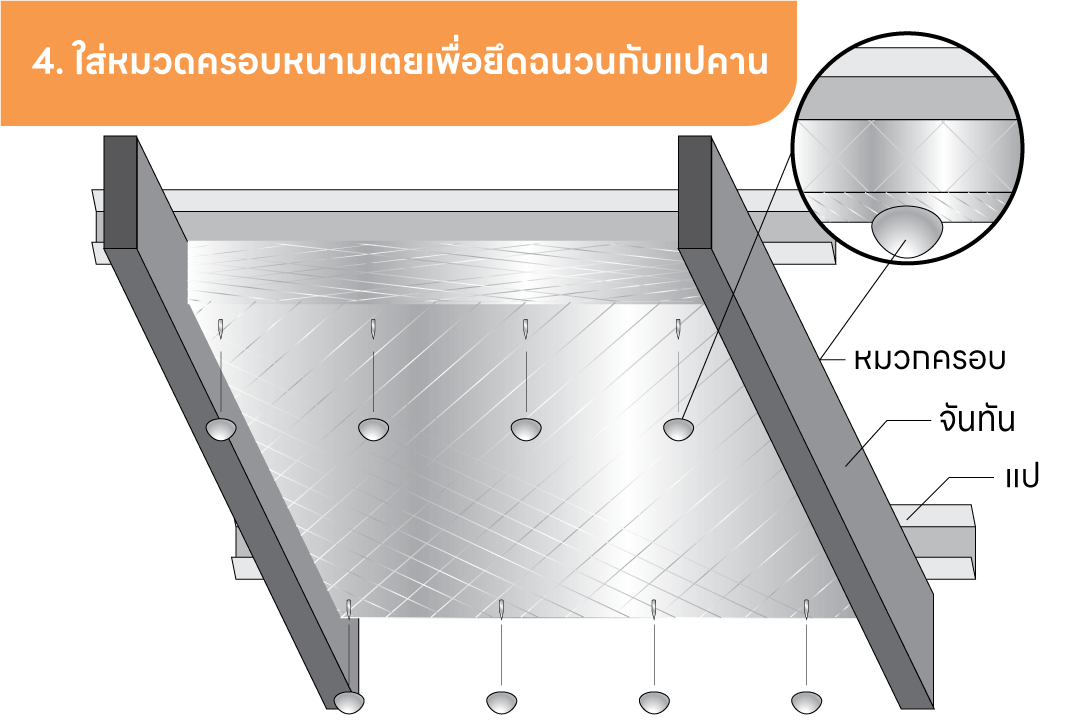
* This method is convenient as it requires minimal installation equipment and is easy, requiring no drill or screws, just commonly available nail adhesive and pins with spring lock washers.
** If insulation comes loose, it’s usually due to poor quality adhesive causing pin bases to detach from purlin beams.
Top 3 Insulation Types for Under-Roof Installation
ROCKWOOL Cool ‘n’ Comfort RL940 50mm thick, wrapped in aluminum foil on all sides
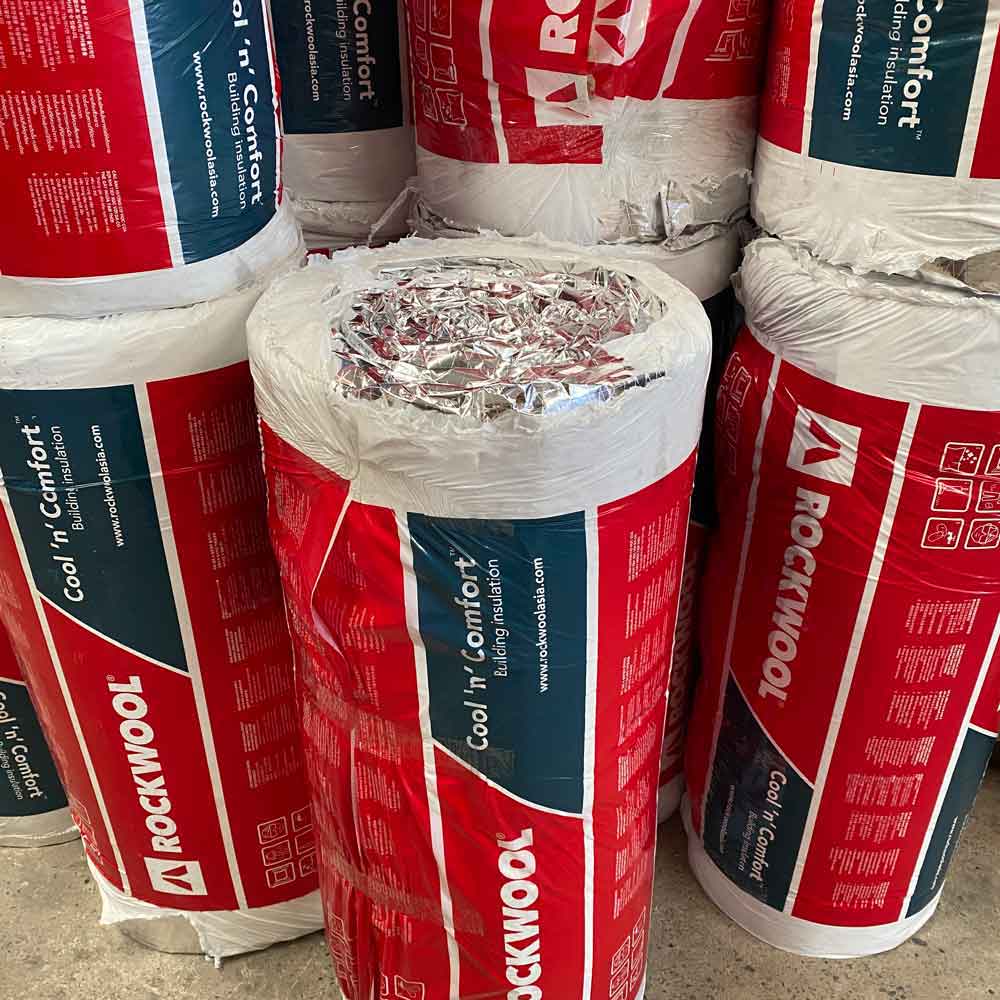
Image - ROCKWOOL Cool 'n' Comfort RL940 with All-Side Foil Wrapping
This is insulation for under-roof installation, installed using chicken mesh with insulation laid in purlin channels before roof installation.
ROCKWOOL Cool ‘n’ Comfort RL940 has a density of 60 kg/m³, low thermal conductivity of 0.034 W/m.K, is non-combustible with melting point above 1,000°C, wrapped in 95% heat-reflective aluminum foil on all sides. Comes in 7.5-meter rolls, easy to install by simply removing plastic wrapping and rolling between purlins.
Read full product details at
https://3t-insulation.com/product/rockwool-cool-n-comfort-rl/
XPE Miron A1 with aluminum foil on both sides
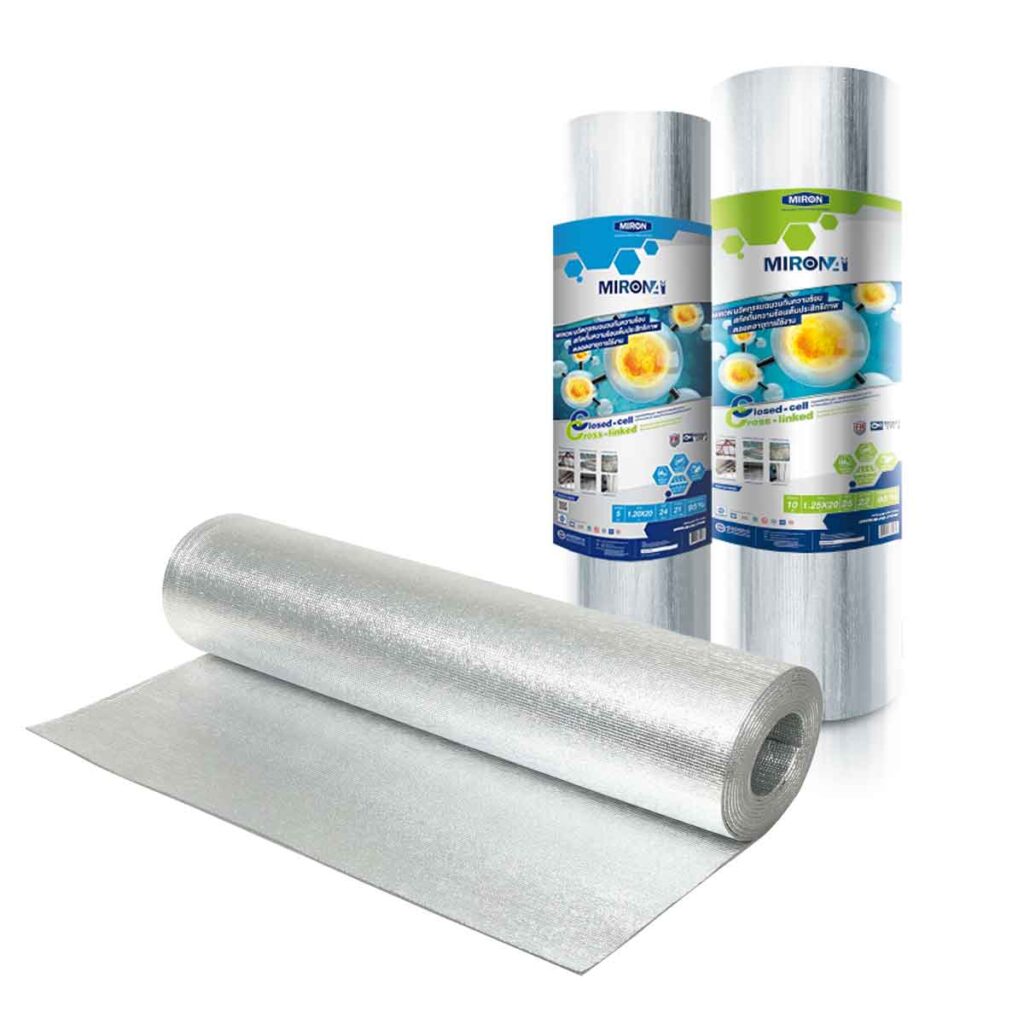
Polyethylene foam insulation using Chemical Cross-link technology achieving low thermal conductivity of 0.025 W/m.K, covered with heat-reflective aluminum foil on both sides to reflect heat radiation away from buildings. Available in thicknesses from 5mm to 25mm depending on roof structure (thicker provides better heat protection).
Installation is easy using either screws with washers under purlins or insulation pins attached under roof purlins.
Read full product details at
ArmaFlex Black Rubber with aluminum foil on both sides
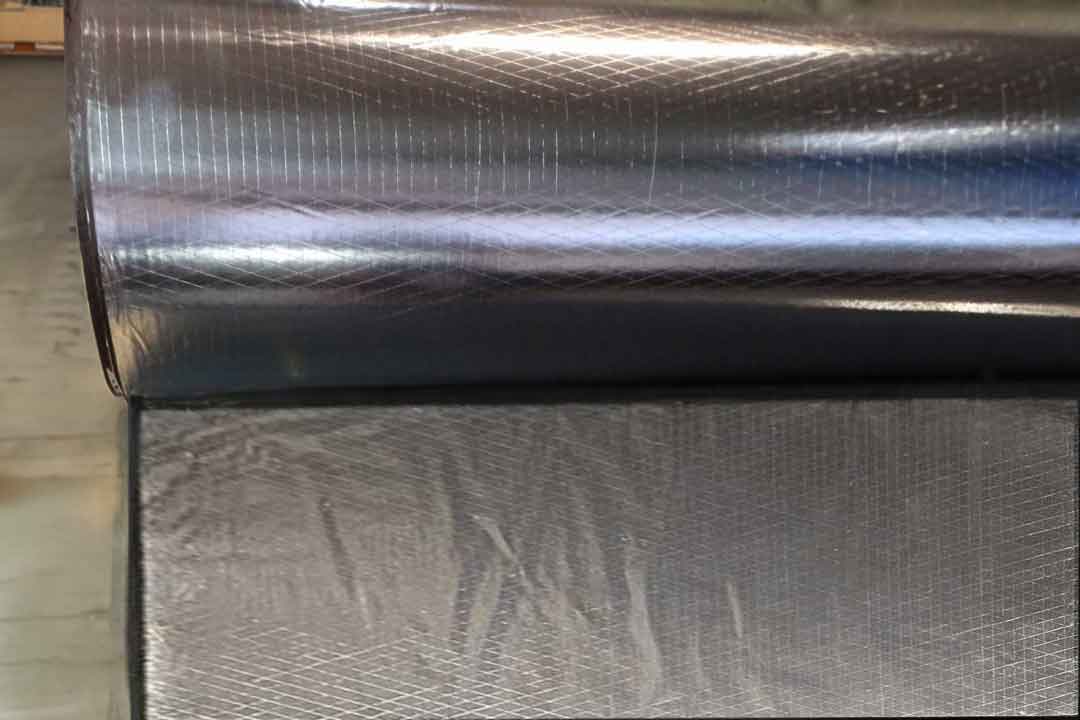
Image - ArmaFlex Black Rubber Insulation with Double-Side Aluminum Foil
Made from Elastomer rubber, soft and flexible with no foam or fiber debris over long-term use (recommended for allergy sufferers). Thermal conductivity of 0.033 W/m.K, covered with 95% heat-reflective aluminum foil on both sides.
Can be installed using chicken mesh, screws with washers under purlins, or insulation pins.
Read full product details at
Ceiling Insulation
Installing insulation above the ceiling is the easiest method. Simply roll out the insulation to cover the ceiling area. For areas with downlights or electrical connection points, leave appropriate clearance around them.
There are various types of ceiling insulation available. For glass wool or rock wool, we recommend using types wrapped in aluminum foil on all sides to reflect heat radiation and contain any insulation dust.
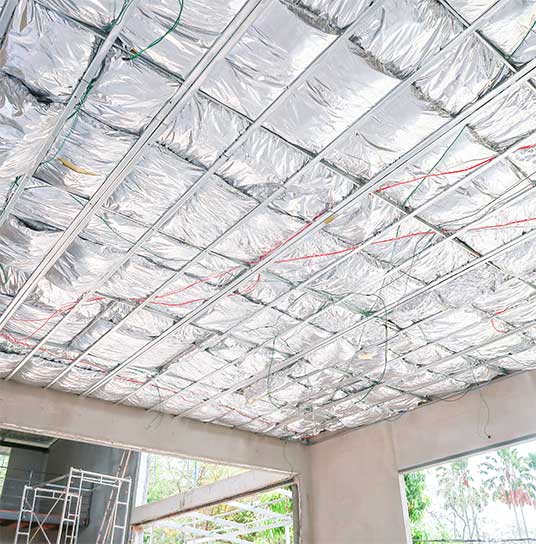
Image - Installing Ceiling Thermal Insulation
Top 5 Insulation Types for Ceiling Installation
SCG STAYCOOL Insulation
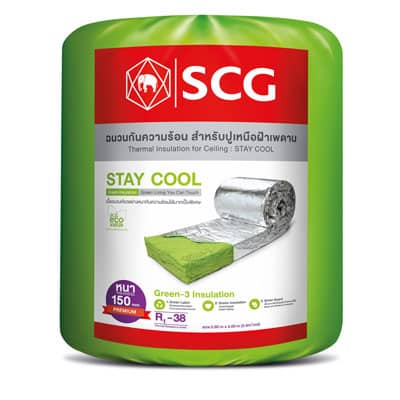
We’re likely familiar with SCG STAYCOOL green roll insulation, available in 3-inch and 6-inch thicknesses, 60cm wide and 4m long, made from high-quality glass fiber produced in Thailand.
The SCG brand has been established for a long time, so prices are higher compared to similar specifications in the market. Easily available at Home Pro, Thai Watsadu, etc.
Read full product details at
3T-INSULATION FEELFREE
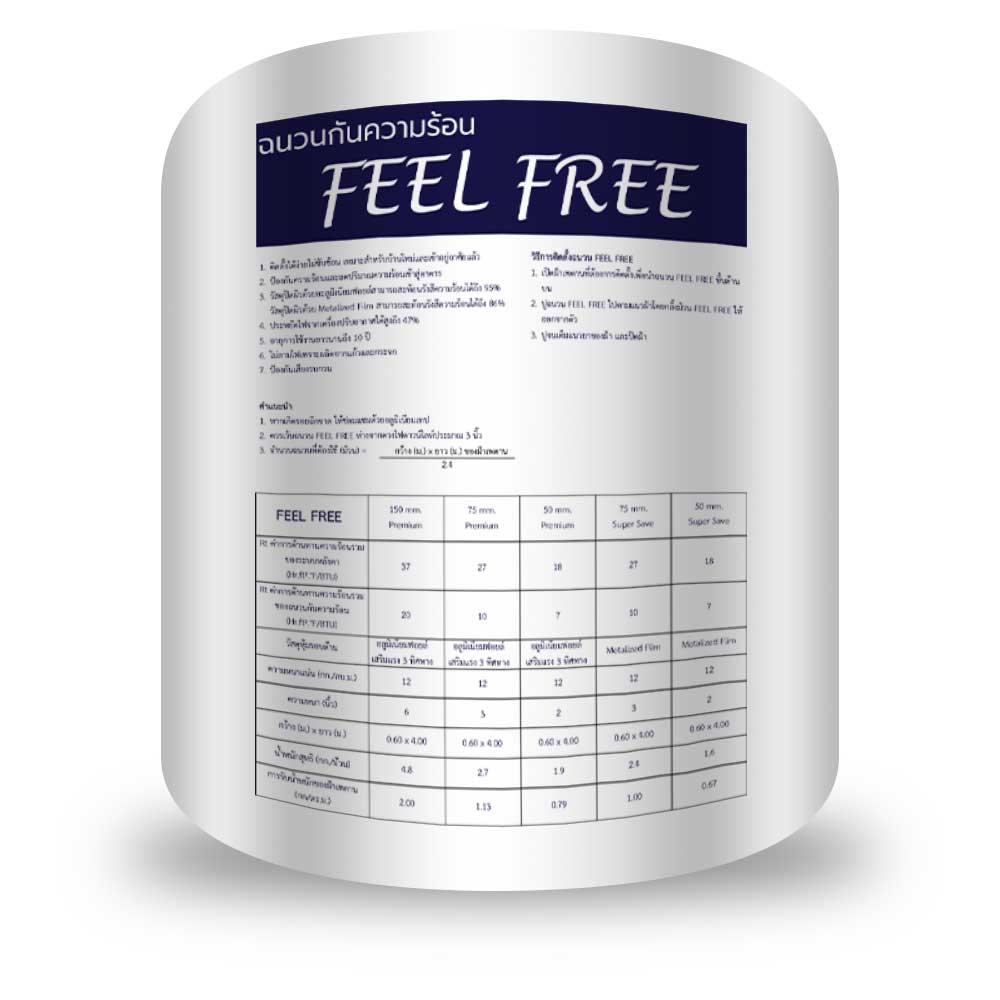
Feel Free Ceiling Insulation
FEEL FREE is made from high-quality glass fiber in Thailand, same quality as STAYCOOL, packaged by 3T Insulation Co., Ltd., making it more cost-effective. Available in 60cm width, 4m length, thicknesses of 2″, 3″, 4″ and 6″. Can choose either 95% heat-reflective aluminum foil or 87% heat-reflective metallized film covering, which is more economical.
Read full product details at
ROCKWOOL Cool ‘n’ Comfort RL920 50mm thick, wrapped in aluminum foil on all sides
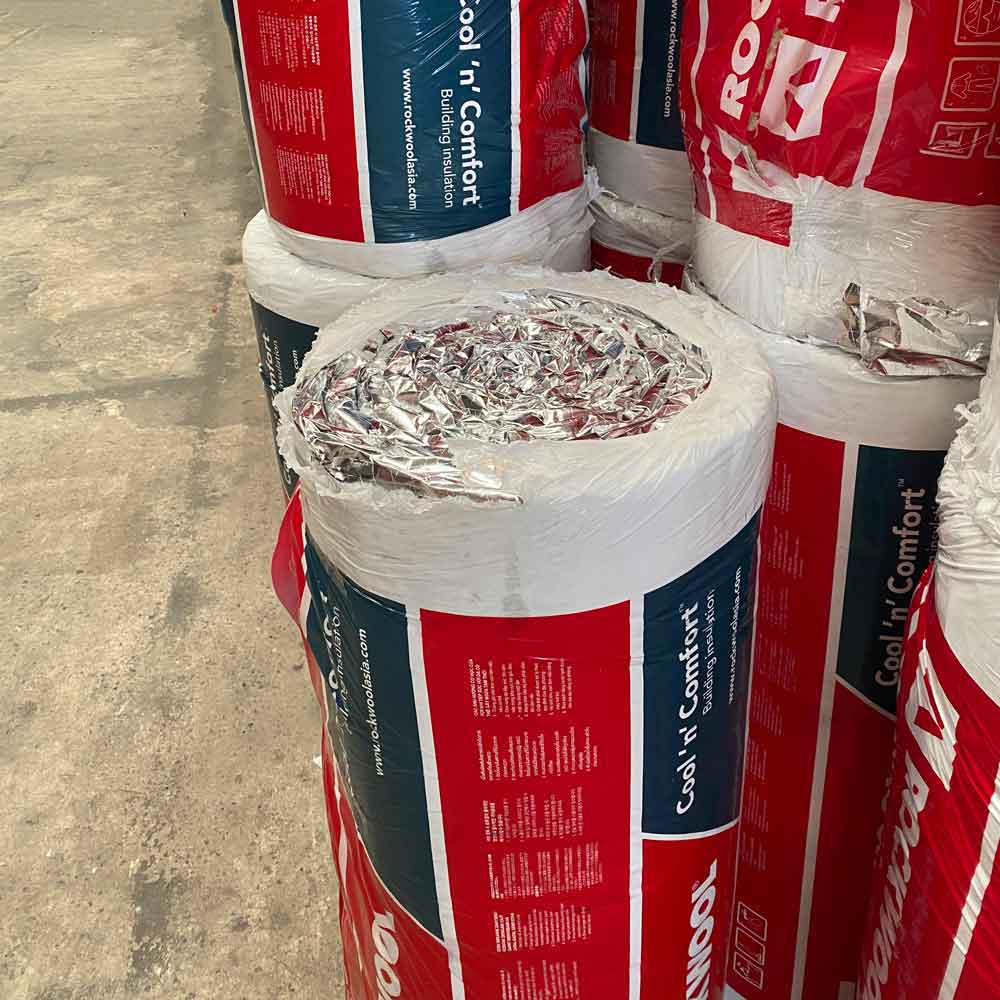
Image - ROCKWOOL Cool 'n' Comfort RL920
ROCKWOOL Cool ‘n’ Comfort RL920 is rock wool insulation with 40 kg/m³ density, lighter than Cool ‘n’ Comfort RL940, reducing ceiling load while maintaining thermal conductivity of 0.036 W/m.K.
Wrapped in 95% heat-reflective aluminum foil on all sides to contain rock wool fibers and extend product life.
Read full product details at
https://3t-insulation.com/product/rockwool-cool-n-comfort-rl/
ArmaFlex Black Rubber 50mm thick with aluminum foil on both sides
Image - ArmaFlex Black Rubber Insulation with Double-Side Aluminum Foil
An alternative for those who prefer non-fibrous insulation, ArmaFlex black rubber with heat-reflective aluminum foil on both sides is easy to install by laying on the ceiling. The material is soft, flexible, and free from dust and fibers.
Excellent thermal insulation performance (k = 0.033 W/m.K) and sound insulation. For ceiling installation, we recommend 50mm (2″) thickness, with roll dimensions of 1.2m width by 3m length.
Read full product details at
Wall Insulation for Heat and Sound
Wall insulation is installed to prevent heat transfer and maintain cool temperatures inside. We typically install it in specific rooms with air conditioning or where sound control is needed.
For homes, this usually means bedrooms or living rooms; for offices, work areas or meeting rooms. These spaces require both heat and sound insulation.
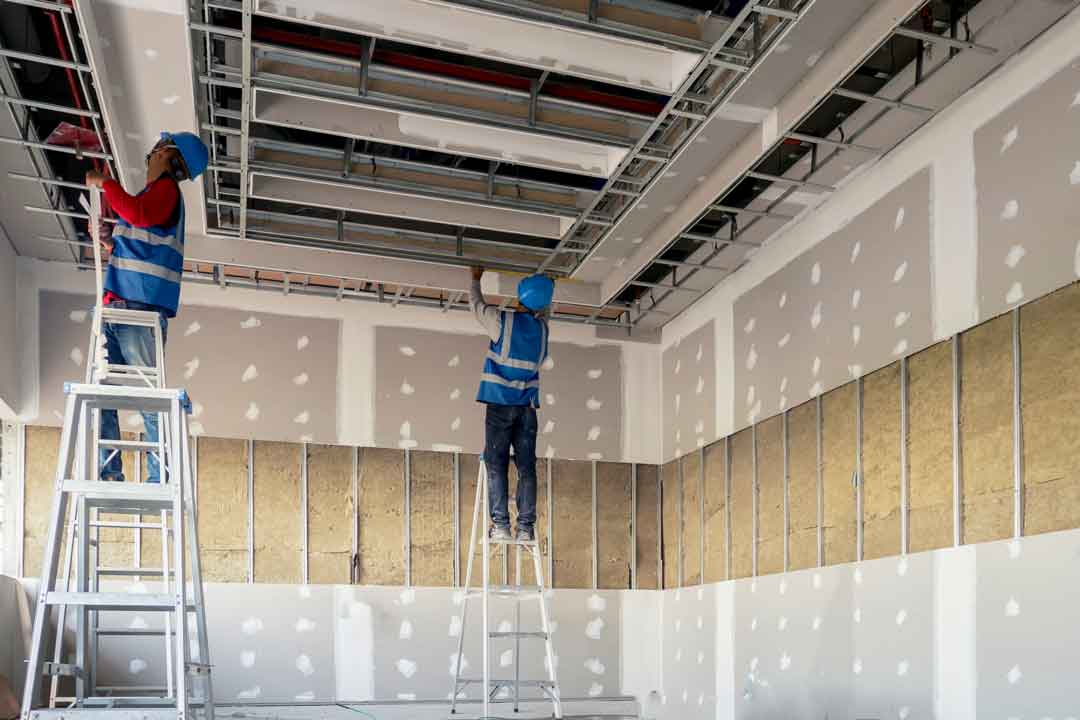
Image - Installing Insulation in Wall Frame
Light wall installation method for insulation
- We set up C-Line frames with 40cm or 60cm spacing
- Leave 1.2-meter height spacing
- Insert insulation sheets into wall frame channels
- Cover with gypsum board and secure firmly with screws
3T Recommendations
For those interested in installing sound insulation to meet specific needs, we recommend reading these two articles:
Recommended Heat and Sound Insulation for Walls
We recommend 3 types of insulation:
- Insulation wrapped with humidity block material
- Insulation wrapped with aluminum foil on all sides
- Insulation wrapped with glass cloth on 5 sides and aluminum foil on 1 side
The recommended insulation is ROCKWOOL Safe ‘n’ Silent Pro 370, 50mm thick, used with C-64mm wall frame and 12mm gypsum board, achieving STC 40 (40 decibel sound reduction).
We recommend Safe ‘n’ Silent Pro 370 instead of Safe ‘n’ Silent Pro 330 or 350 because it has lower thermal conductivity, requiring only 50mm thickness. This makes it suitable for residential buildings with limited wall frame space but requiring heat and sound protection (commercial buildings near roads or residential rooms).
Another important reason for recommending Safe ‘n’ Silent Pro 370 is that wall insulation is a one-time investment. Safe ‘n’ Silent Pro 370’s high density (80 kg/m³) means fibers remain firm and don’t compress over time, compared to Safe ‘n’ Silent Pro 330 and 350 with only 40 kg/m³ and 60 kg/m³ density respectively.
ROCKWOOL Safe ‘n’ Silent Pro370 with humidity block
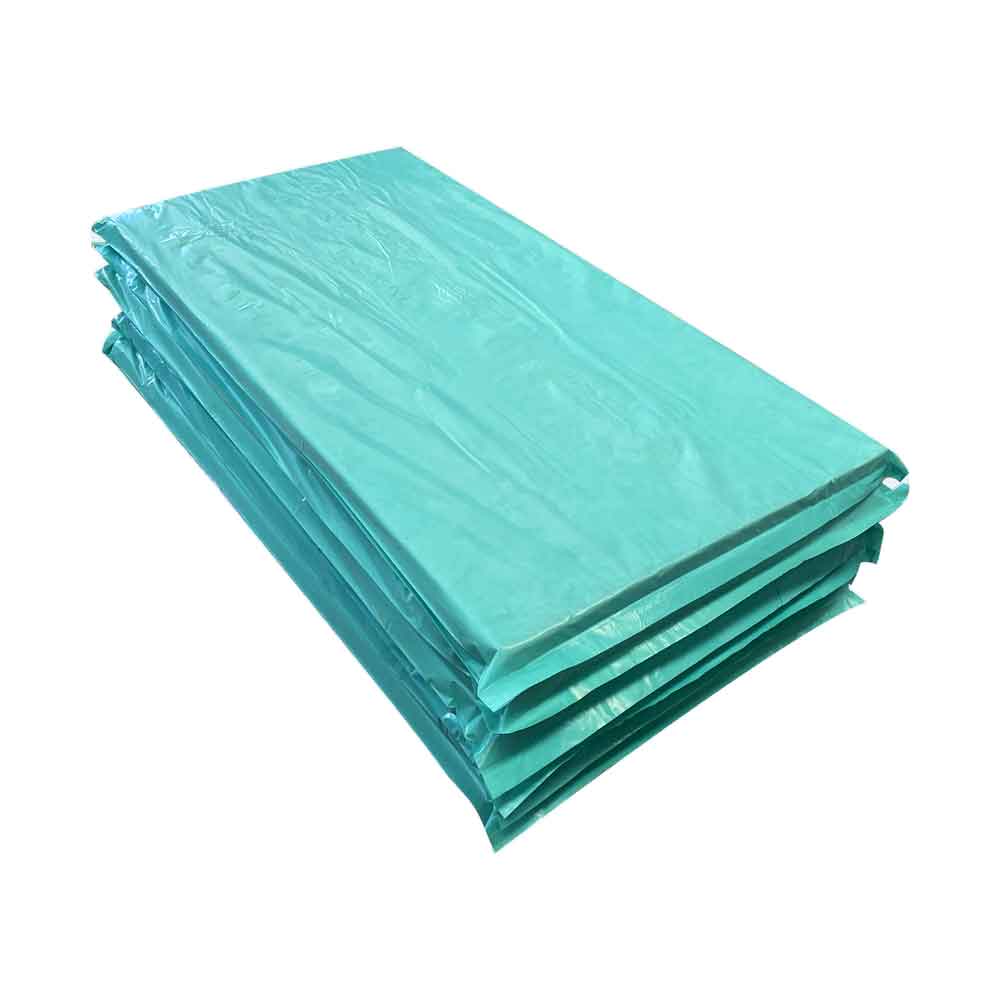
Image - ROCKWOOL Safe 'n' Silent Pro with Humidity Block Wrapping
ROCKWOOL Safe ‘n’ Silent Pro 370 wrapped with humidity block serves two purposes: protecting against moisture from external walls (high humidity during rain) and containing rock wool fibers that might come loose over time.
ROCKWOOL Safe ‘n’ Silent Pro370 wrapped with aluminum foil on all sides
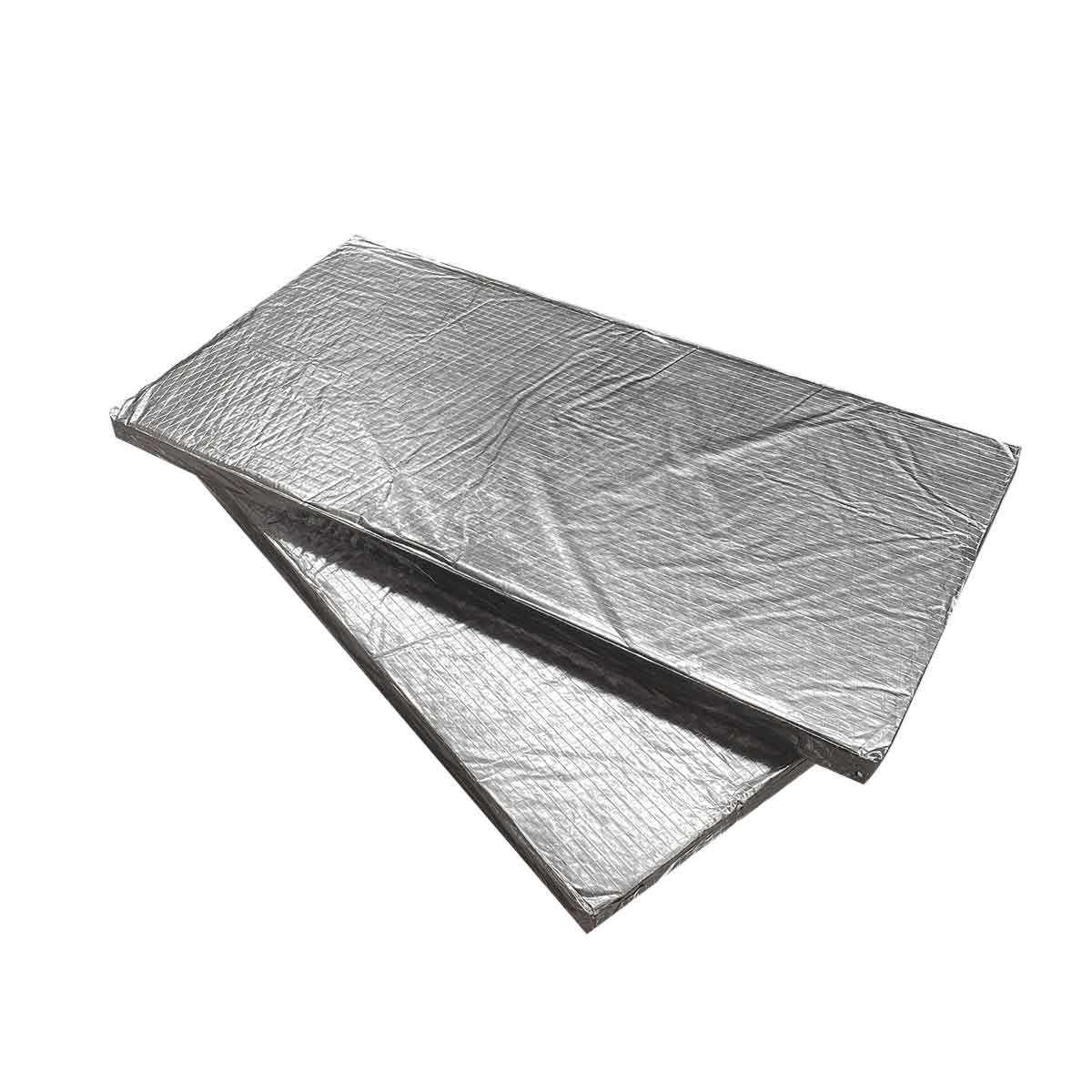
Image - ROCKWOOL Safe 'n' Silent Pro with All-Side Aluminum Foil Wrapping
Wrapping with aluminum foil on all sides provides 3 additional benefits beyond ROCKWOOL’s properties:
- 95% heat reflection aluminum foil reduces heat transfer through building walls
- Aluminum foil extends insulation life by protecting against moisture
- Aluminum foil contains any fibers that might come loose over long-term use
ROCKWOOL Safe ‘n’ Silent Pro370 wrapped with glass cloth on 5 sides and aluminum foil on 1 side
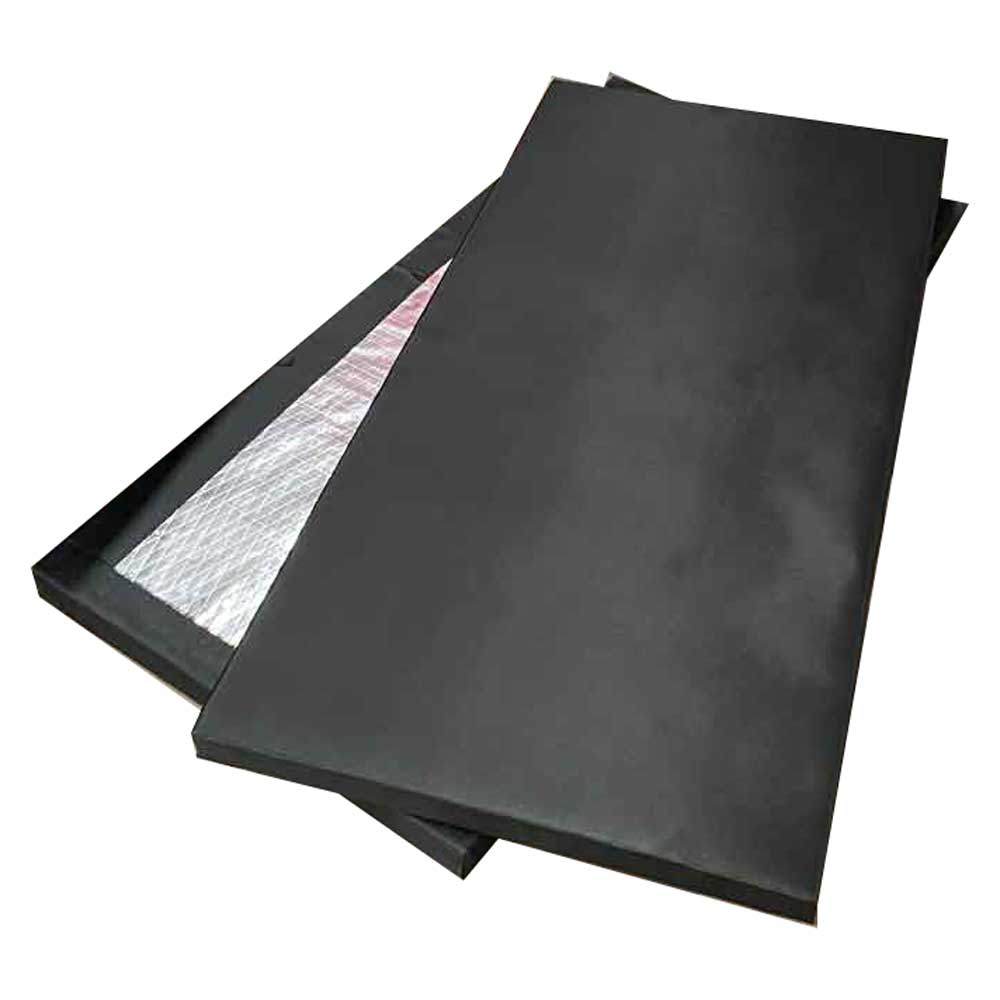
Image - ROCKWOOL Safe 'n' Silent Pro with 5-Side Glass Cloth and 1-Side Aluminum Foil
Wrapping ROCKWOOL with glass cloth on 5 sides and aluminum foil on 1 side provides 5 benefits:
- The porous nature of glass cloth maintains insulation’s sound absorption efficiency
- Glass fibers used in glass cloth strengthen the insulation system, maintaining insulation properties longer
- Heat-reflective aluminum foil faces the outer wall to reflect heat away from the building
- Aluminum foil prevents moisture accumulation inside, extending insulation life
- Glass cloth contains insulation fibers, reducing dust in wall cavities
Comparison of Wall Systems for Noise Protection
From our wall system calculations, we've seen that wall insulation for heat protection isn't very necessary. Therefore, we focus more on sound protection instead.
For wall sound insulation, we use the STC (Sound Transmission Class) value, which is an average measure of sound reduction at certain frequencies. This generally indicates how many decibels (dB) of sound reduction can be expected with a particular wall installation.
For sound insulation, we recommend ROCKWOOL Safe 'n' Silent Pro 370 used with C64 frame and 13mm gypsum board, which reduces sound by 40 decibels. For comparisons of different lightweight wall systems and ROCKWOOL Safe 'n' Silent Pro models, please refer to this article.
https://3t-insulation.com/sound-insulation/rockwool-acoustic-insulation-guideline/
After reading the ROCKWOOL sound insulation wall article, we can see that using double-layer gypsum boards provides better sound insulation than increasing insulation thickness, and increasing insulation thickness is more effective than increasing insulation density.
The reason we recommend Safe 'n' Silent Pro 370 instead of Safe 'n' Silent Pro 330 is that wall sound insulation is a one-time investment. Safe 'n' Silent Pro 330 has a density of only 40 kg/m³ (soft structure that can compress over time). After long-term installation, the insulation may compress, creating air gaps within the wall cavity where sound can penetrate through.
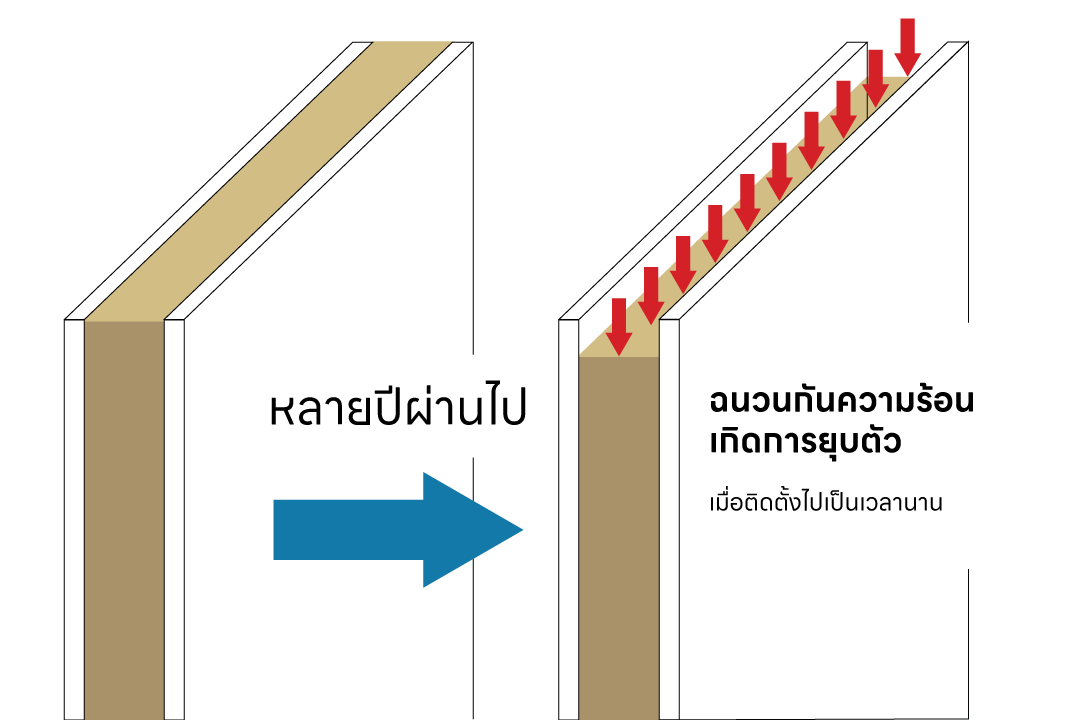
Image - Insulation Compression After Long-Term Installation
Why Must Home Insulation Be Wrapped with Aluminum Foil on All Sides?
To Prevent Dust from Fiber Shedding
When using glass wool or rock wool insulation, the fibers can break down and shed over time, creating dust that accumulates on ceilings or roofs.
In carports with constant airflow, dust won't accumulate. However, in homes with air conditioning and limited air circulation, dust will accumulate.
Therefore, when using glass wool or rock wool insulation, we recommend using all-side aluminum foil wrapping so that when fibers break or shed, they remain contained within the aluminum foil wrapper.
High Heat Radiation Reflection Capability of 95%
If it's just for dust protection, wouldn't plastic wrapping be sufficient? The answer is yes, plastic wrapping would be enough for dust protection alone.
However, aluminum foil wrapping has another advantage: it can reflect up to 95% of radiant heat. Objects that can reflect radiant heat must have a metallic shiny surface to effectively reflect heat radiation (not sunlight). You can read more about radiant heat in this article under the heat radiation section.
Three-Directional Reinforcement Fibers Prevent Tearing
Heat-reflective aluminum foil has three-directional reinforcement fibers in a diamond grid pattern, making the aluminum foil more durable and tear-resistant, helping extend the insulation's lifespan.
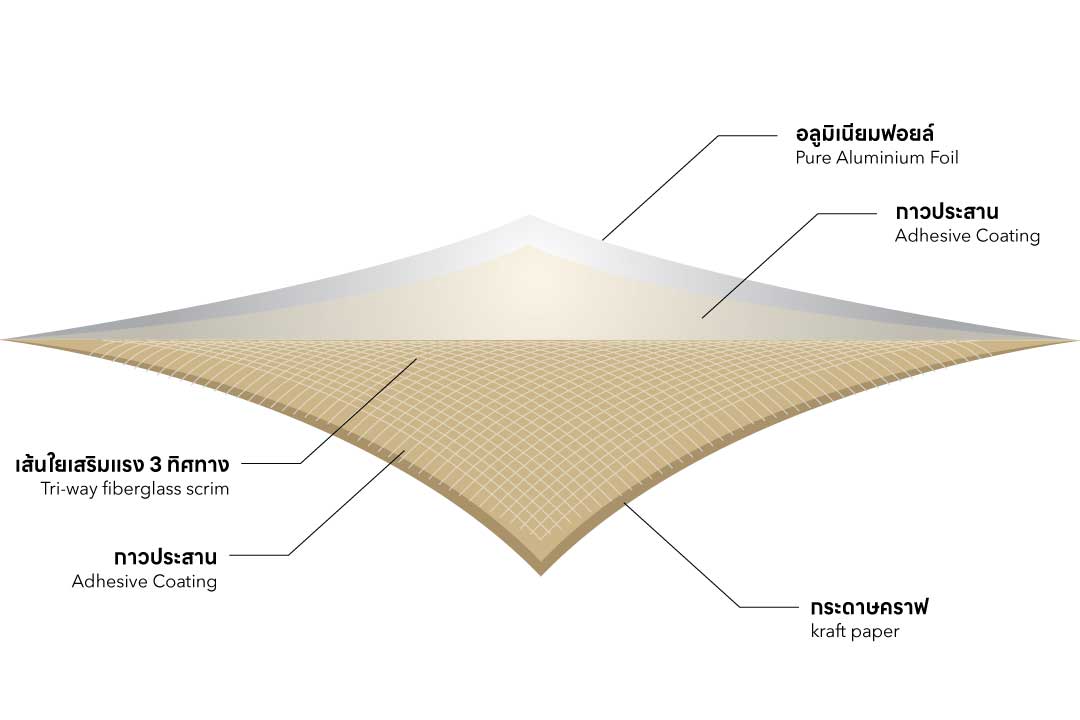
Image - Heat Reflective Aluminum Foil with Three-Directional Fiber Reinforcement
Prevents Moisture Penetration into Insulation
Insulation without all-side aluminum foil heat reflection wrapping, whether unwrapped or wrapped on 1 or 2 sides, can absorb moisture into the insulation material, reducing its effectiveness.
All-side aluminum foil wrapping helps prevent water droplets or moisture from directly contacting the insulation material. Instead, moisture collects on the foil surface and evaporates when heated. Since it's pure aluminum, it won't rust when exposed to moisture.
Why Wall Insulation Needs 5-Side Glass Cloth Wrapping and 1-Side Foil
Glass Cloth with Flame Retardant is a 0.20mm thick fabric woven from glass fiber. It has a porous characteristic that can absorb sound and is coated with fire-resistant acrylic resin. Glass cloth comes in two types: with and without flame retardant coating.
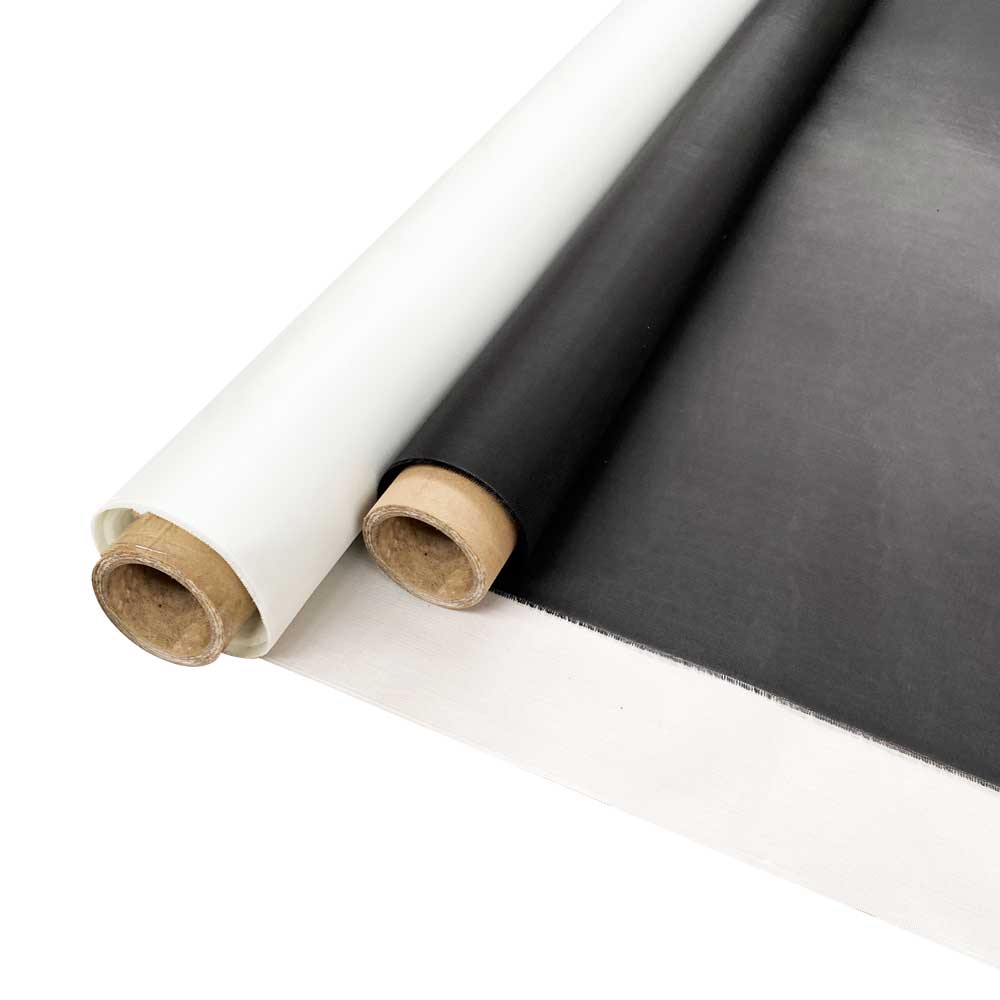
Image - Black and white glass cloth for thermal insulation wrapping
We use flame-retardant coated glass cloth for wrapping because once we close the ceiling or wall, we can't see the insulation at all. If the materials we use in insulation systems can catch fire, even if the insulation itself is non-flammable, fire can still spread through the wrapping material
We recommend 5-side glass cloth wrapping with 1-side aluminum foil because in wall thermal and acoustic insulation systems, the insulation is hidden within lightweight walls. The chance of encountering water droplets or moisture is less than with roof insulation or ceiling insulation.
Using 1-side foil to reflect heat radiation from outside the building and 5-side glass cloth wrapping to absorb sound inside the building is more effective than all-side aluminum foil wrapping.
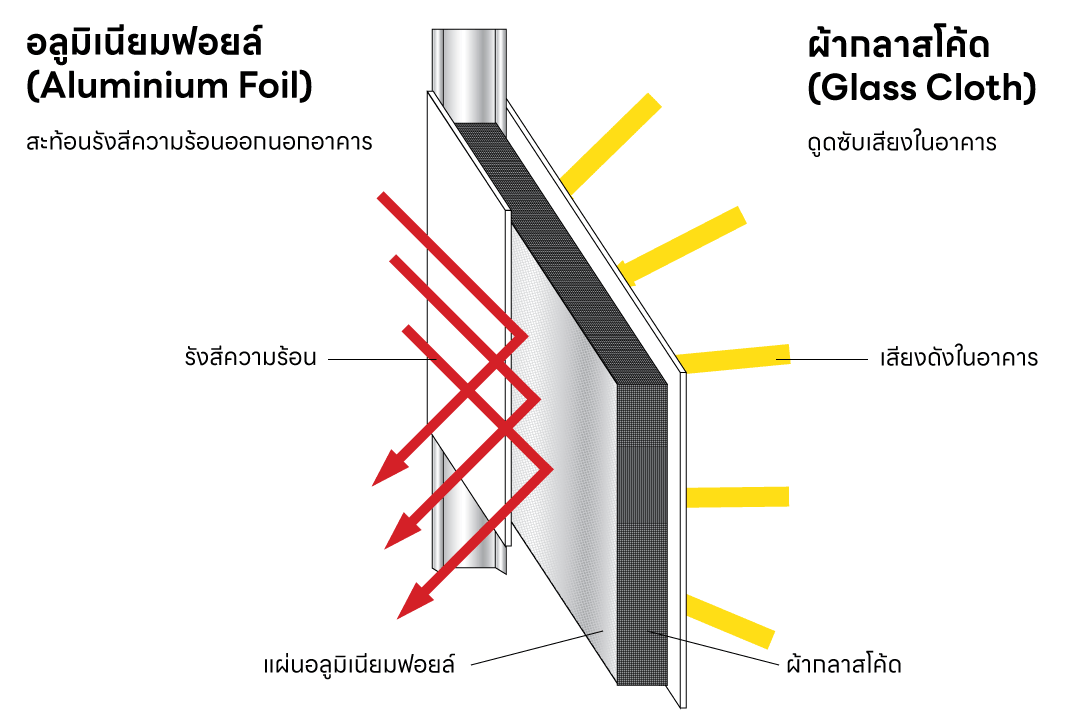
Image - Aluminum Foil Reflects External Heat Radiation and Glass Cloth Absorbs Internal Sound
One-Side Aluminum Foil Reflects 95% of Heat Radiation
For optimal effectiveness of aluminum foil, the foil side should face the direction of incoming heat. For example, in roof or ceiling systems, face it toward the roof; for wall systems, face it toward the exterior wall.
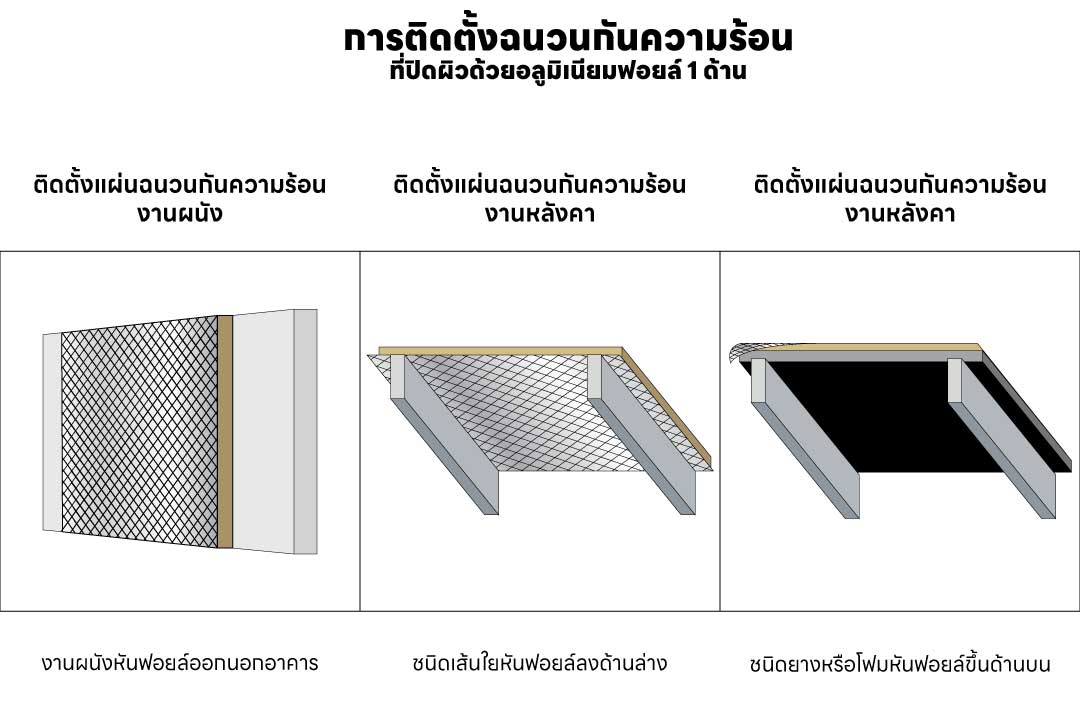
Image - Installing Heat Reflective Aluminum Foil with Foil Side Facing Outward
In some roof insulation systems where only one side has aluminum foil and it faces downward, this is done to prevent glass wool or rock wool fibers from falling onto building occupants and to maintain a clean, attractive appearance.
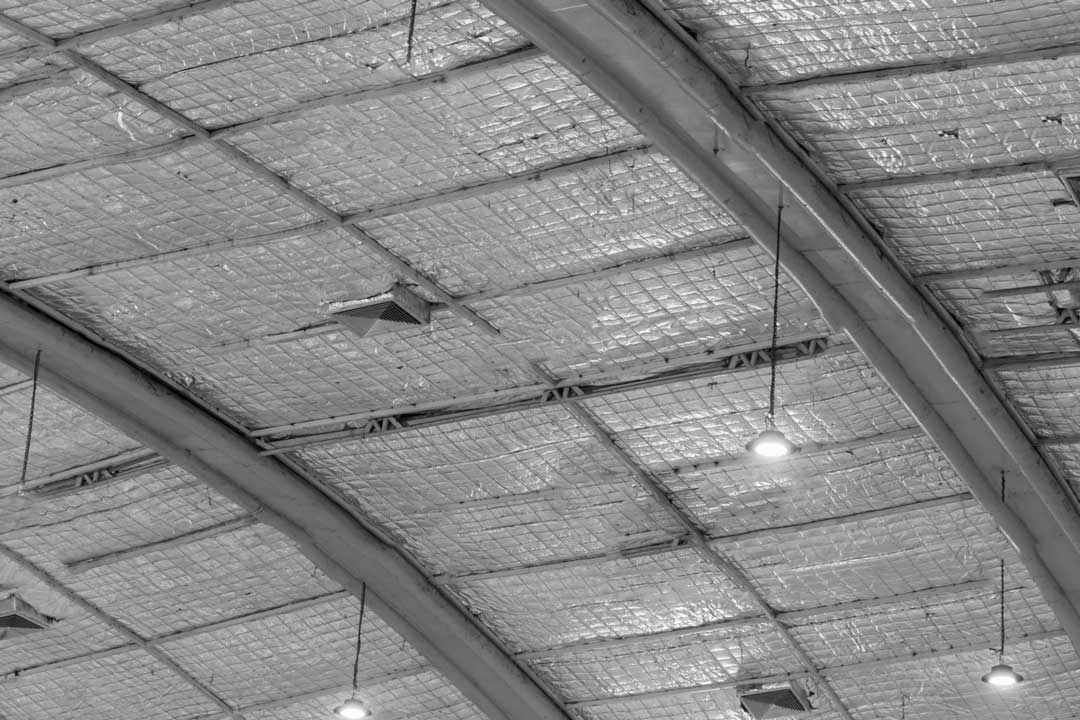
Image - Roof Installation with Aluminum Foil-Faced Insulation Creates an Attractive Roof System
5-Side Glass Cloth Wrapping Prevents Dust Shedding
The material used to wrap insulation on all sides is meant to prevent dust from insulation fibers. The advantages and disadvantages vary depending on the wrapping material. You can read and compare insulation wrapping material properties in this article.
5-Side Glass Cloth Wrapping Enhances Sound Absorption
With 5-side glass cloth wrapping, we face the glass cloth side toward the interior building wall. The porous nature of glass cloth allows sound to pass through to the insulation material inside, which absorbs the sound instead of reflecting it back.
This differs from aluminum foil sheets which have a smooth, shiny surface - when sound hits the aluminum foil surface, it reflects back instead of being absorbed.
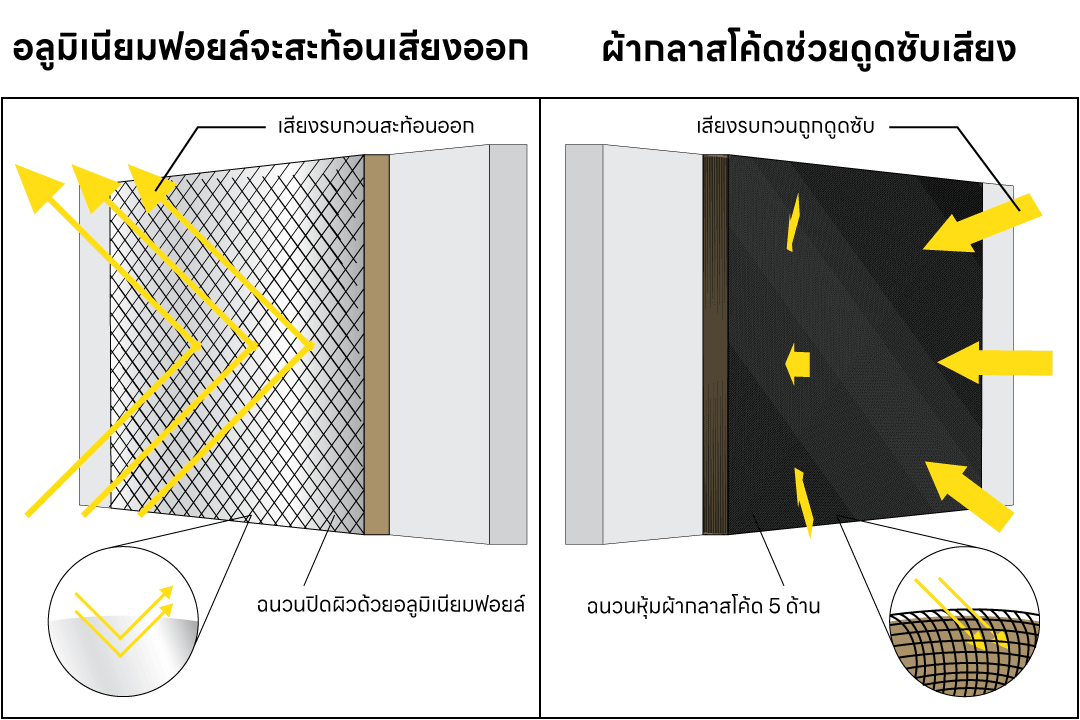
Image - Comparison of Sound Absorption between Glass Cloth and Aluminum Foil Wrapping


