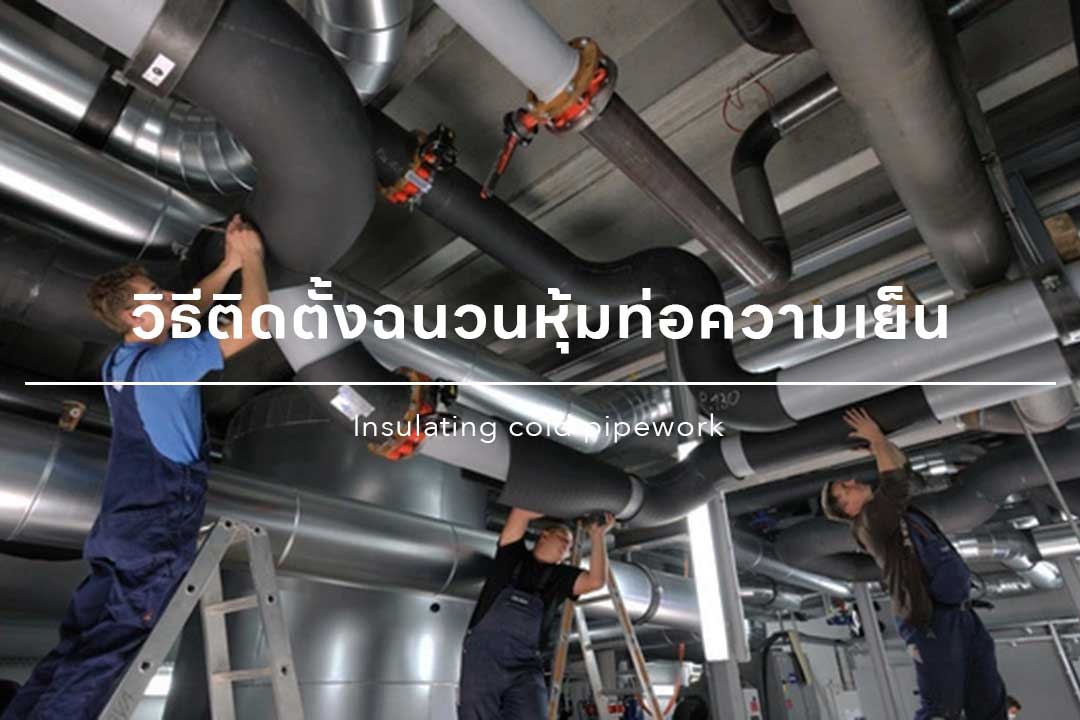
Methods of Insulating Air Ducts and Joints with Black Rubber Insulation
This article explains how to insulate air ducts with black rubber insulation for air ducts, chilled water pipes, joints and valves to maintain the temperature of refrigerant or chilled water in pipes and prevent condensation. Therefore, insulation is extremely important for both aesthetic appeal and insulation efficiency.
Incorrect insulation installation wastes both effort and time. Sometimes damaged insulation or air conditioning damage requires system removal or work rejection. Selecting quality insulation and proper installation are therefore critical factors.
3T Recommendations
If you want to know more details about black rubber insulation, types of black rubber insulation, and other applications, you can read more at
Insulating Air Ducts Using Tubular Black Rubber Insulation
Cutting Air Duct Insulation
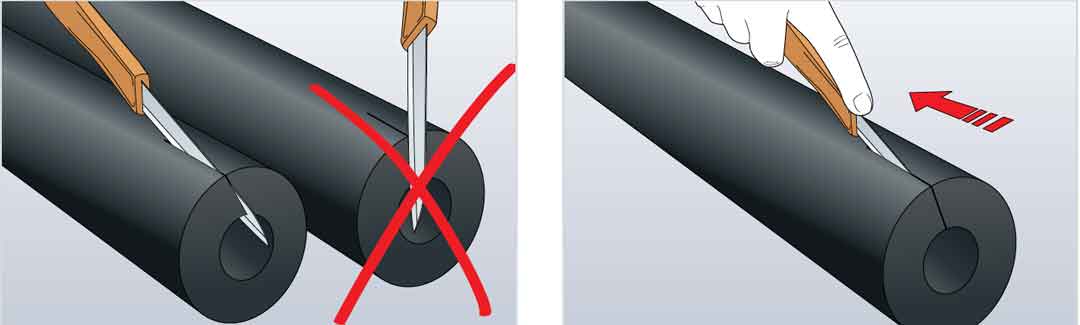
Image - Slitting Air Duct Insulation
When cutting, keep the blade sharp with an acute angle for scoring the insulation (avoid holding the knife handle too high).
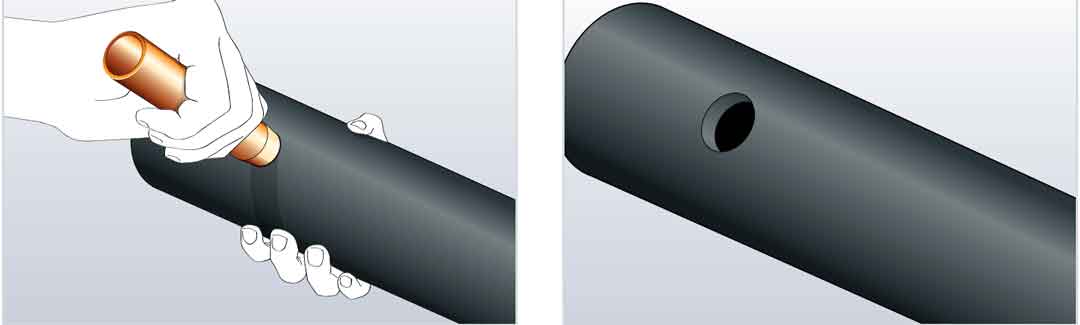
Image - Punching Holes in Air Duct Insulation
To make holes in insulation, use a pipe to punch holes in the insulation.
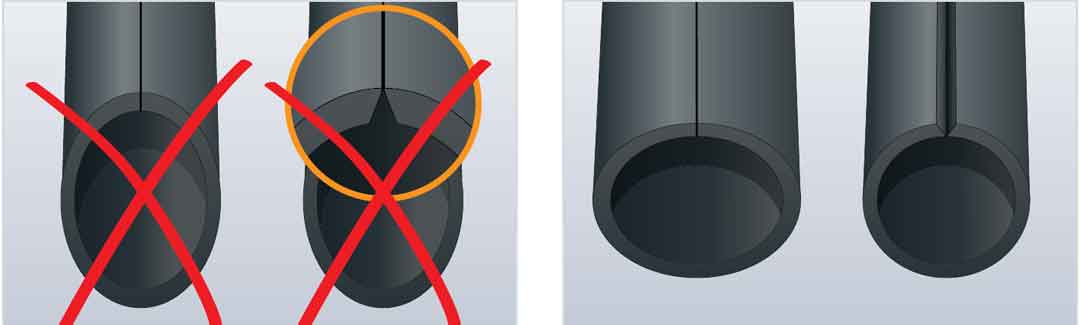
Image - Air Duct Insulation Should Be Slit on Smooth Surface
Cut black rubber insulation on a smooth surface.
Installing Air Duct Insulation on New Pipe Runs Using Sleeve-On Method
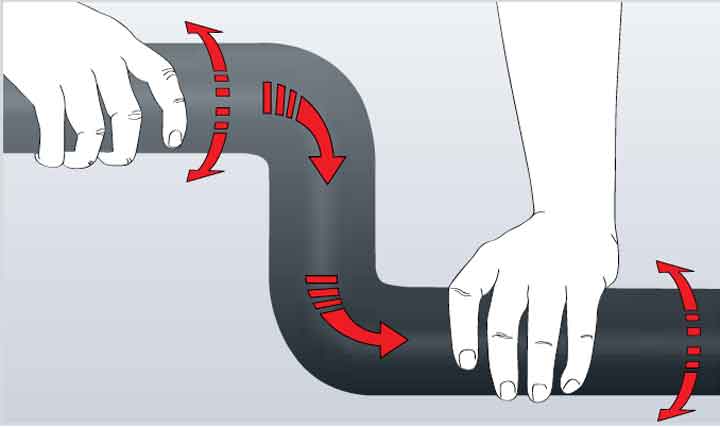
Image of Sleeve-On Method
When installing tubular air duct insulation, we can slip it over pipes and slide it into various joints.
Recommendations
Do not attempt to force insulation around tight corners as this may cause the insulation to tear.
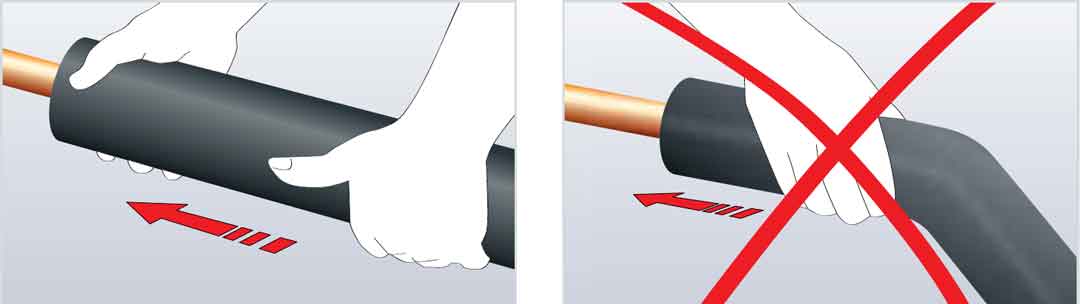
Image of Correct Fitting and Incorrect Insulation Pulling
However, in some cases where corners are very tight and we force the insulation around narrow corners, it will cause the insulation to wrinkle and form ridges, reducing the thickness in that area from the calculated amount. When insulation thickness decreases, there is a risk of condensation in that area, leading to damage to pipes and insulation.
Installing Air Duct Insulation for Pre-Installed Pipes Using Snap-On Method
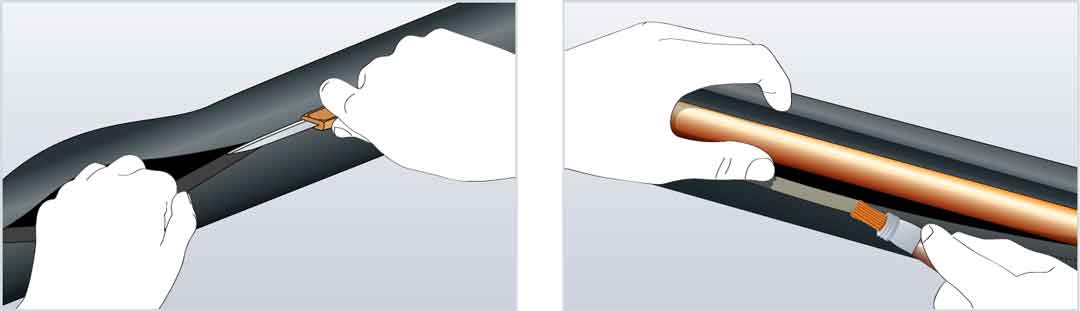
Image of Slitting Insulation and Applying Adhesive to Joints
1. Use a sharp knife to slit the air duct insulation along its entire length
2. Fit the insulation over the pipe to be installed and apply adhesive to both sides of the slit edges
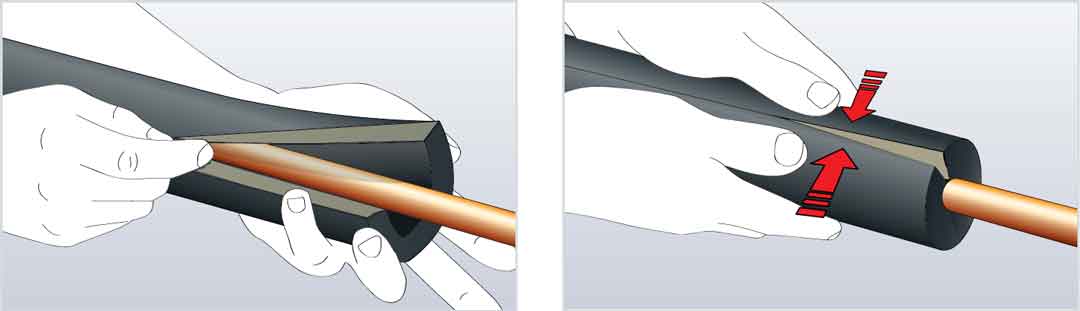
Image - Installing Air Duct Insulation
3. Allow the adhesive to dry. You can test by touching the glued area with your finger
4. Press the insulation edges together to bond them
Multi-layer Air Duct Insulation
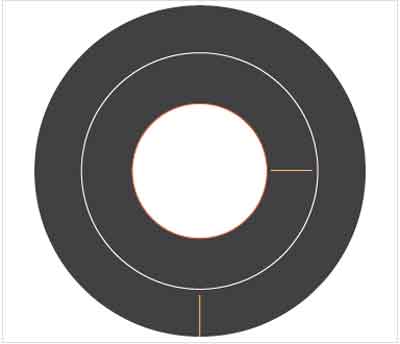
Image - Cross-Section of Black Rubber Insulation with Overlapping Slit Joints
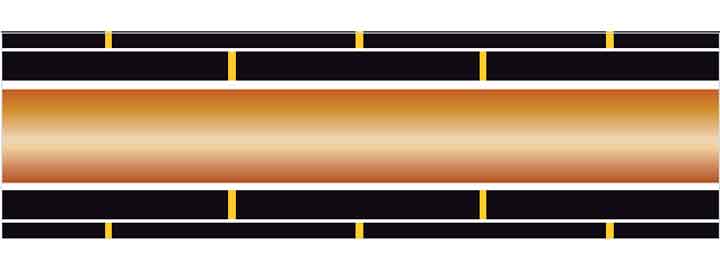
Image - Longitudinal Section of Black Rubber Insulation with Overlapping Slit Joints
Multi-layer insulation using tubular insulation
For the first layer of tubular insulation, we select the inner diameter size according to the pipe’s outer diameter. For the second layer, we select according to the O.D. of the first layer rubber insulation.
I.D. of layer 2 = O.D. of layer 1
Multi-layer insulation using tubular insulation combined with black rubber sheet insulation
If the pipe diameter after insulation wrapping is sufficiently large, we recommend using sheet-type black rubber insulation for the second layer because we can cut sheet insulation to fit the exact size of the first layer pipe.
Multi-layer insulation using tubular insulation combined with black rubber sheet insulation
In some cases where the OD pipe size is larger than 3 inches (89 mm), we can choose to use rubber sheet insulation for wrapping.
Recommendations
At the ends of the pipe insulation wrapping, it must be sealed with adhesive to fit tightly against the first layer insulation to prevent insulation sagging and internal air gaps. If the pipe is larger than 24 inches (600 mm), we must apply adhesive over the entire surface of both the first and second layer insulation during installation to prevent CUI (Corrosion under insulation).
Multi-layer insulation for smooth surfaces using black rubber sheet insulation
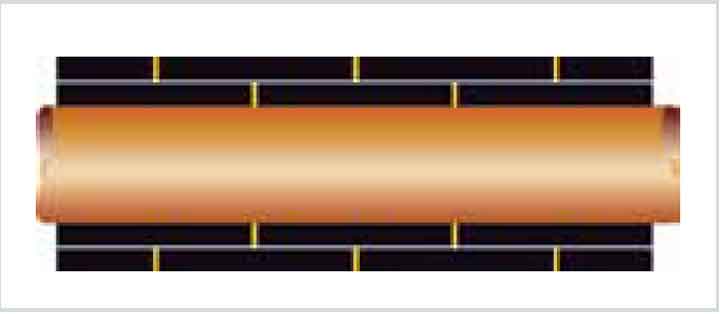
Image - Installing Black Rubber Insulation on Smooth Surface Materials
In cases where we apply multi-layer insulation, for layer 1 we apply adhesive over the entire pipe surface and the entire insulation sheet before installation. For layer 2, it must wrap tightly against the first layer, requiring adhesive application over the entire surface of the previous layer and the second layer insulation sheet.
At joint areas marked with yellow lines, we wrap by overlapping joints, and every joint must be sealed with insulation adhesive.
Using ArmaFlex Template
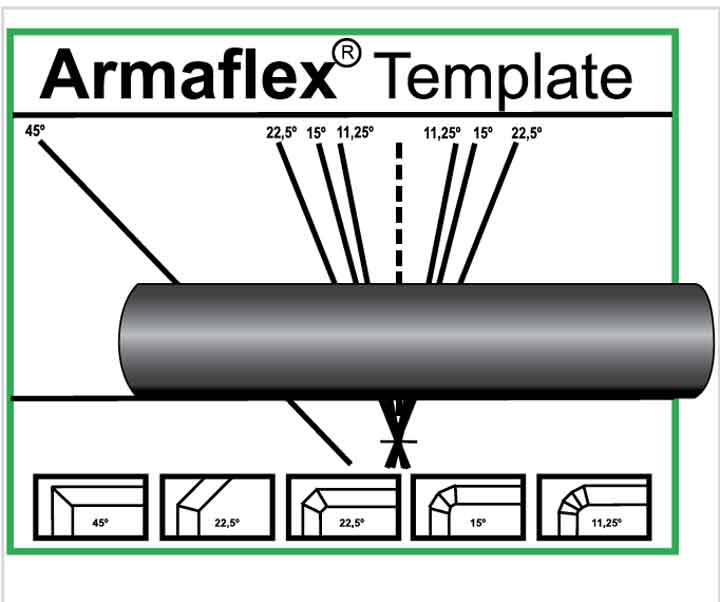
Image - Armaflex Template
Cutting various joints can use the patterns drawn on ArmaFlex Class1 black rubber insulation boxes, including cuts at 11.25°, 15°, 22.5° and 45° which cover practical applications.
Cutting 90° Elbow Insulation
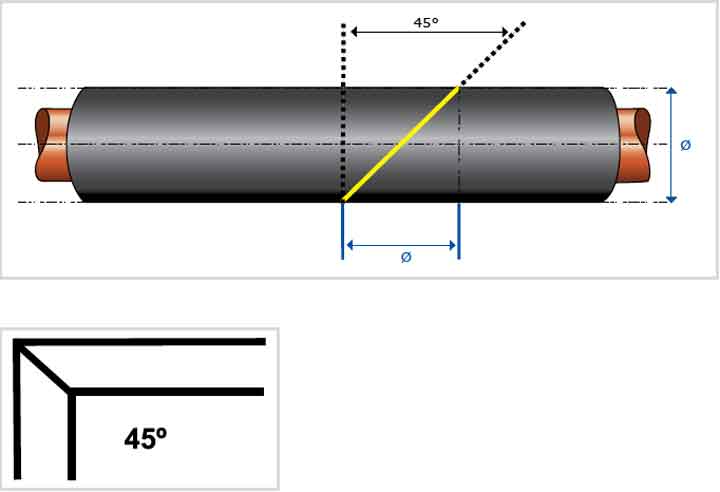
Image - Cutting into 90° Angle
Cutting at 45° angles along yellow lines allows installation at 90° angles.
Cutting 45° Elbow Insulation
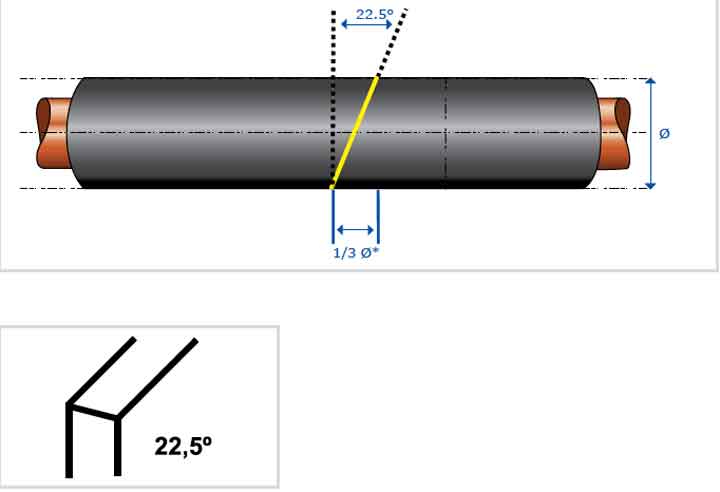
Image - Cutting into 45° Angle
Cutting at 22.5° angles along yellow lines allows installation at 45° angles.
Cutting 90° Elbow Insulation with 1 Middle Piece
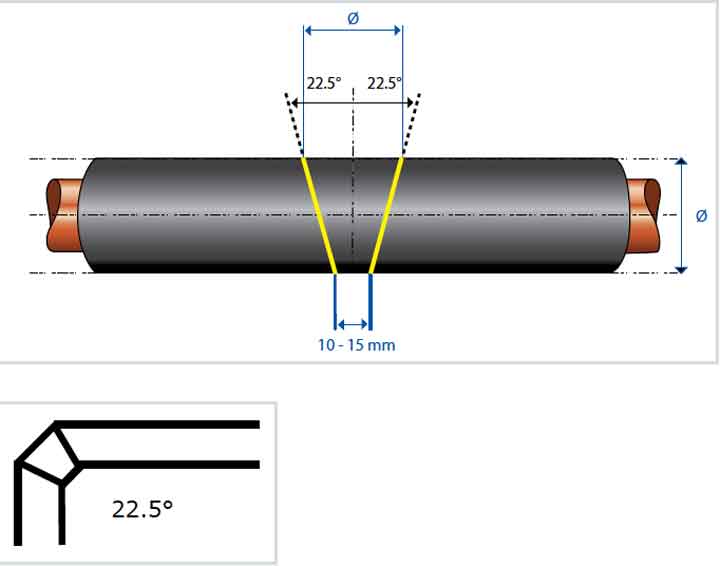
Image - Cutting into 90° Angle with 1 Middle Piece
Cutting at 22.5° angles along yellow lines at 2 positions allows installation at 90° angles with 1 middle piece.
Cutting 90° Elbow Insulation with 2 Middle Pieces
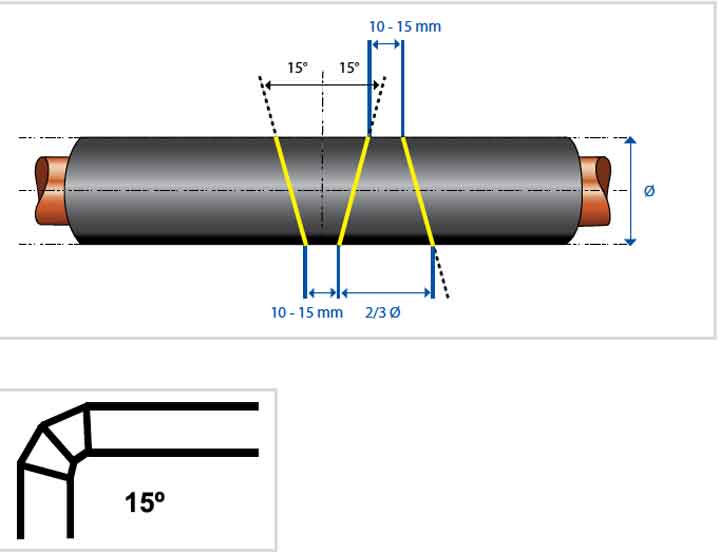
Image - Cutting into 90° Angle with 2 Middle Pieces
Cutting at 15° angles along yellow lines at 3 positions allows installation at 90° angles with 2 middle pieces.
Cutting 90° Elbow Insulation with 3 Middle Pieces
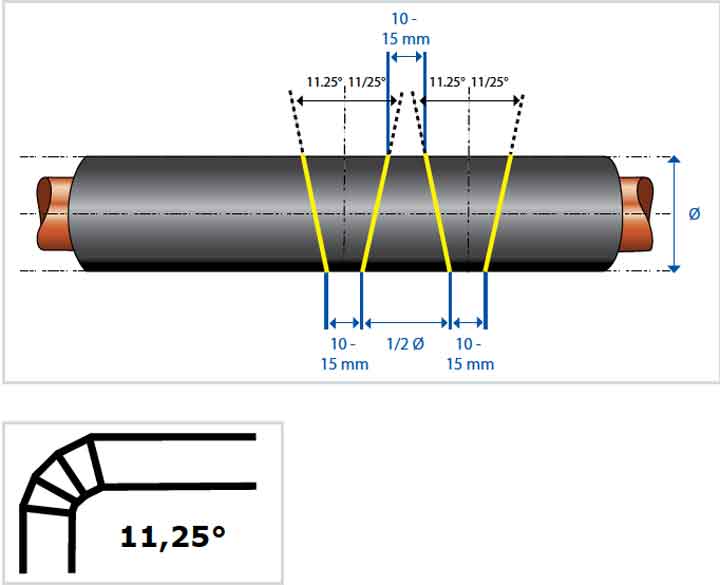
Image - Cutting into 90° Angle with 3 Middle Pieces
Cutting at 11.25° angles along yellow lines at 4 positions allows installation at 90° angles with 3 middle pieces.
Cutting Insulation into Plus Sign (+)
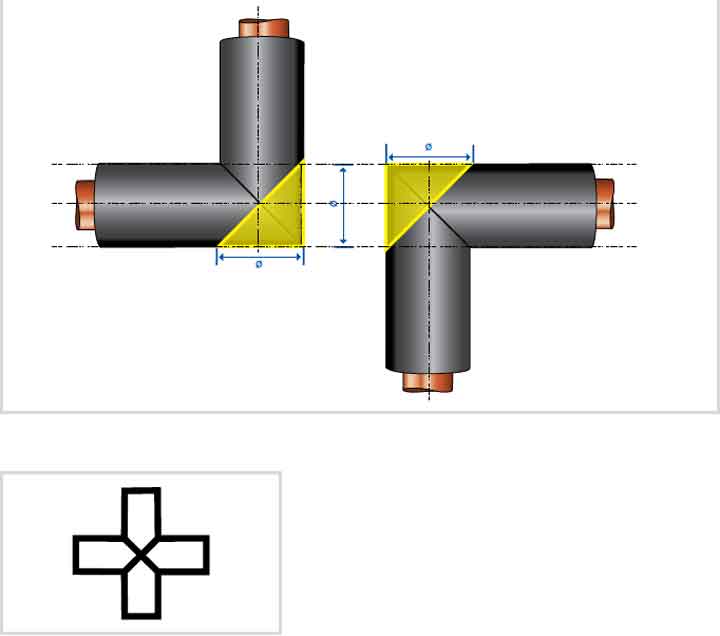
Image - Cutting into Plus Sign (+)
We cut two 90° elbows and cut them again at 45° angles at the elbow corners along the yellow lines in the image.
Cutting Insulation into Y-Pipe
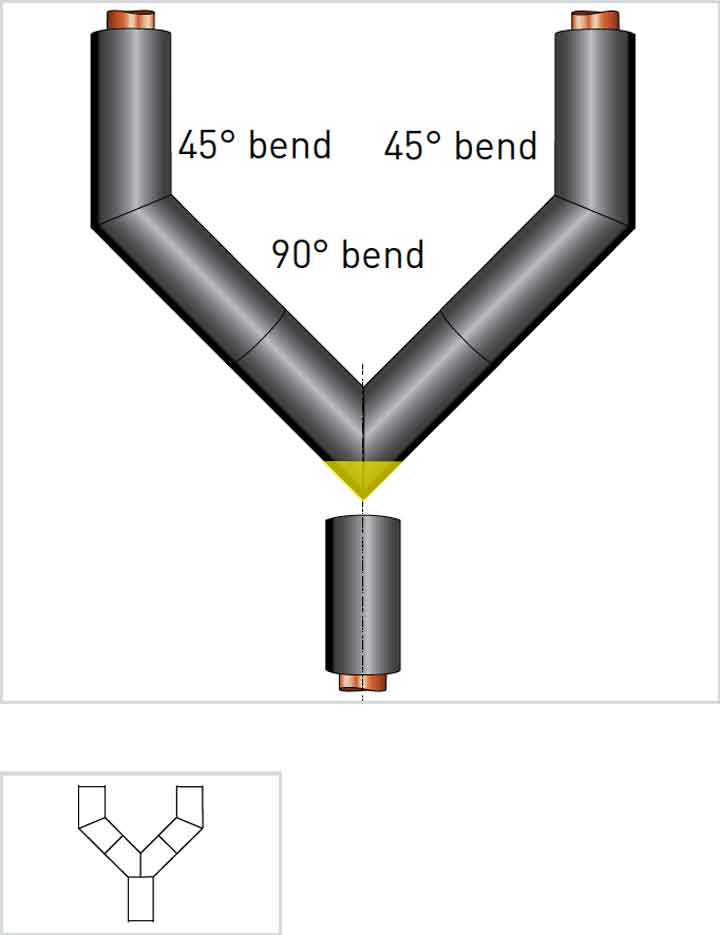
Image - Cutting Y-Pipe
We cut two 45° elbows and one 90° elbow, then use insulation adhesive to attach the cut elbows as shown in the image, cut the corners off the 90° elbow, and attach straight pipe insulation with insulation adhesive.
Cutting Insulation into T-Bend Pipe
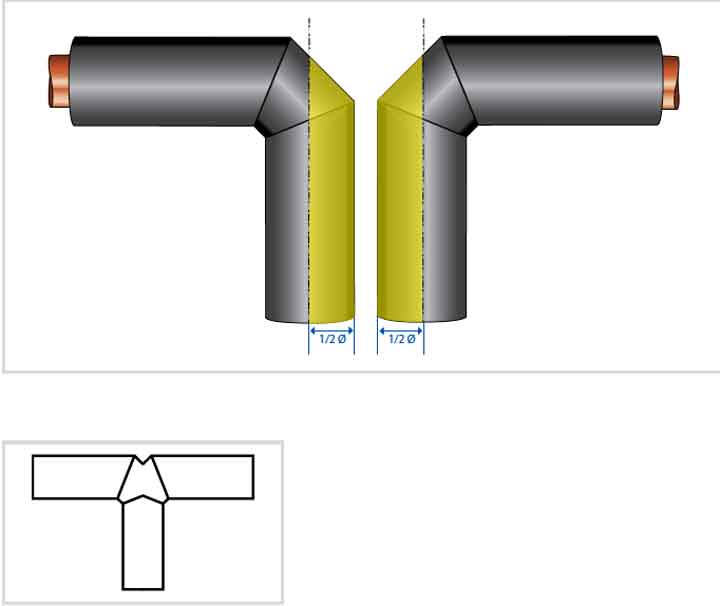
Image - Cutting T-Bend Pipe
Cut two 90° bends and split the pipe along the middle following the yellow line, then use insulation adhesive to bond both pieces together.
Cutting 3-Way T-Piece Insulation
Method 1 “Punched Hole” T Piece
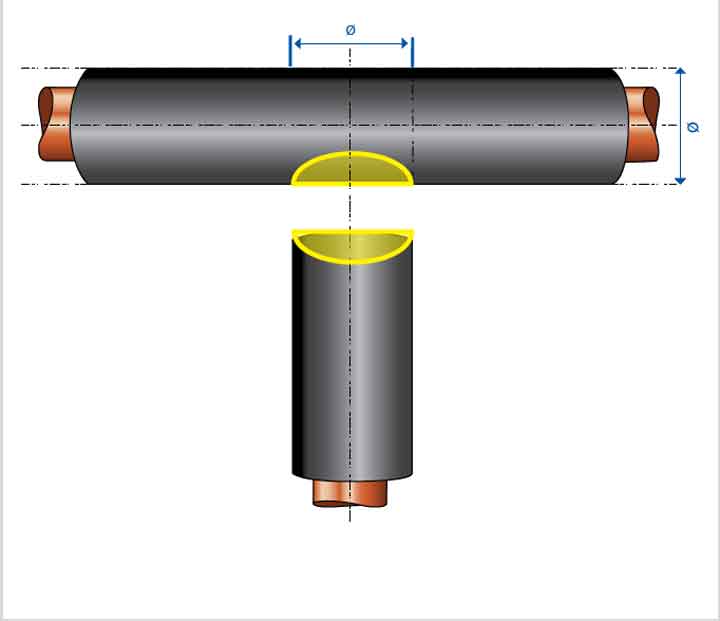
Image - Cutting Insulation Using Punched Hole Method
- Punch a hole in the insulation area where installation is required using a pipe of the same size.
- Carve out the insulation material to form a semicircle along the yellow line.
- Use insulation adhesive to seal the joint areas to complete the work.
Method 2 “Mitre-Block” T Piece
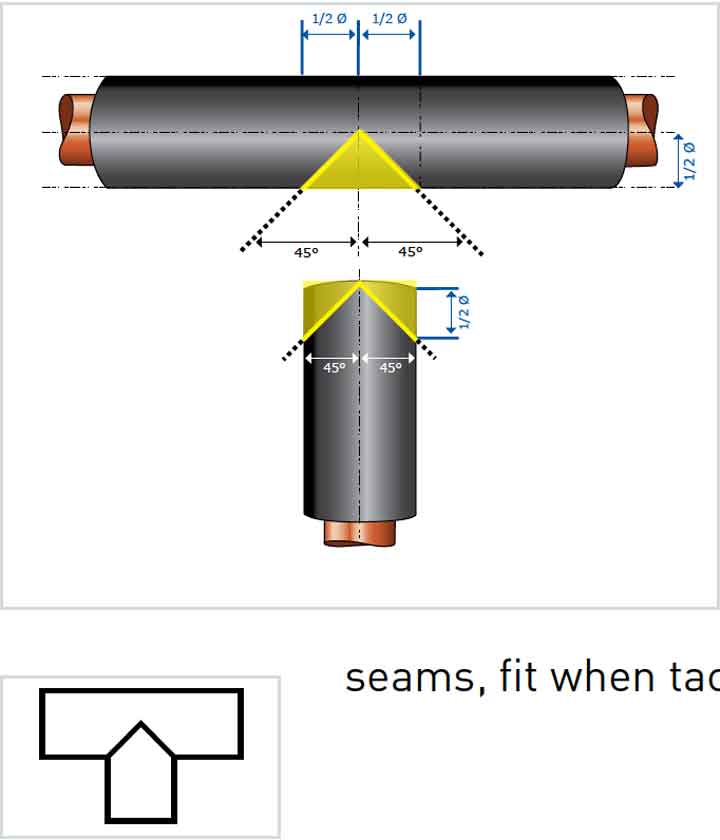
Image - Cutting Insulation Using Mitre-Block Method
- Cut the black rubber insulation at the end of the branch pipe at a 45° angle.
- Cut the black rubber insulation at the main pipe area at a 90° angle.
- Connect the grooved insulation pieces together with insulation adhesive.
Insulating 90° Threaded Joints
Method 1: Use larger-sized insulation to cover over
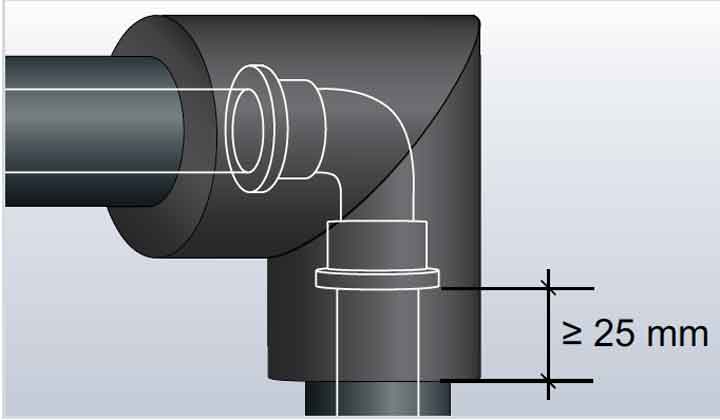
Image - Insulating Threaded Joints by Using Larger Pipe
- The inner diameter size of insulation covering the joint equals the original pipe size + thickness of installed insulation. For example, 10 mm pipe with 19 mm thick insulation requires joint insulation of 48 mm size with 19 mm thick insulation.
- Wrap joint insulation with approximately 25 mm overlap with straight pipe insulation.
- Use insulation adhesive to seal the ends in the overlapping areas.
Method 2: Use tight-fitting 90° insulation wrapping
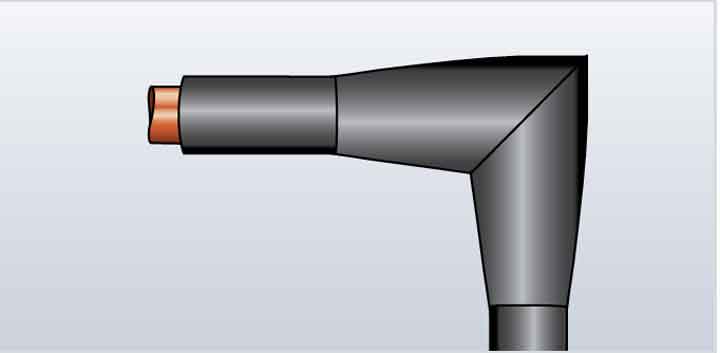
Image - Insulating Threaded Joints Using Tight-Fitting Method
- The insulation used to wrap threaded joints uses tubular insulation sized equal to the O.D. of the threaded joint with minimum length of 40 mm on each side from the threaded joint connection.
- For pipes larger than 35 mm, cut the insulation material at the insulation ends into wedge shapes and wrap tightly against the straight pipe, then use adhesive to seal the joint areas.
Insulating T-Piece Offset Joints
Method 1
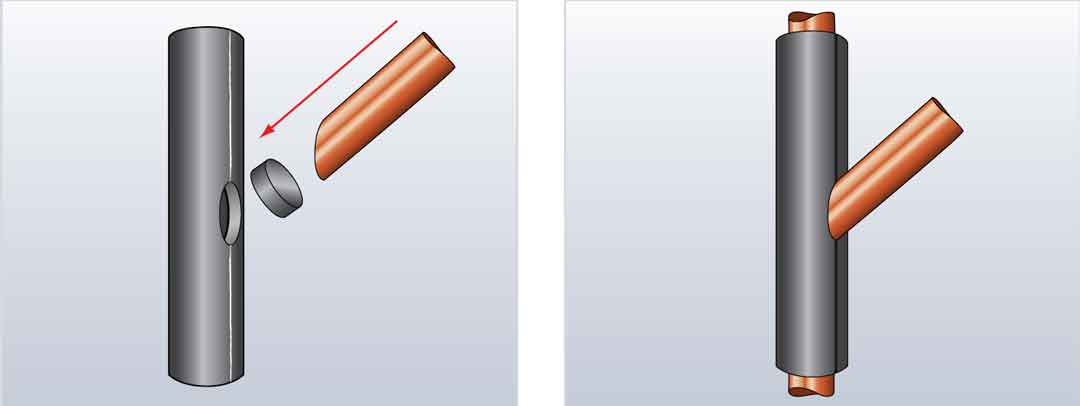
Image - Using Sharp-Ended Pipe to Punch Out Insulation Material
1. Use a pipe with sharp end to punch holes in insulation along the wrapping direction
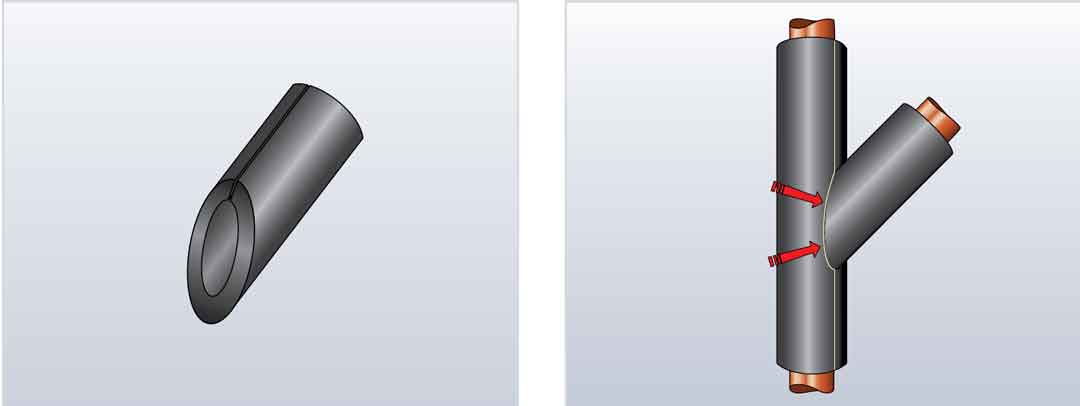
Image - Cutting Branch Pipe at 45° Angle
2. Cut the branch pipe insulation at 45° angle and carve the insulation end into a semicircle
3. Use insulation adhesive to attach the branch pipe and main pipe together
Method 2
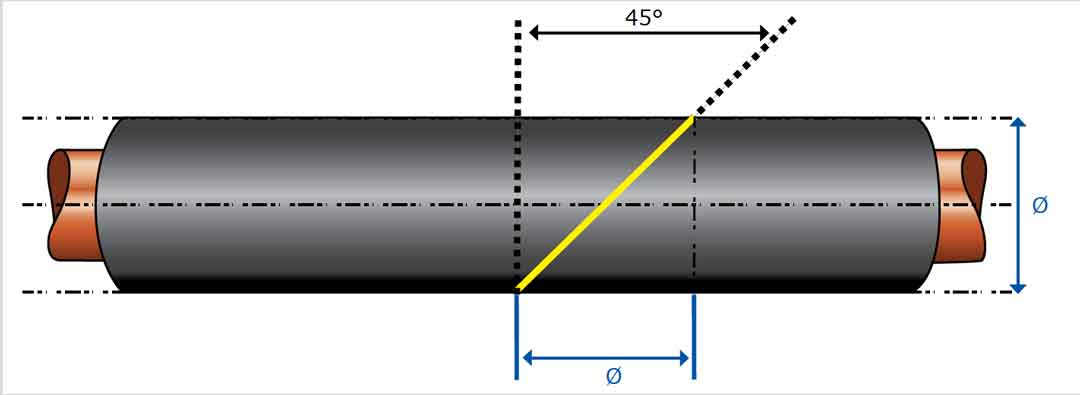
Image - Cutting Insulation at 45° Angle
1. Cut the branch pipe insulation at 45° angle along the yellow line
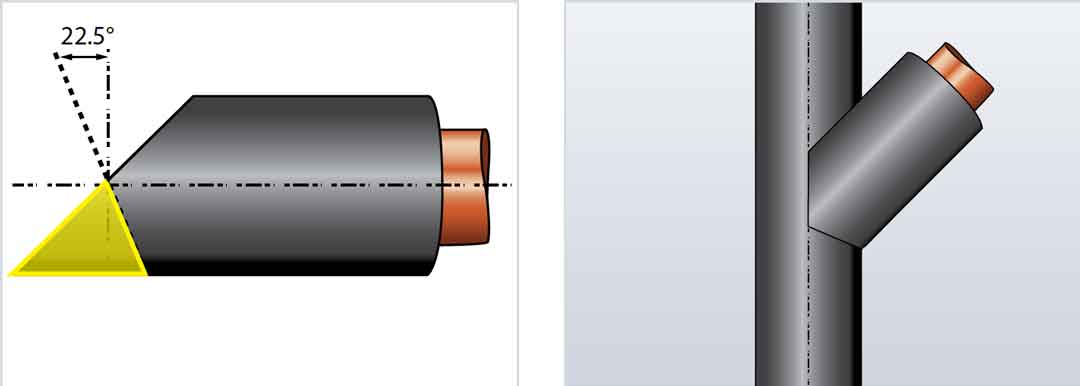
Image - Cutting Insulation at 22.5° Angle
2. Cut the other side insulation at 22.5° angle
3. Use adhesive to seal the branch pipe insulation to the main pipe
Recommendations
If the pipe diameter exceeds 500 mm, adhesive should be applied to the underside of the pipe to prevent insulation vibration.
Wrapping 90° Bends with Sheet Insulation
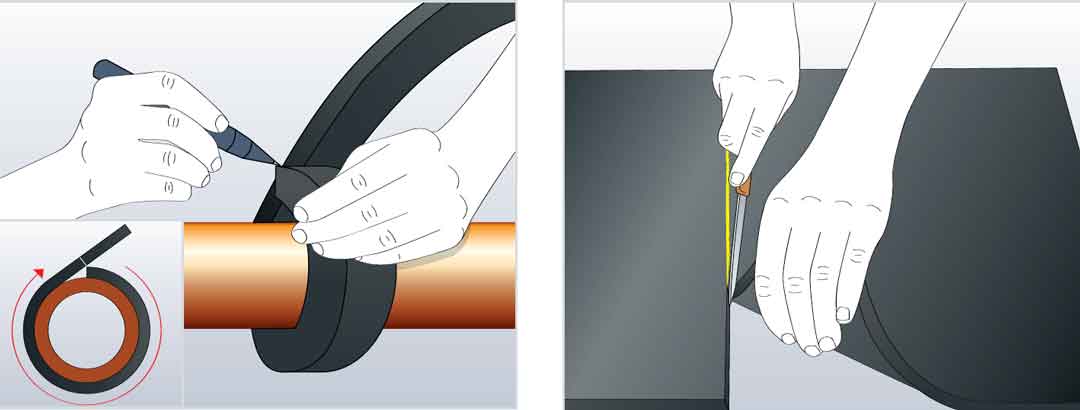
Image - Using Strip to Find Pipe Circumference
Find the elbow radius and pipe circumference to be wrapped, and cut insulation according to the pattern below.
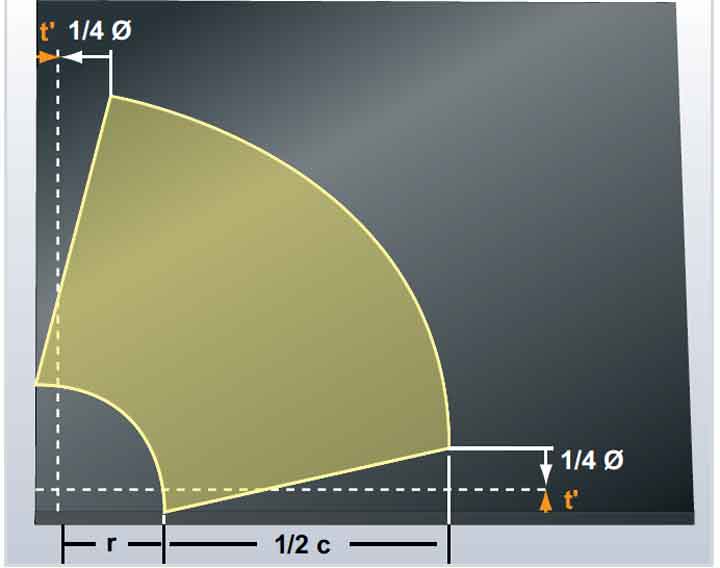
Image - Pattern for Cutting Black Rubber Insulation for Elbow Wrapping
r = elbow radius (mm)
1/2 C = half of pipe circumference (mm)
t’ = insulation thickness (mm)
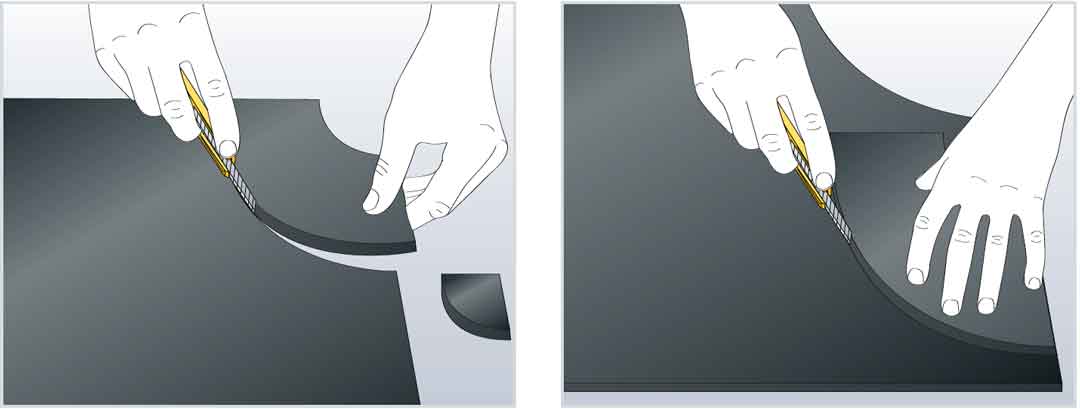
Image - Cutting Insulation for Elbow Wrapping with Black Rubber Sheet Insulation
Cut insulation according to the first drafted pattern, then use the first piece as a template for cutting the second piece.
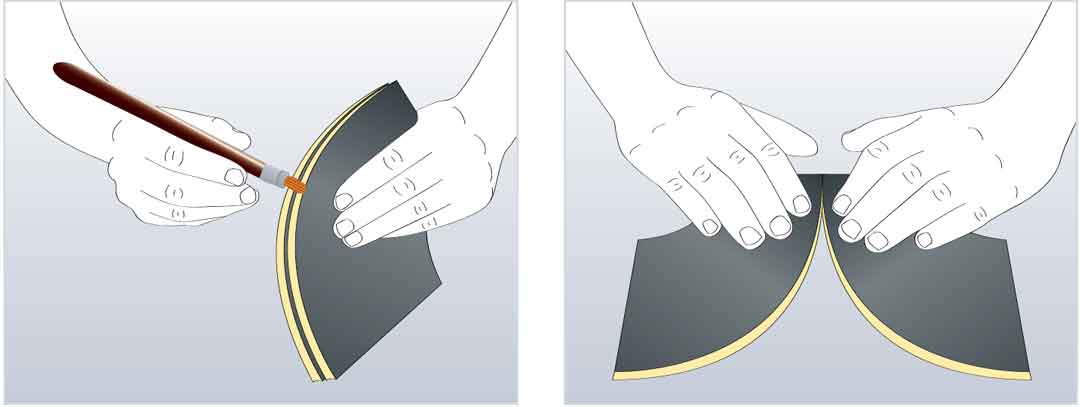
Image - Installing Insulation for Elbow Wrapping with Adhesive
Apply adhesive to the outer edges of insulation and bond both pieces together.
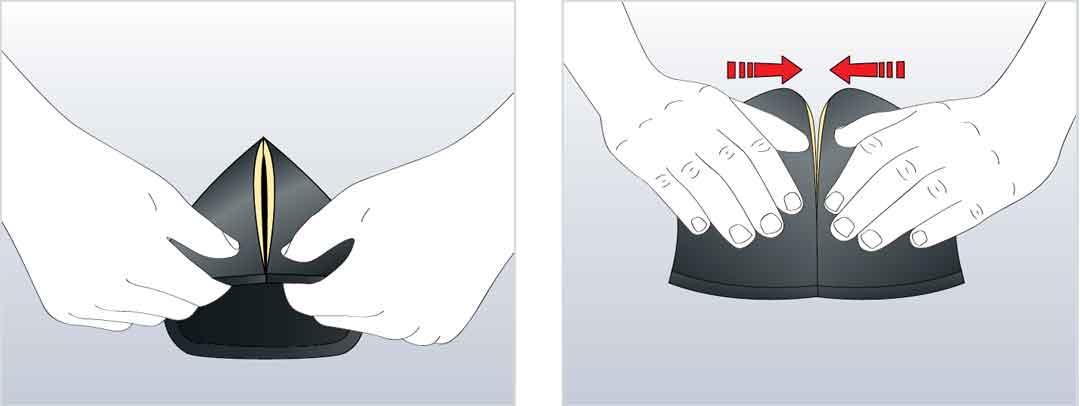
Image - Installing Insulation for Elbow Wrapping with Adhesive
Start bonding from the end areas first, then the middle, then press all parts to bond together.
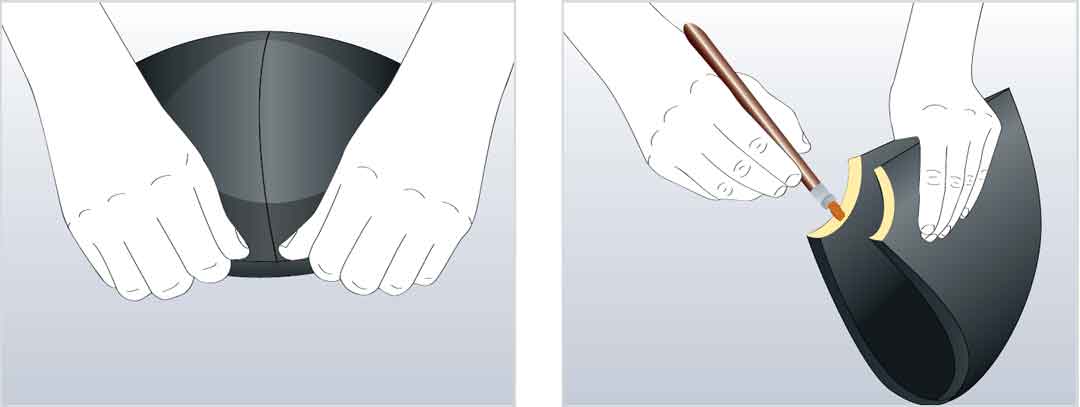
Image - Installing Insulation for Elbow Wrapping with Adhesive
Apply adhesive to the inner edges and set aside for installation.
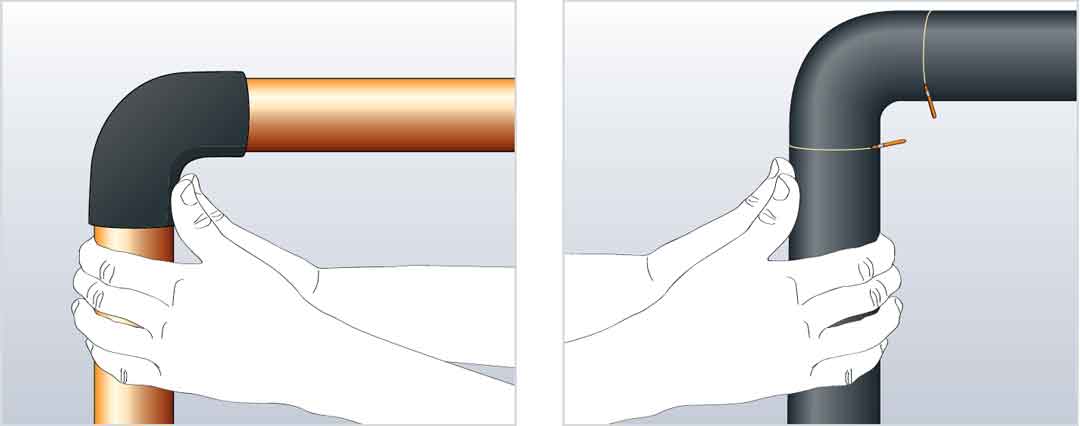
Image - Installing Elbow Insulation
Install insulation and seal joint areas with adhesive.
Insulating Reducers
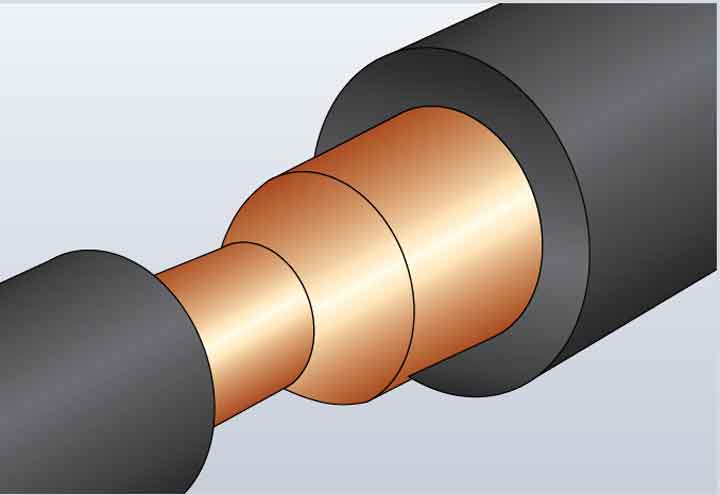
Image - Reducer Requiring Insulation
1. Use a pipe with sharp end to punch holes in insulation along the wrapping direction
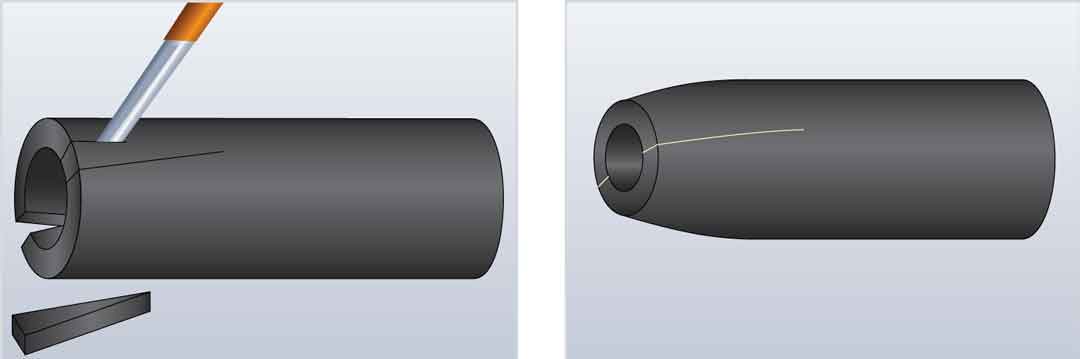
Image - Splitting Insulation Material into Wedges
Split the insulation end into wedge shape and connect the split areas with adhesive.
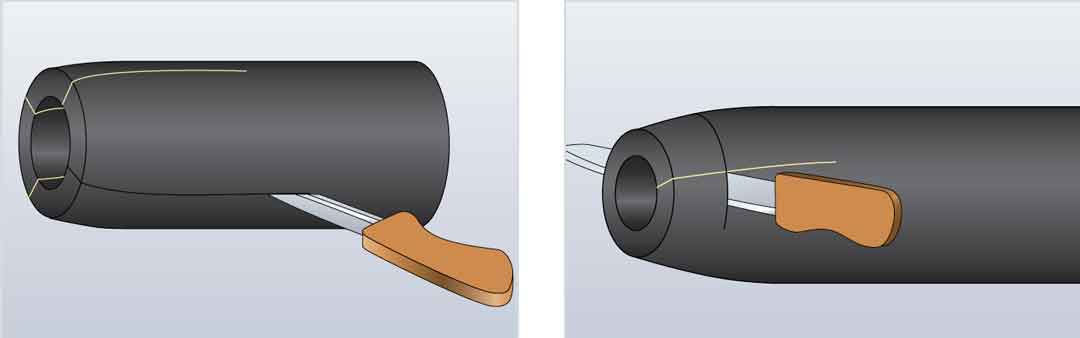
Image - Cutting Insulation for Reducer Wrapping
Cut the insulation end to equal the reducer length.
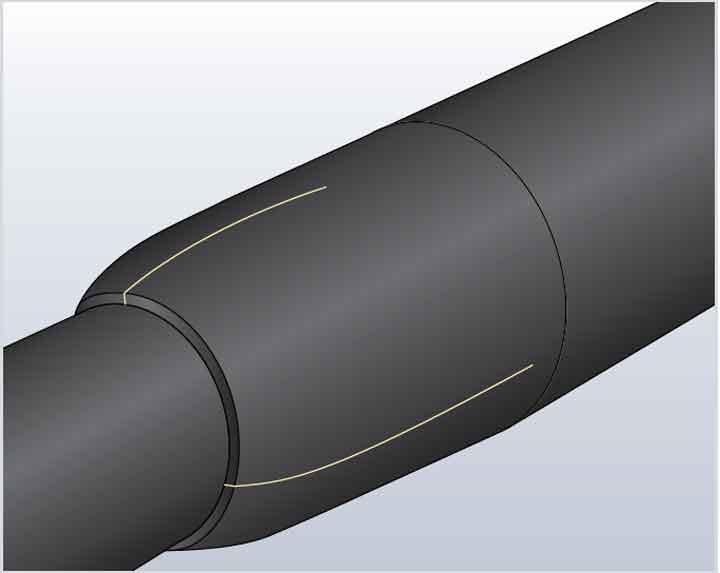
Image - Reducer Insulation After Installation
Use adhesive to seal all joints in the insulation wrapping to finish the work.
Wrapping 90° Bends with Sheet Insulation
Image - Using Strip to Find Pipe Circumference
1. Find the elbow radius and pipe circumference to be wrapped, and cut insulation according to the pattern below
Image - Pattern for Cutting Black Rubber Insulation for Elbow Wrapping
2. Cut elbow insulation template
r = elbow radius (mm)
1/2 C = half of pipe circumference (mm)
t’ = insulation thickness (mm)
Image - Cutting Insulation for Elbow Wrapping with Black Rubber Sheet Insulation
3. Cut insulation according to the first drafted pattern, then use the first piece as a template for cutting the second piece
Image - Installing Insulation for Elbow Wrapping with Adhesive
4. Apply adhesive to the outer edges of insulation and bond both pieces together
Image - Installing Insulation for Elbow Wrapping with Adhesive
5. Start bonding from the end areas first, then the middle, then press all parts to bond together
Image - Installing Insulation for Elbow Wrapping with Adhesive
6. Apply adhesive to the inner edges and set aside for installation
Image - Installing Elbow Insulation
7. Install insulation and seal joint areas with adhesive
Methods of Insulating Valves with Black Rubber Sheet Insulation
After wrapping pipes up to the valve section, we need to wrap the valve with black rubber sheet insulation as well.
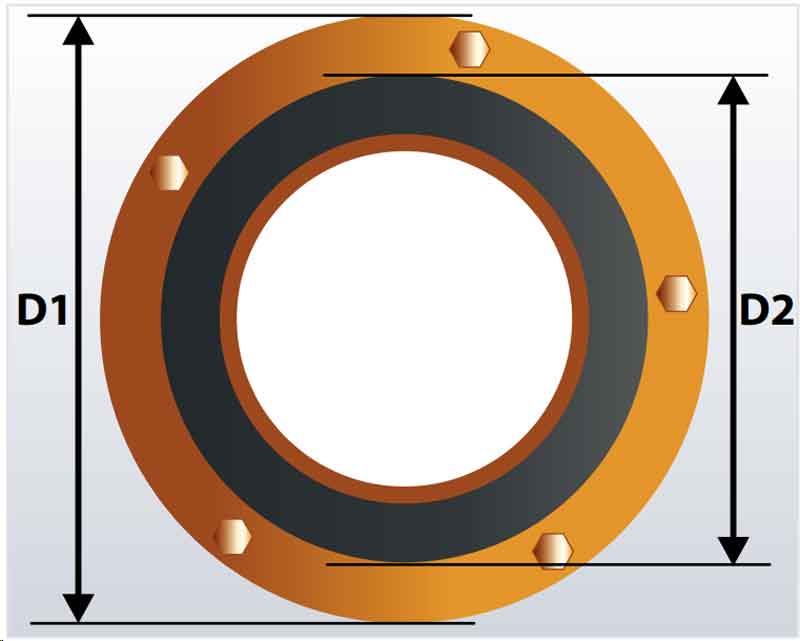
Image - Cross-Section of Valve Dimensions and Pipe Insulation Wrapped to Valve
1. Measure dimensions to cut black rubber to wrap the valve
- D1 = valve flange face diameter
- D2 = diameter of black rubber insulation pipe wrapped up to the valve
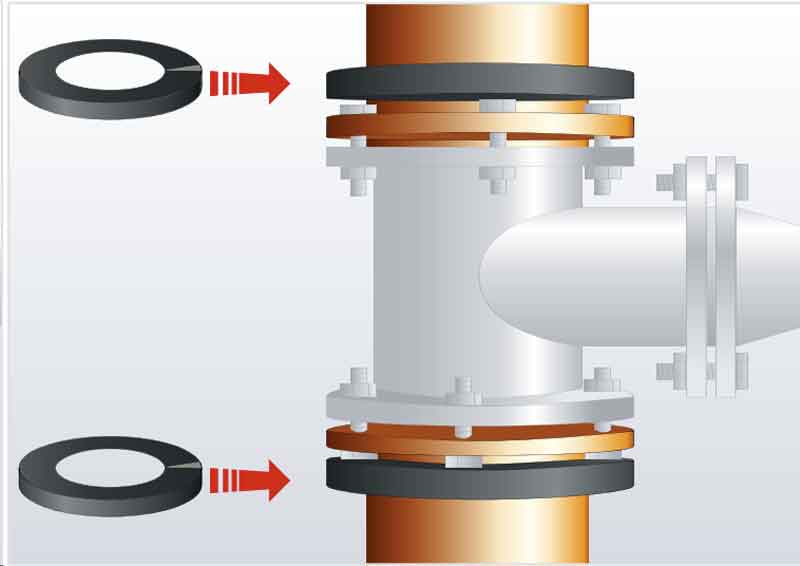
Cut Rubber Insulation Sheet into Ring to Wrap Over Pipe Insulation
2. Cut black rubber sheet into circles and wrap over the pipe
- Cut black rubber sheet into circles with outer diameter equal to D1 and inner diameter equal to D2.
- Use the cut black rubber sheet ring to wrap over the pipe with black rubber adhesive.
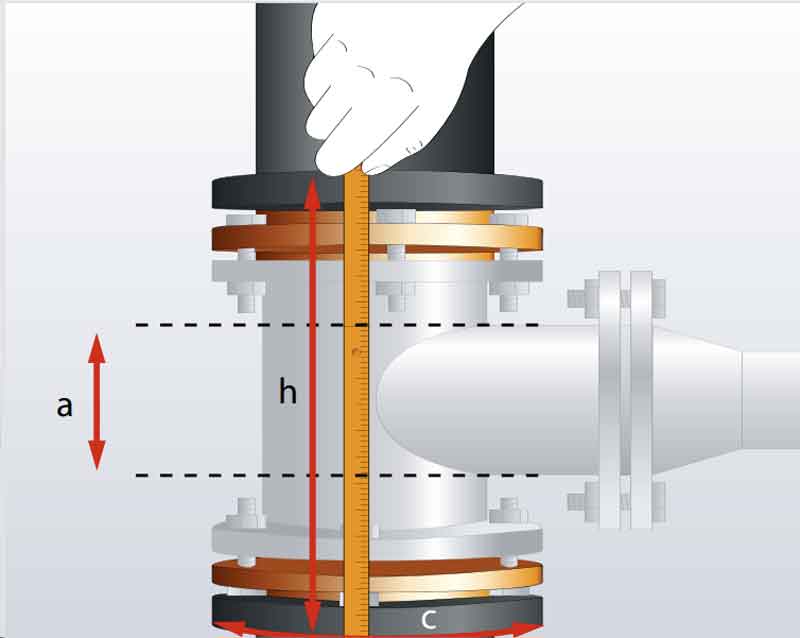
Image - Measuring Valve Body Dimensions for Black Rubber Insulation Wrapping
3. Measure valve dimensions for black rubber insulation wrapping
- h = height measured from outer edge of lower ring insulation sheet to outer edge at top
- a = valve neck diameter
- c = circumference of ring insulation sheet wrapping the valve
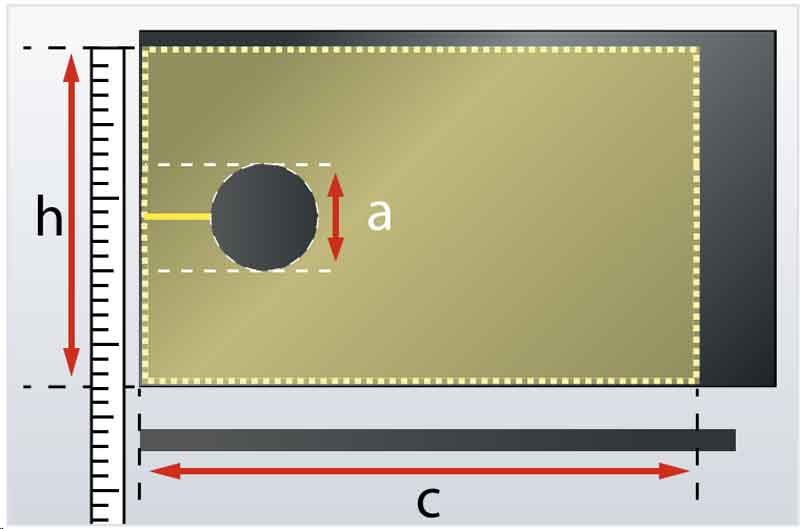
Image - Cutting Insulation Sheet for Valve Neck Wrapping
4. Method of cutting insulation sheet to wrap valve neck
- Use measurements h, a, c from measurements to cut on black rubber insulation sheet.
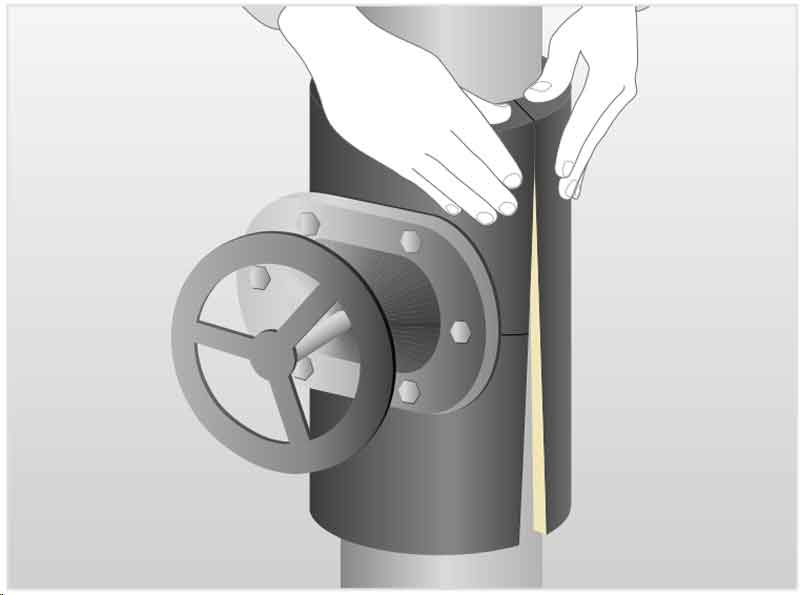
Image - Wrapping Valve with Black Rubber Insulation
5. After cutting the insulation sheet, wrap it over the valve body and secure with black rubber adhesive.
Methods of Wrapping Valve Neck with Black Rubber Sheet Insulation
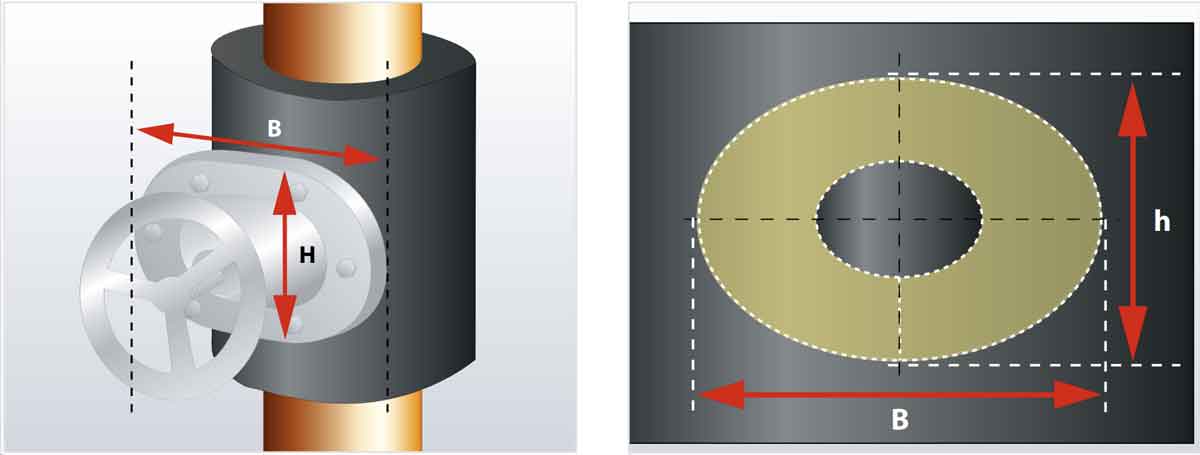
Image - Measuring Distances to Cut Insulation Sheet for Valve Neck Wrapping
1. Measure distances h and B to cut insulation sheet
- h = valve neck flange height
- B = valve neck flange height
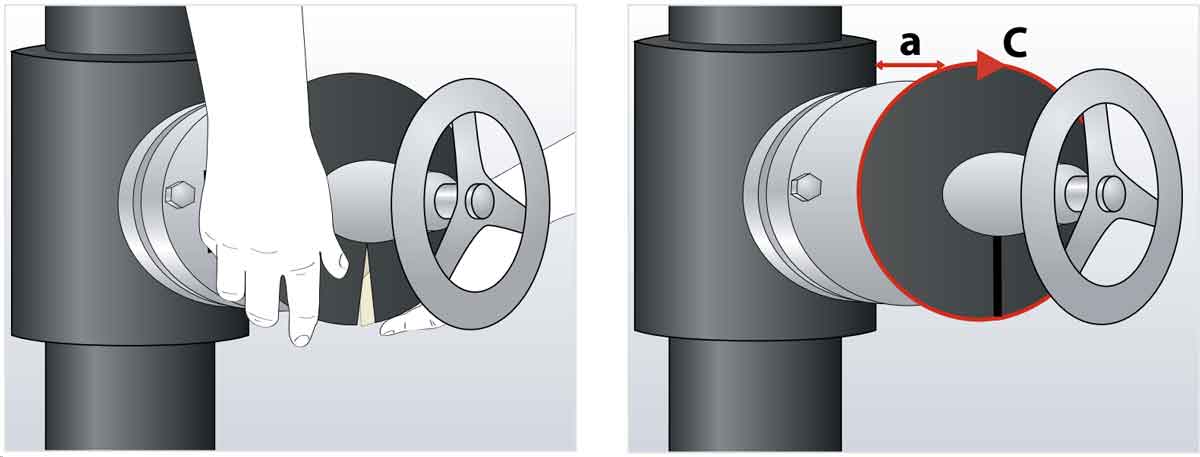
Image - Wrapping Insulation on Valve Stem and Measuring Distance from Valve Neck to Insulation Sheet
2. Wrap the cut insulation sheet to attach to valve stem and measure distances for valve neck wrapping
- a = shortest distance from valve neck base to valve stem insulation sheet
- C = circumference of valve stem insulation sheet
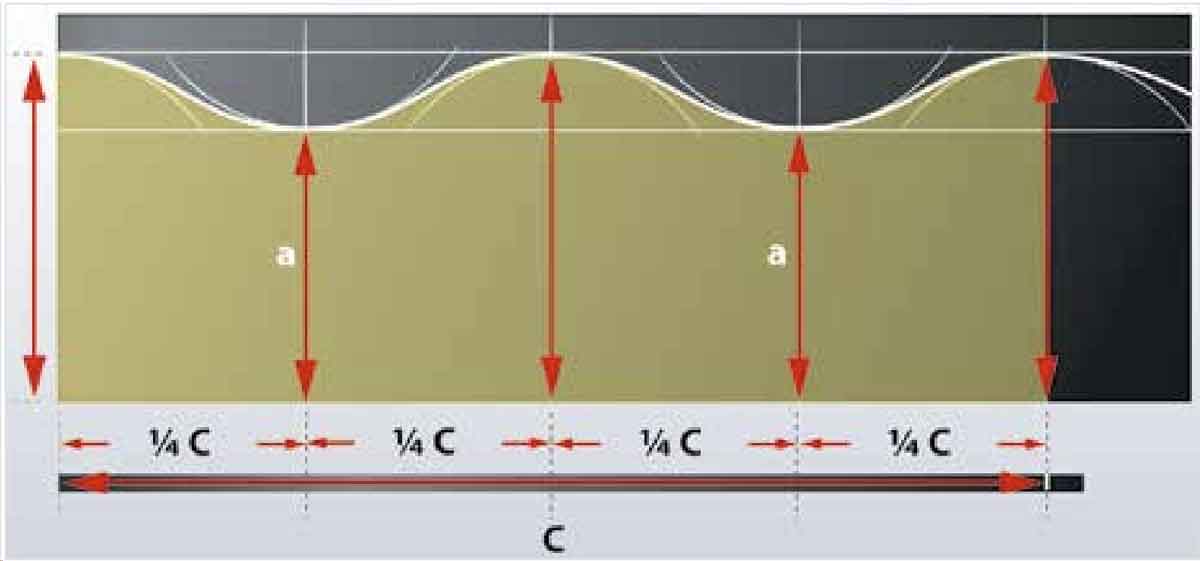
Image - Pattern for Cutting Insulation for Valve Stem Wrapping
3. Draft pattern to cut on black rubber insulation sheet
- After obtaining distances a and C, we use both measurements to draft the pattern on insulation sheet.
- Divide circumference C into 4 equal parts.
- This gives us 5 red straight lines total. Designate lines 2 and 3 to have length equal to valve stem a.
- At the tops of lines 2 and 4, draw circles with size equal to valve radius (radius of circumference C).
- Draw circles at distance a of every line (as shown in the image above).
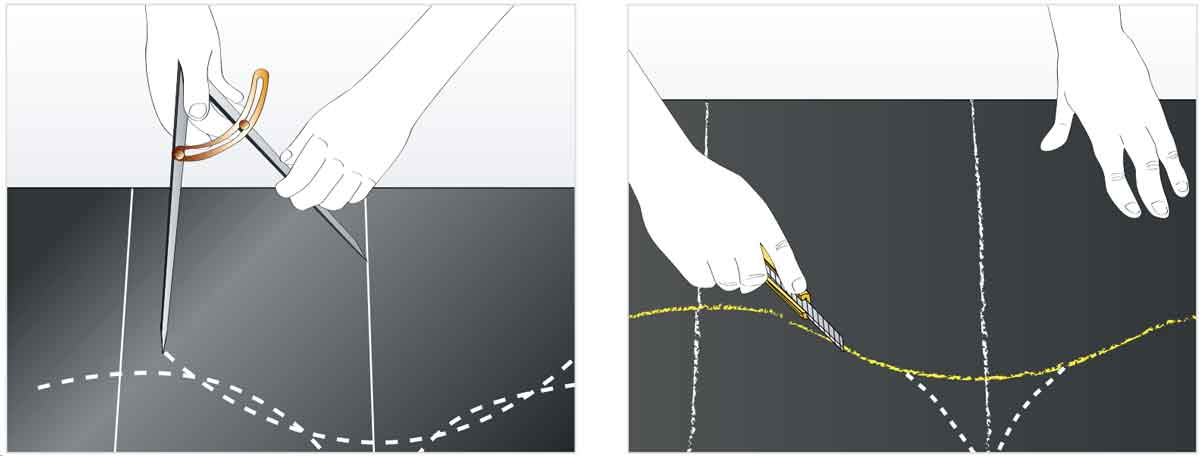
Image - Using Compass to Draw Cutting Distances for Valve Stem Insulation Sheet
4. Use knife to cut along points where circle radii intersect
- Use knife to cut along the lines where radii intersect.
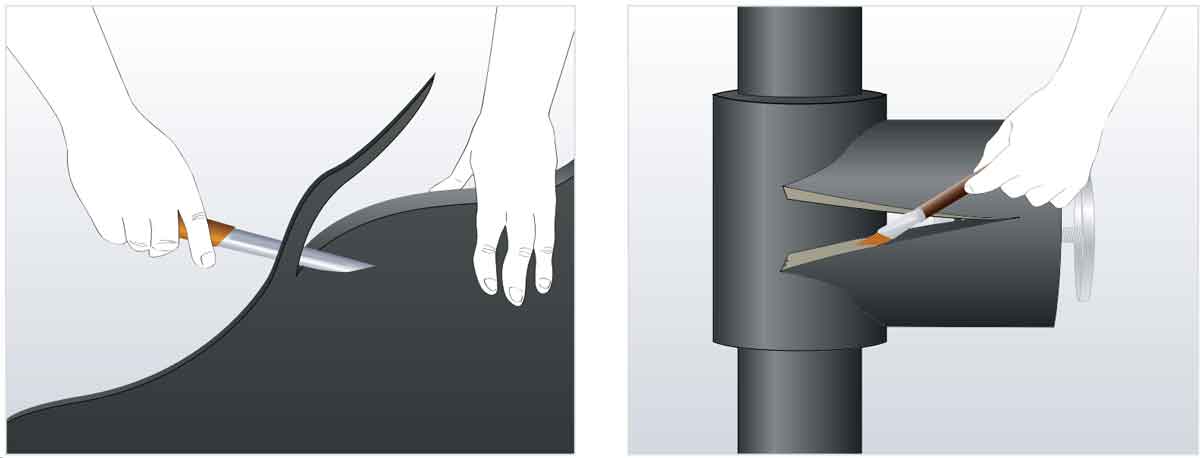
Trimming Cut Edges for Appearance and Wrapping Insulation Sheet on Valve Stem
5. Trim cut edges for appearance and wrap with insulation sheet
- Trim edges of black rubber insulation sheet.
- Apply black rubber adhesive to insulation sheet edges then wrap around valve stem.
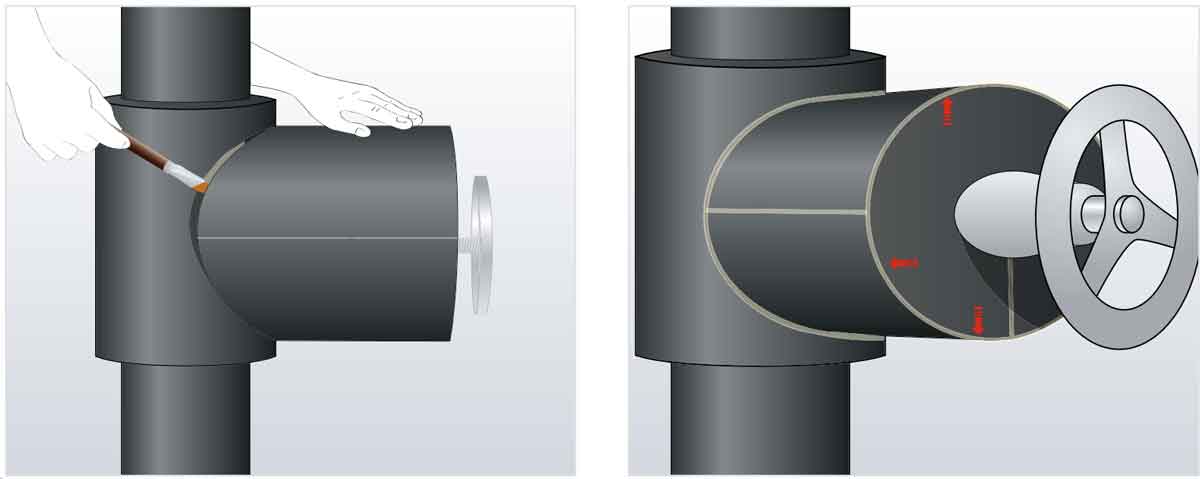
Image - Finishing Details in Valve Insulation
6. Apply adhesive to finish valve insulation sheet details
- Apply adhesive along joint edges to bond with other insulation parts and press insulation together.
Insulating Valves with D-Shaped Box
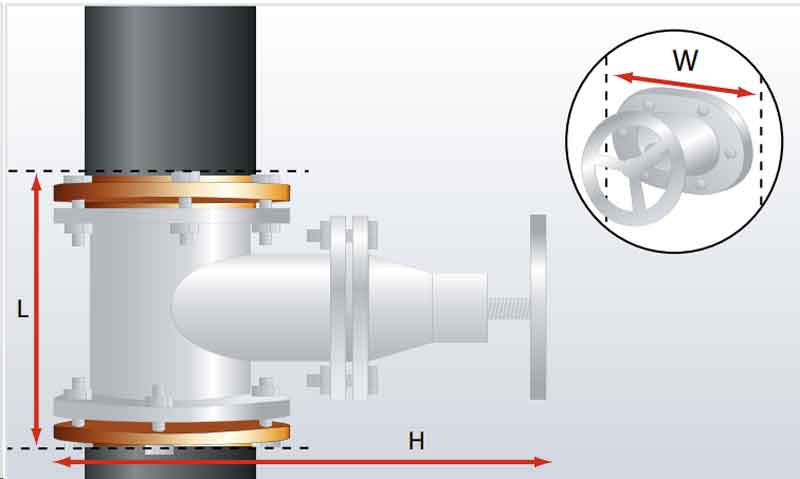
Image - Valve Width and Length Dimensions to Measure
1. Measure valve height and valve width
- L = valve length + (2 x insulation thickness)
- H = valve height + (2 x insulation thickness)
- W = valve diameter + 10 mm
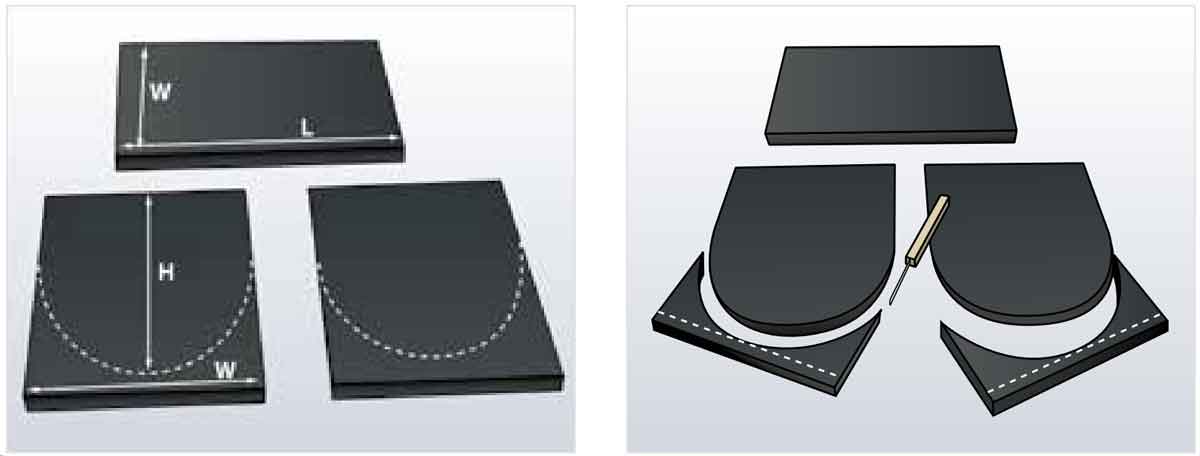
Image - Cutting Insulation Sheet According to Measured Dimensions
2. Measure dimensions and cut insulation sheet
- Use sharp knife to cut insulation as shown in image with 2 types of curved sheets and 1 rectangular sheet.
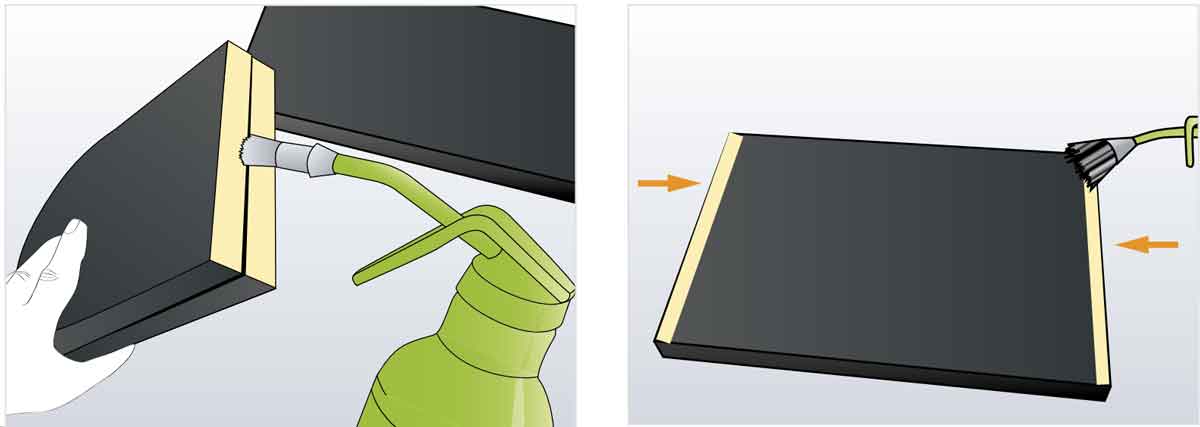
Image - Applying Adhesive to Cut Insulation Sheet for Assembly
3. Use black adhesive on insulation sheet for valve box assembly
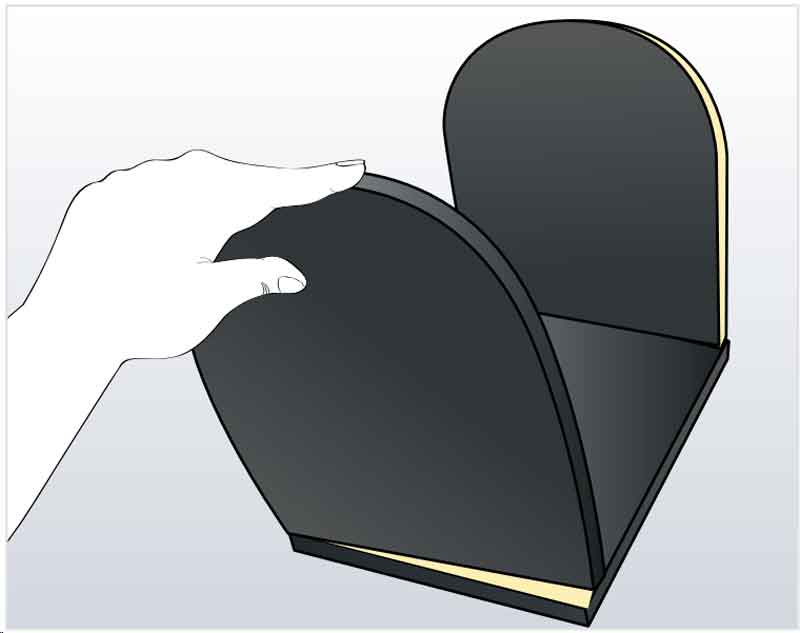
Image - Bonding All 3 Insulation Pieces Together
4. After adhesive completely dries, assemble all 3 insulation pieces together
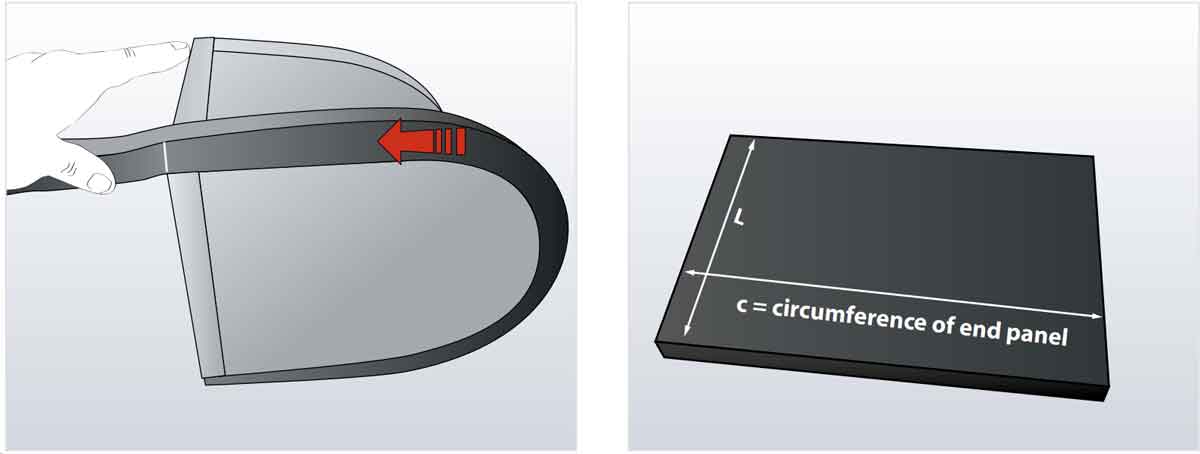
Image - Using Rubber Measuring Strip to Measure Valve Box Circumference for Insulation
5. Use black rubber insulation cord to measure black rubber box for insulation wrapping
- Use insulation cord with thickness equal to insulation used for valve box wrapping, measure length around valve box.
- Use measured distance to cut black rubber insulation sheet with width equal to valve width and length equal to valve box circumference.
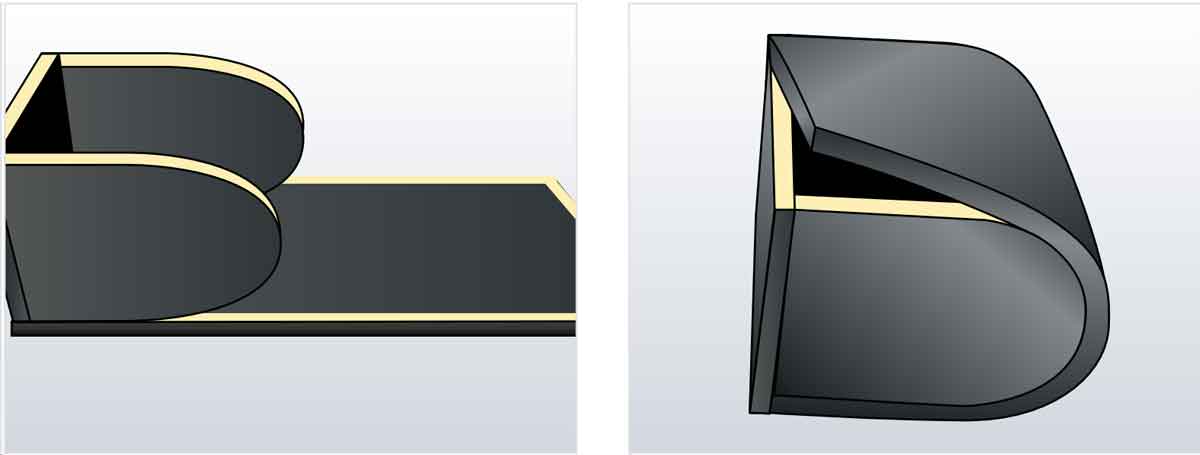
Image - Applying Adhesive and Assembling Properly
6. Apply adhesive around black rubber insulation sheet, wait for adhesive to dry then assemble together
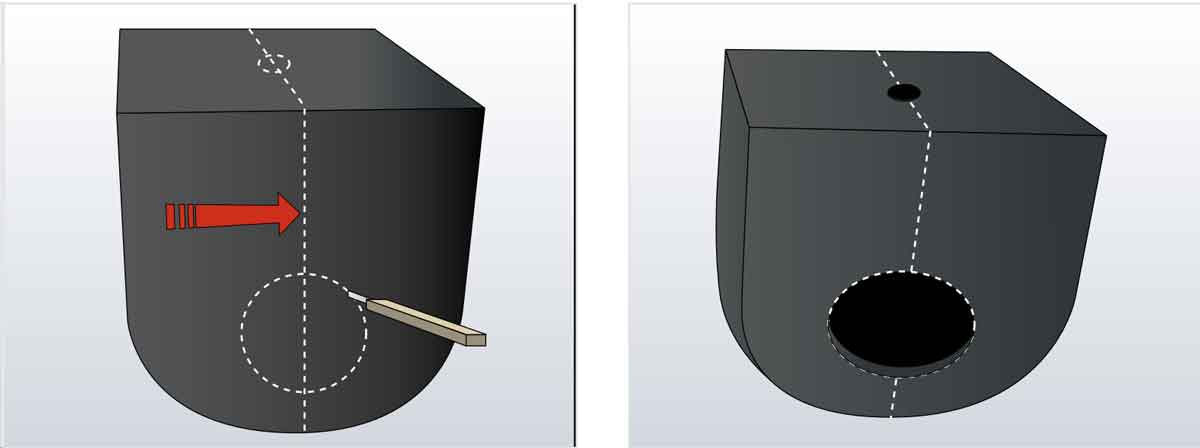
Image - Punching Holes in Valve Box for Valve Fitting
7. Use pointed knife to punch holes in insulation box for pipe fitting
Insulating Valves with D-Shaped Box
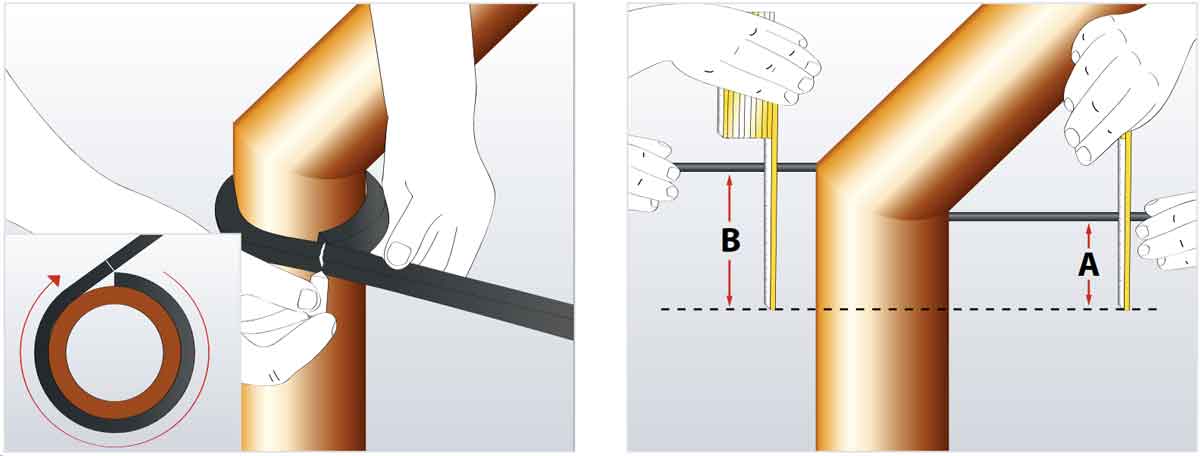
Image - Using Black Rubber Insulation Strip to Measure Pipe Circumference and Measuring Tape to Measure Elbow Height
1. Use black rubber insulation strip to measure pipe circumference and use measuring tape to measure elbow height
- A = inward bend height
- B = outward bend height
- C = pipe circumference
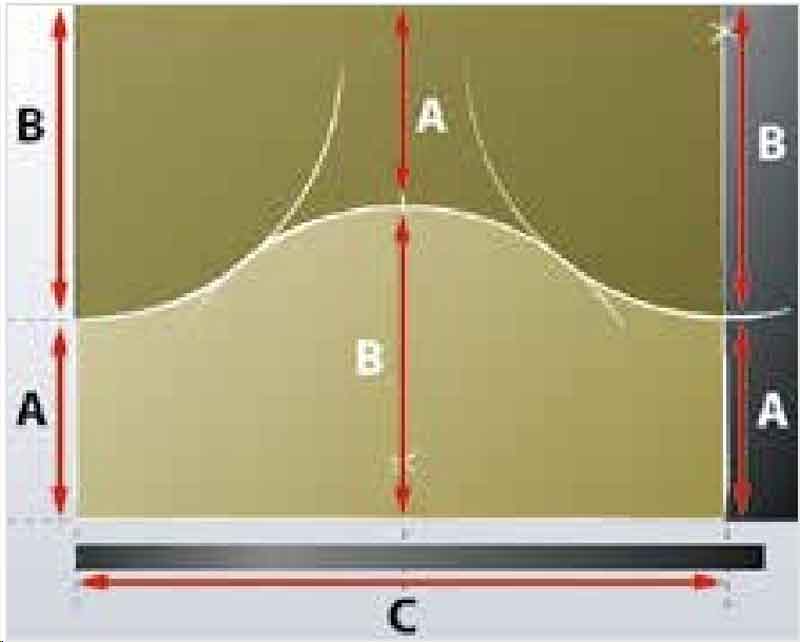
Image - Pattern for Cutting Insulation for Elbow Wrapping
2. Use measured distances to draft pattern on black rubber insulation sheet
- Divide circumference C into 2 parts to get 3 straight lines total.
- Use compass to draw circles with radius B along divided straight lines to get 3 circles total.
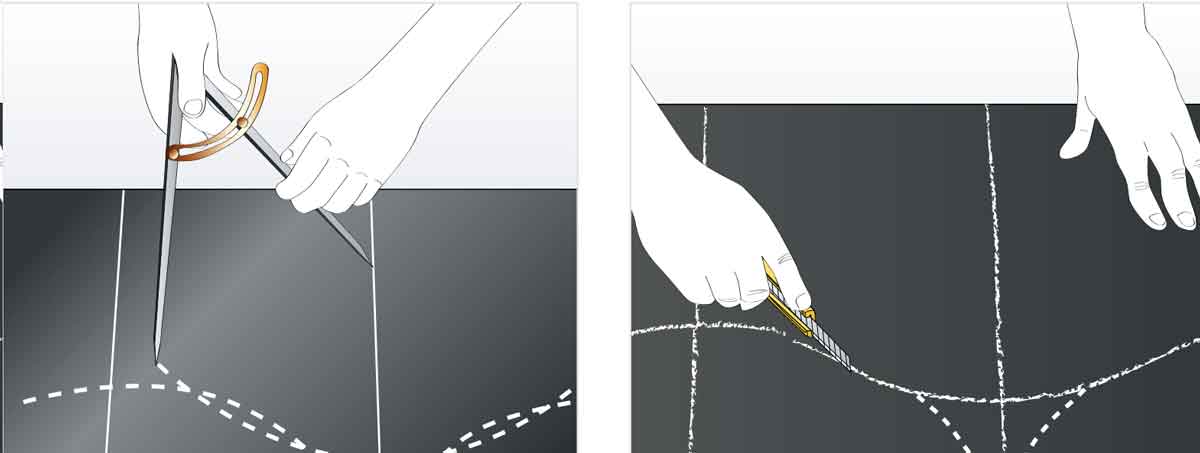
Image - Use a compass to draw circles according to the pattern and cut the insulation sheet along the overlapping lines
3. Use compass to draw curved lines according to pattern and use knife to score along intersecting lines
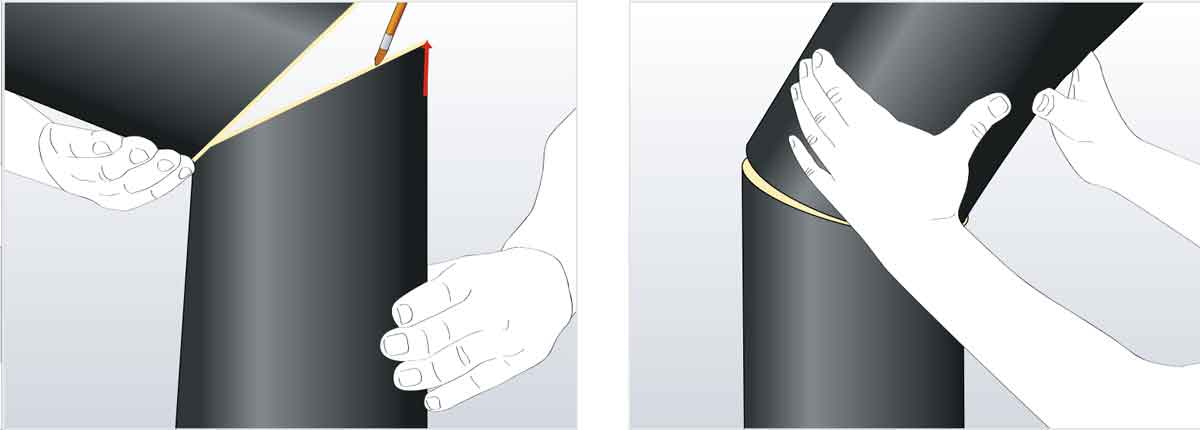
Apply adhesive to the insulation sheets and assemble them together
4. Apply black adhesive to both cut insulation pieces and assemble with elbow
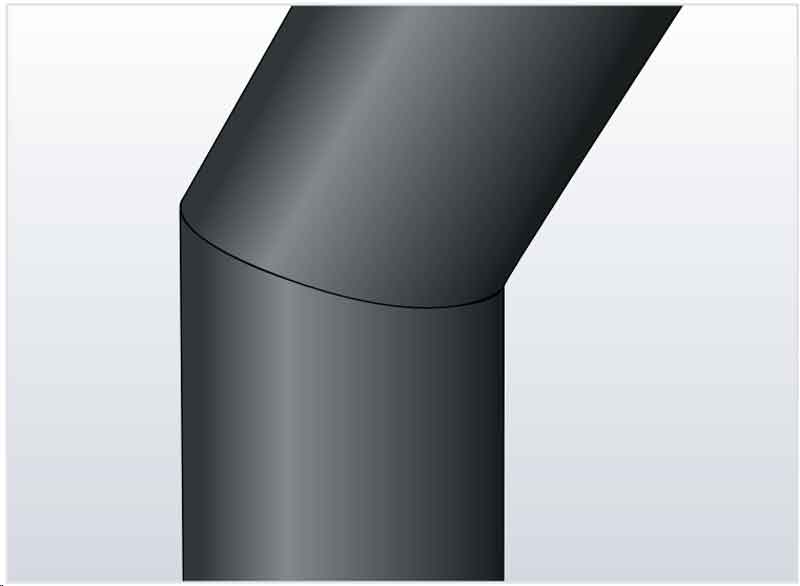
Image - Elbow covered with black rubber insulation
5. Wrap black rubber insulation elbow
Methods of Insulating Strainers, Strainer Valves & Inclined Seat Valves
Insulation methods for strainers and seat valves are very similar.
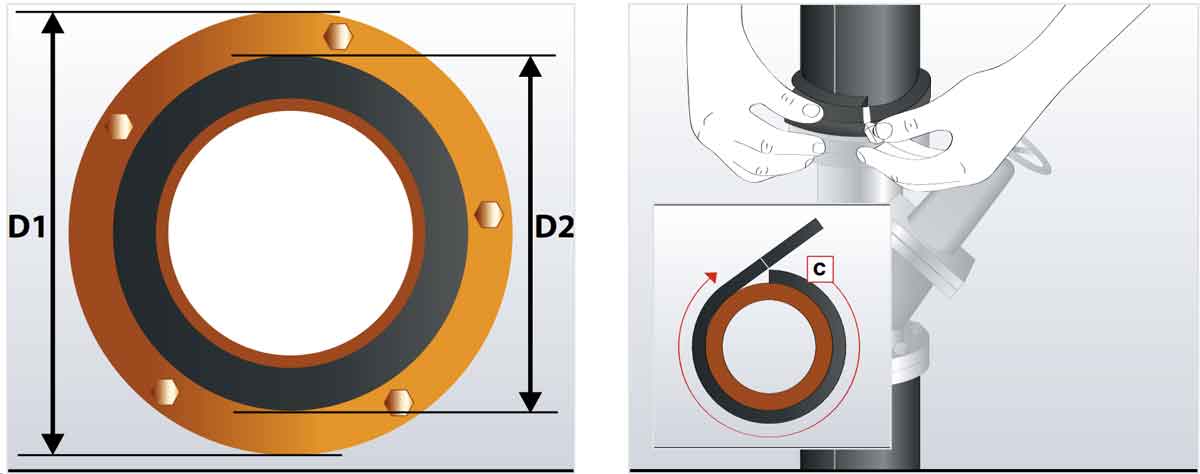
Image - Measure the diameter of the valve and the diameter of the insulated pipe
1. Use black rubber insulation strip to measure insulated pipe diameter, valve, and insulated pipe circumference
- D1 = valve flange face diameter
- D2 = outer diameter of black rubber insulated pipe
- C = black rubber insulated pipe circumference
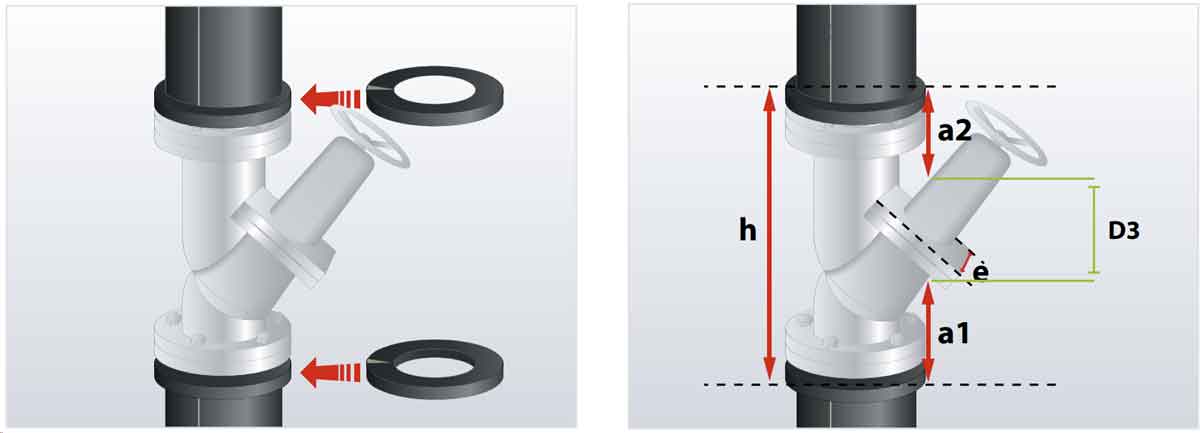
Cut the black rubber insulation into a circle to cover the pipe insulation and measure each section of the valve
2. Cut insulation sheet to wrap over insulated pipe and measure valve dimensions
- Cut insulation into circles to wrap over black rubber insulated pipe.
- Measure dimensions h, a1, a2, e, D3.
- h = valve height from flange face to flange face
- a1 = distance from flange face to lower strainer
- a2 = distance from flange face to upper strainer
- e = strainer shoulder width
- D3 = strainer valve neck diameter
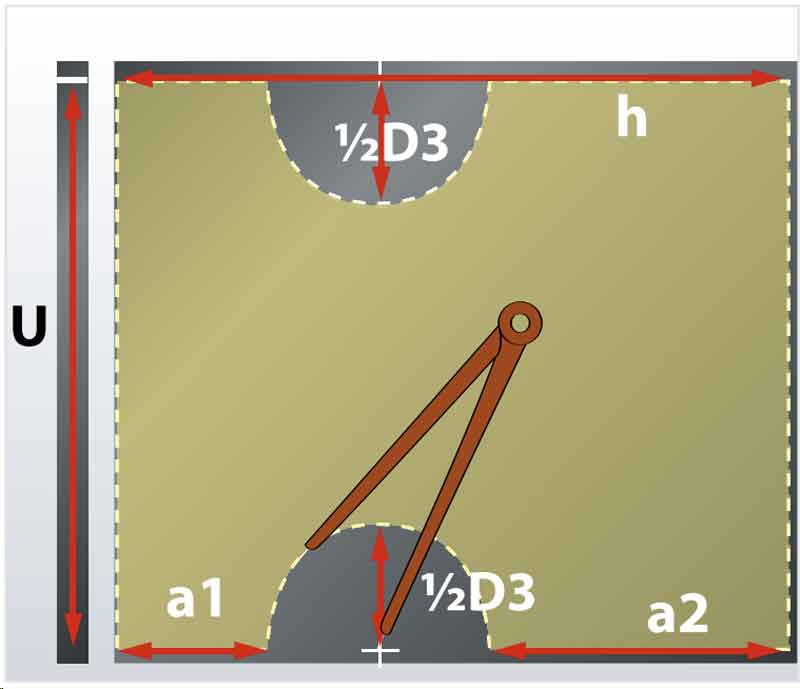
Image - Pattern for cutting black rubber insulation to cover the valve body
3. Pattern for cutting black rubber insulation to wrap valve body
- Measure distances and cut black rubber insulation sheet according to image for valve wrapping.
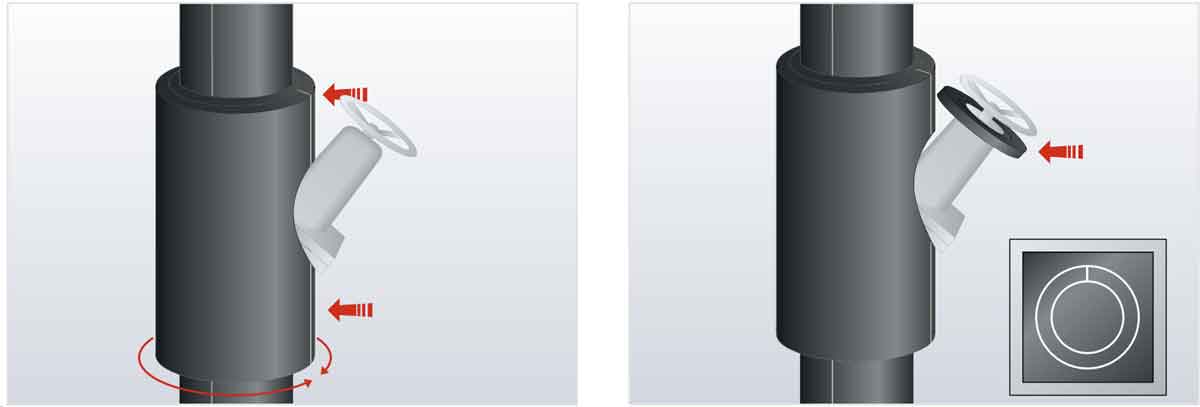
Image - Insulating the valve body and valve neck
4. After wrapping valve body, cut insulation sheet into circles to wrap valve neck
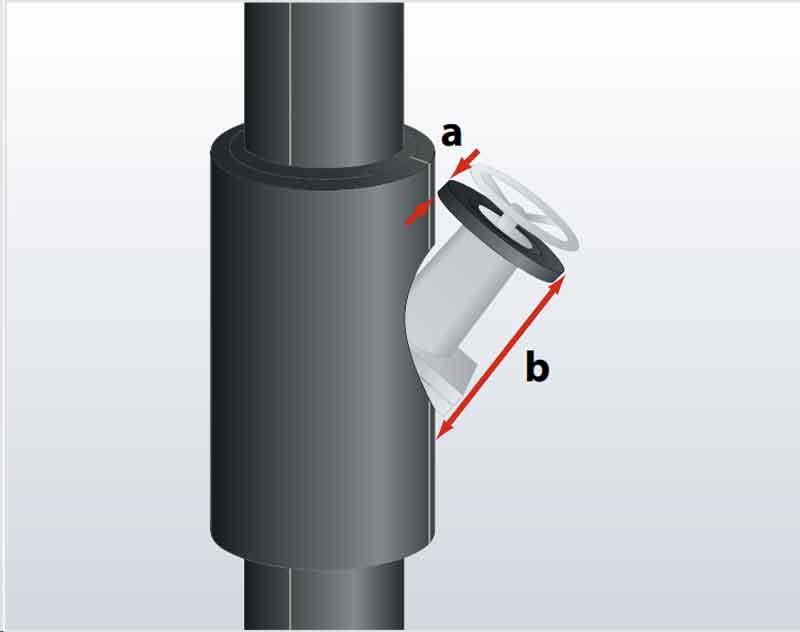
Image - Measurements required to insulate the valve neck
5. Measure distances for valve neck wrapping
- a = shortest distance between insulation sheet and valve body
- b = longest distance between insulation sheet and valve body
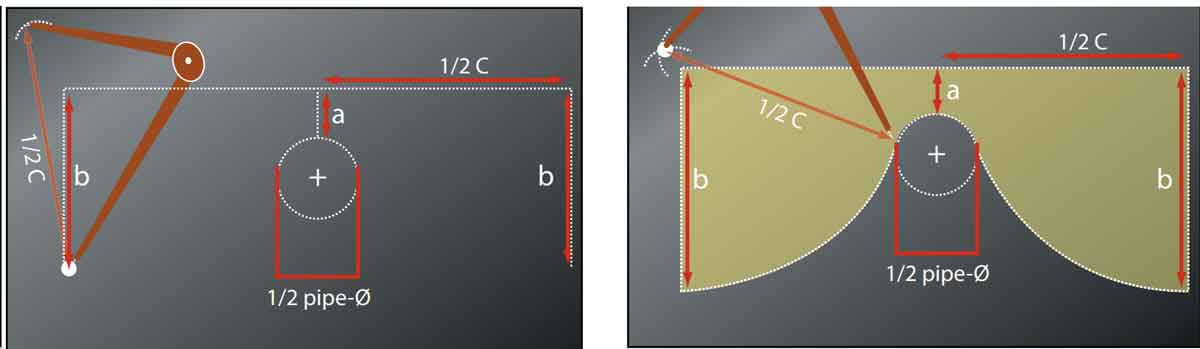
Image - Cutting Insulation Sheet for Valve Neck Wrapping
6. Cut insulation sheet according to image for valve neck wrapping
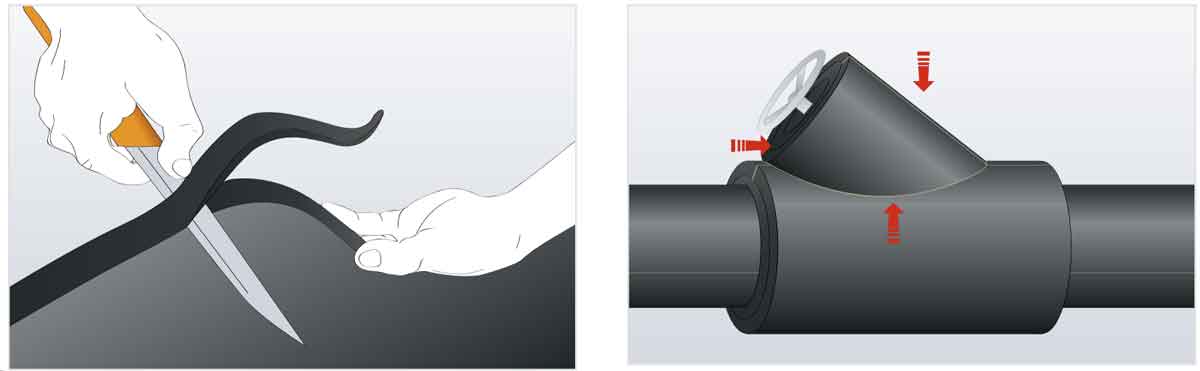
Image - Insulating valve neck
7. Wrap cut insulation sheet to connect with valve body
Methods of Insulating Flanges
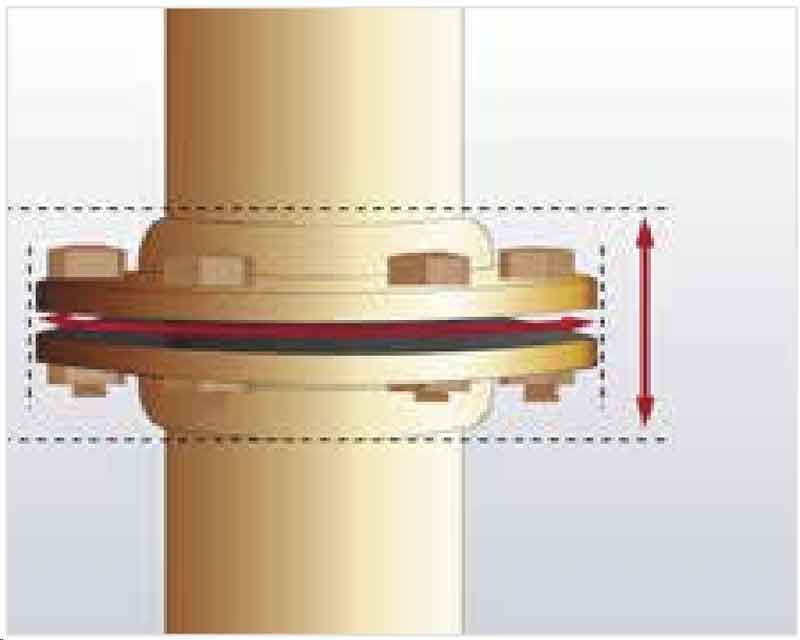
Image - Measuring the circumference of the flange face
1. Measure flange width and flange circumference
- Use vernier calipers to measure flange width from bolt head to bolt head on opposite side plus thickness of black rubber insulation on both sides.
- Use black rubber insulation strip to measure flange circumference.
- Measure flange diameter.
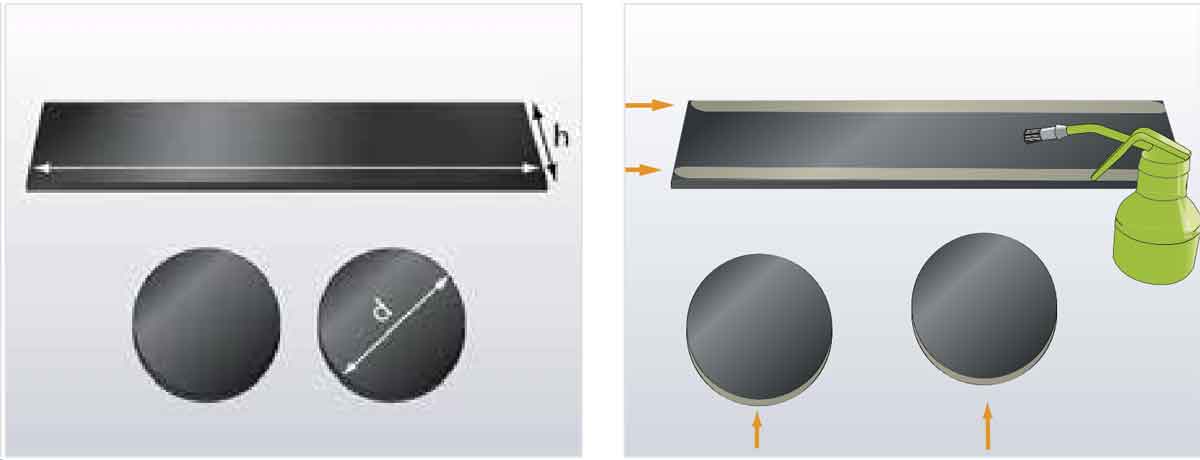
Image - Cutting insulation sheets according to measured dimensions
2. Cut insulation sheet according to measured dimensions
- 2 circular sheets sized equal to flange diameter
- 1 rectangular sheet
- Width = bolt head distance from flange on both sides + (2 x black rubber insulation thickness)
- Length = flange circumference length
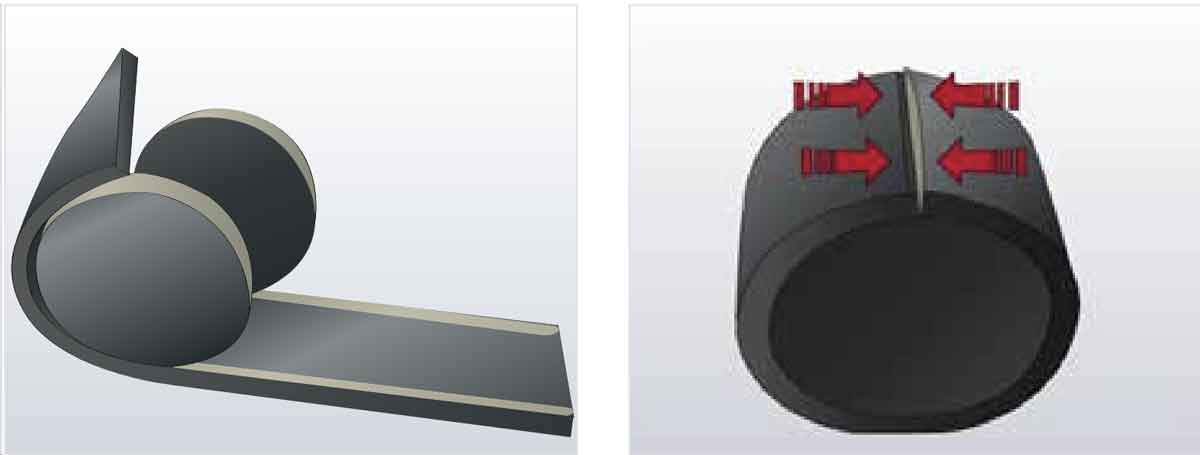
Image - Assembling the 3 insulation pieces together
3. Apply adhesive and attach all 3 pieces together according to image
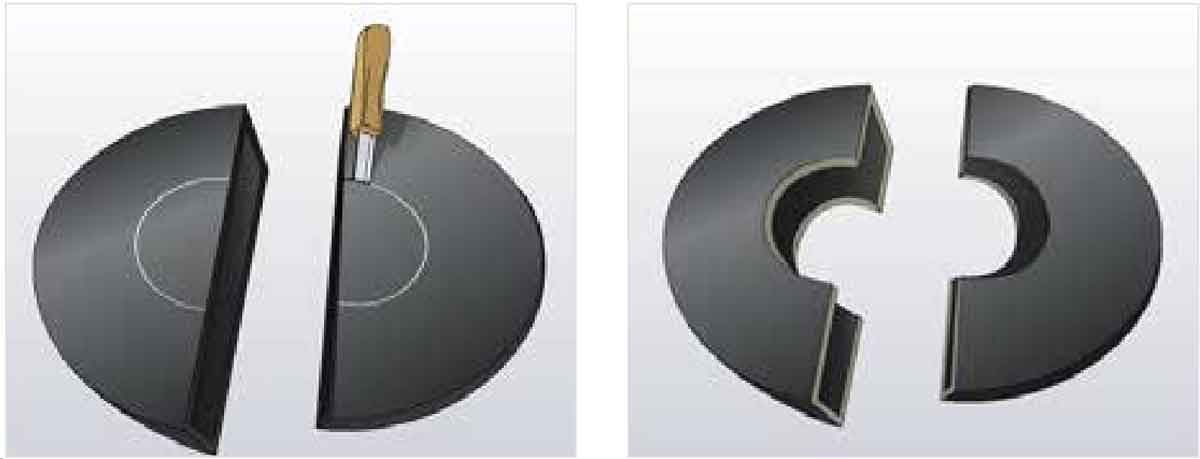
Image - Slitting the adhesive-backed flange insulation lengthwise and cutting a circular hole to match the pipe size
4. Split flange insulation box along length direction and carve interior according to pipe size
Summary
In installing air duct, chilled water pipe, joint, and elbow insulation, proper installation methods should be followed to ensure insulation can be used for a long time at full efficiency, reducing problems and other costs that may follow.