
How to Install Black Rubber Insulation for Pressure Vessels and Chilled Water Tanks
Pressure Vessels are used to store raw materials before they are sent to the production process. Some raw materials have high temperatures, while others have low temperatures. Therefore, it is necessary to insulate them to maintain a constant internal temperature and prevent damage to the raw materials.
3T Recommendations
If you want to know more details about black rubber insulation, types of black rubber insulation, and other applications, you can read more at
Draft for Installing Pressure Vessel Insulation
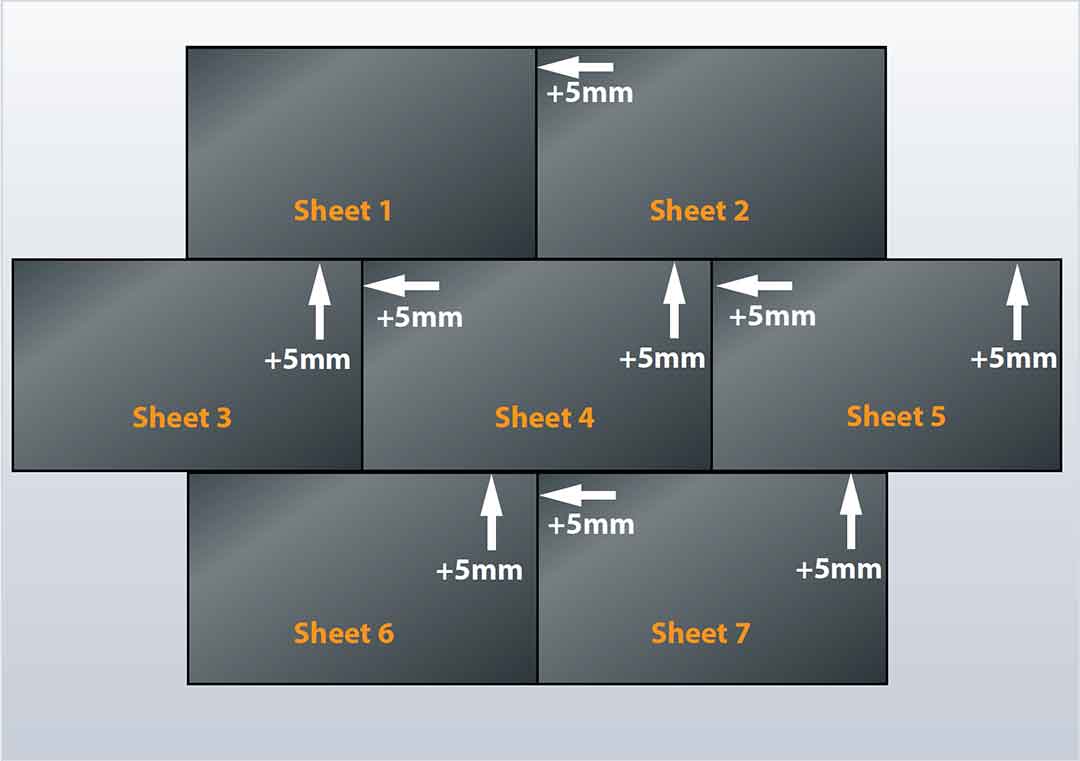
Image - Installation pattern for black rubber insulation on large pressure vessels
Determine the installation pattern for black rubber insulation sheets or rolls (width 1.22 meters, length 3 – 15 meters)
3T Recommendations
The edges or joints of the black rubber insulation should overlap to prevent water droplets from seeping through the insulation grooves.
Leaving compression space at insulation joints
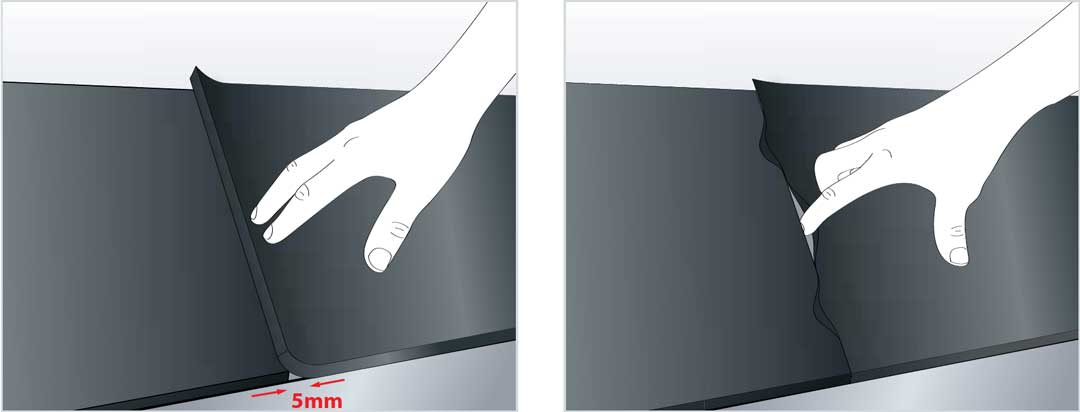
Image - Leave 5 mm compression space
When cutting black rubber insulation sheets, we leave a 5 mm compression space. When we press the excess insulation into the joint area, it will compress tightly.
Applying adhesive for pressure vessel insulation installation
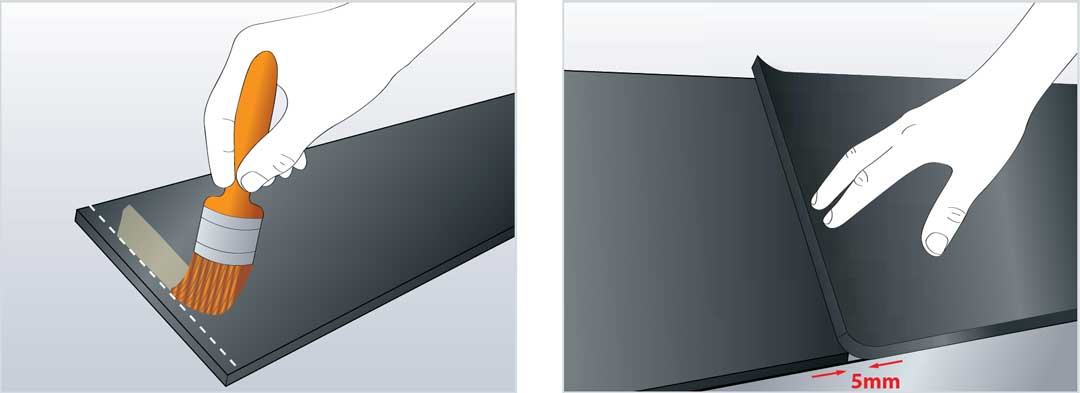
Image - Leave 5 mm compression space
Apply adhesive to the black rubber insulation, leaving a 5 mm space for compression between insulation pieces.
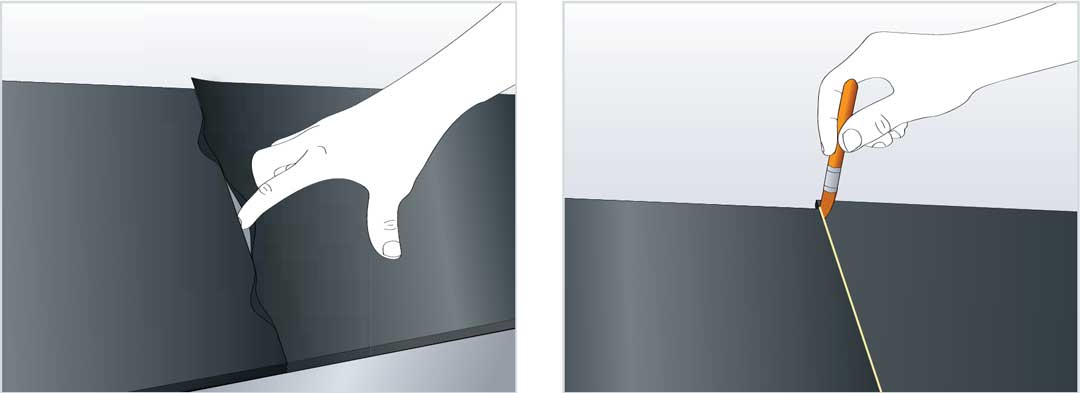
Image - Seal all joints of black rubber insulation with adhesive
After pressing the remaining insulation into the joint groove, seal all joints with insulation adhesive.
Insulating large pressure vessels with a diameter larger than 1.5 meters (φ < 1.5 m)
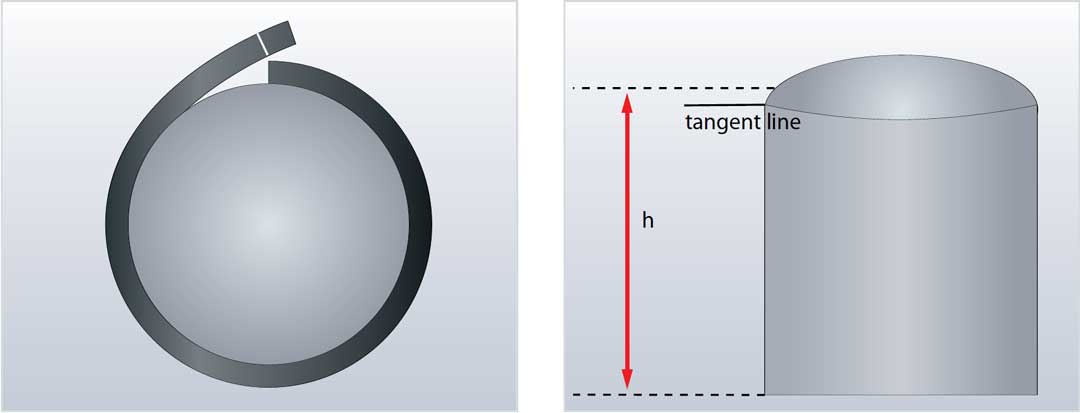
Image - Determining the circumference of the pressure vessel
1. Cut the black rubber insulation sheet into long strips to measure the circumference of the pressure vessel.
3T Recommendations
- When measuring the circumference of the pressure vessel, use insulation thickness equal to the thickness that will be used to cover the tank.
- Do not stretch or pull the insulation while measuring.
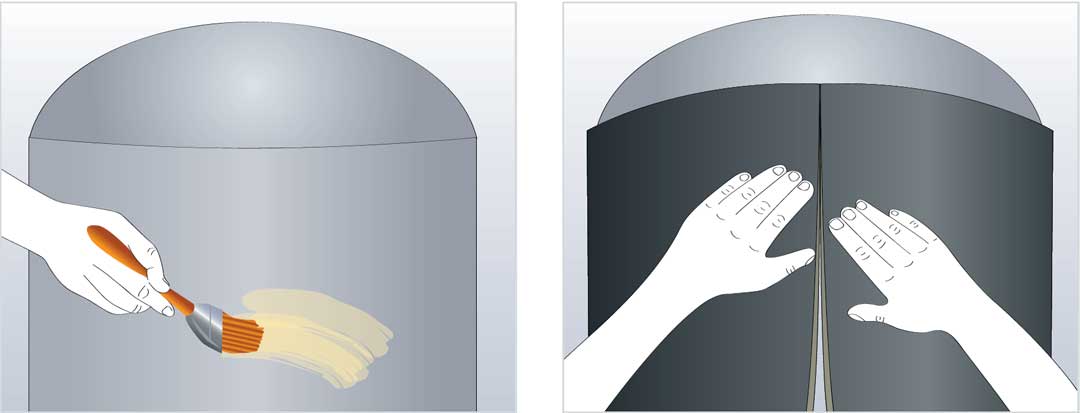
Image - Apply adhesive to the black rubber insulation first, then to the metal tank surface
2. Cut the black rubber insulation to the measured size. Then apply adhesive to the black rubber insulation sheet and to the surface of the pressure vessel. Wait for the adhesive to dry before wrapping the black rubber insulation, ensuring that the top edge of the insulation extends 50 mm beyond the tank’s edge (Tangent line).
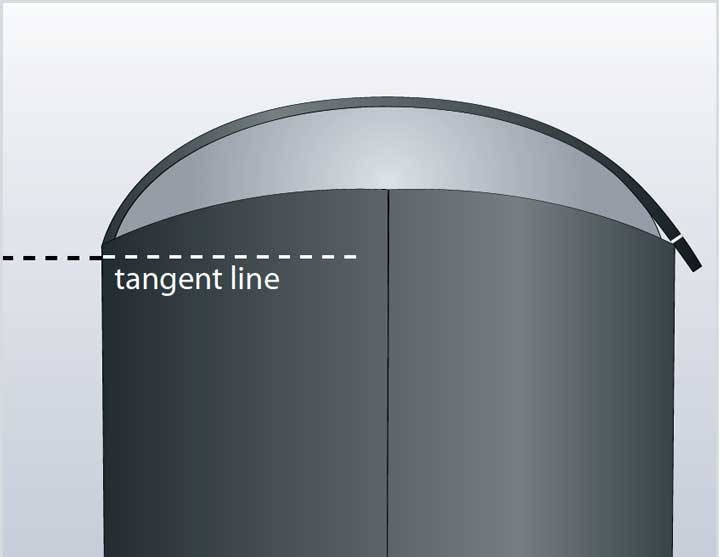
Image - Determining the curvature of the tank head using a strip line
3. Determine the curvature of the tank head using a strip of black rubber insulation (Strip line).
3T Recommendations
- The edges or joints of the black rubber insulation should overlap to prevent water droplets from seeping through the insulation grooves.
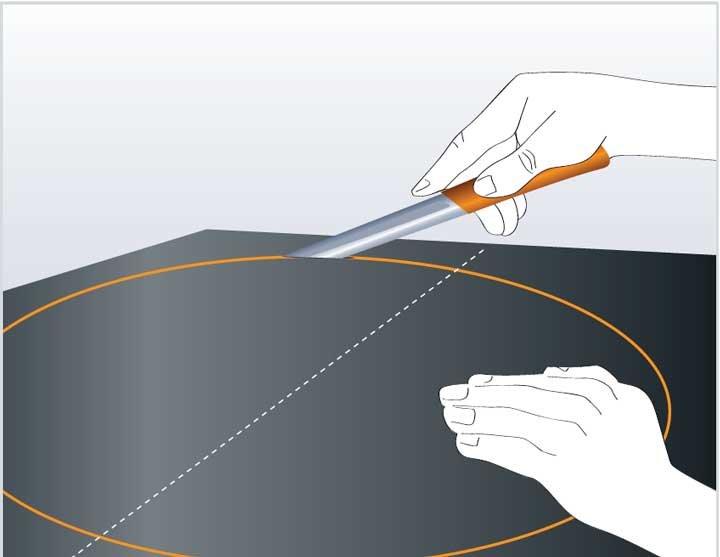
Image - Cut black rubber insulation for the tank head using the head curvature as the diameter
4. Once you have the curvature of the pressure vessel head, cut the insulation sheet into a circle, using the curvature as the diameter.
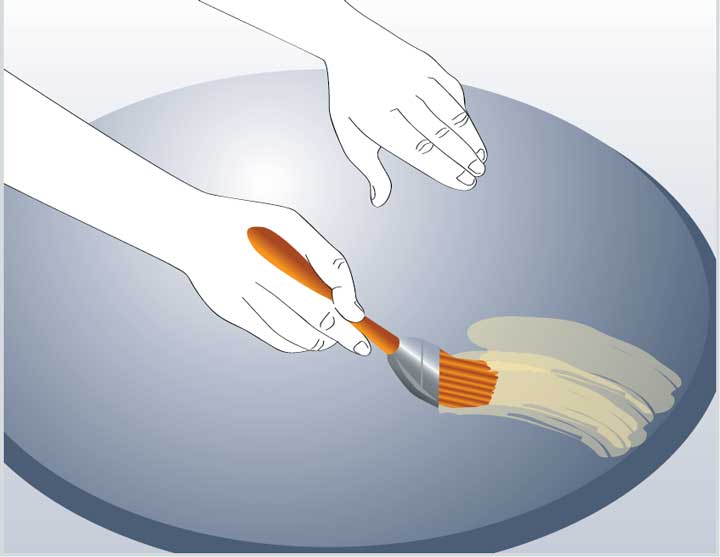
Image - Apply adhesive to the metal surface of the pressure vessel head
5. Apply adhesive to the surface of the black rubber insulation as a rubber film and to the surface of the pressure vessel head.
6. After the adhesive dries, install the adhesive-coated insulation sheet over the tank head, pressing from the center of the head outwards to the edges to prevent air bubbles from forming inside.
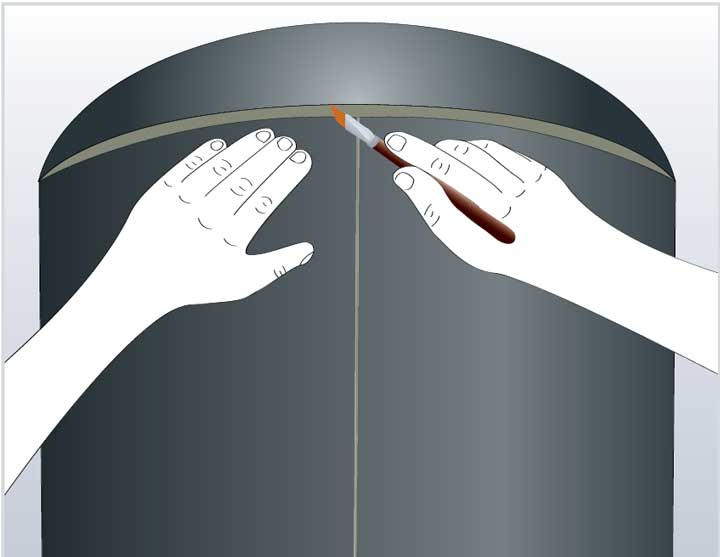
Image - Sealing the joints of the insulation with adhesive
7. Apply adhesive to the edge joints of the insulation and wait until the adhesive dries.
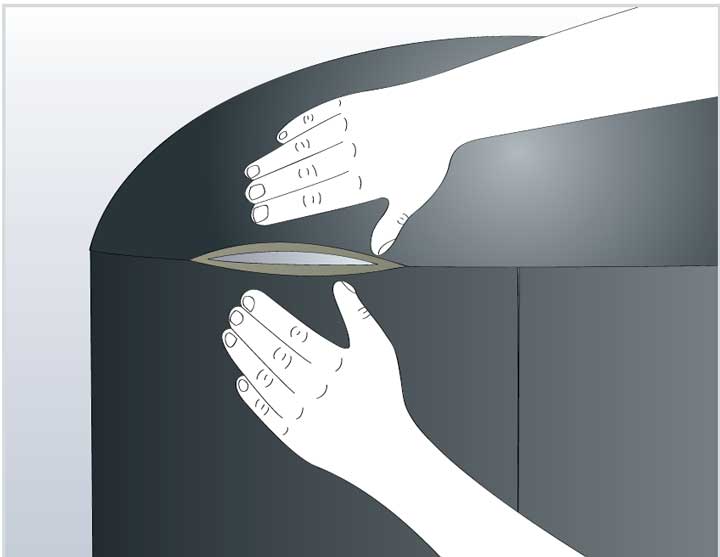
Image - Press the insulation joints tightly together
8. After the adhesive dries, press the insulation tightly together.
Insulating large pressure vessels with a diameter larger than 1.5 meters (φ < 1.5 m)
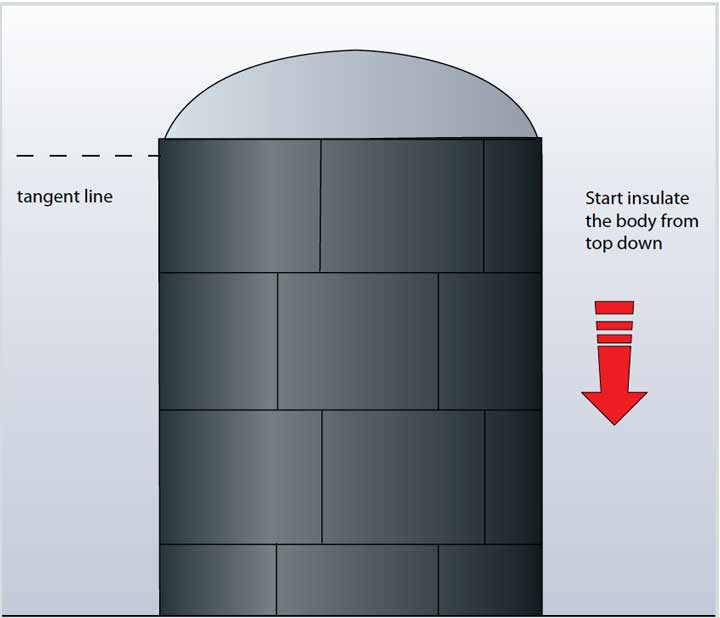
Image - Install black rubber insulation starting from the top edge of the pressure vessel down to the bottom of the tank
1. When installing black rubber insulation for storage tanks or pressure vessels, we start installation from the top edge of the tank and work our way down.
Image - Press the insulation joints tightly together
2. We will position the insulation sheets to prevent forgetting which sheet should be installed where. We will mark the positions with white chalk on the tank wall.
3. The insulation installed at the tank edges will be roughly cut, leaving an edge that extends 50 mm beyond the tank edge.
4. Apply adhesive thoroughly to the insulation sheet and the tank surface. Then wait for the adhesive to dry. Install according to the design, starting from piece 1 to the last piece, allowing for a 5 mm compression space.
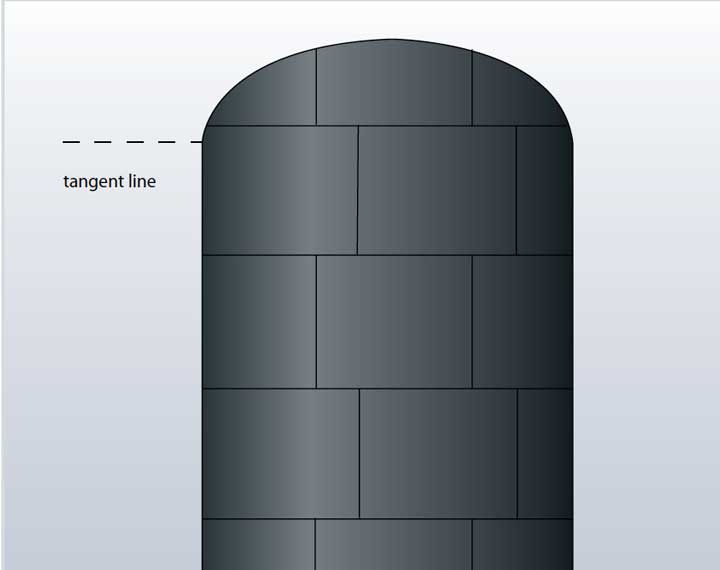
Image - Installation completed
5. Check the completeness of the work to finish the installation.
Source
ARMAFLEX Application manual – https://local.armacell.com/th/armacell-thailand/applications/armaflex-industrial/


