
Enclosure Fire Behavior
Stages of Fire Development
The stages of fire development are divided into 5 parts.
- Incipient Period
- Growth Period
- Flashover
- Fully Developed
- Decay Period
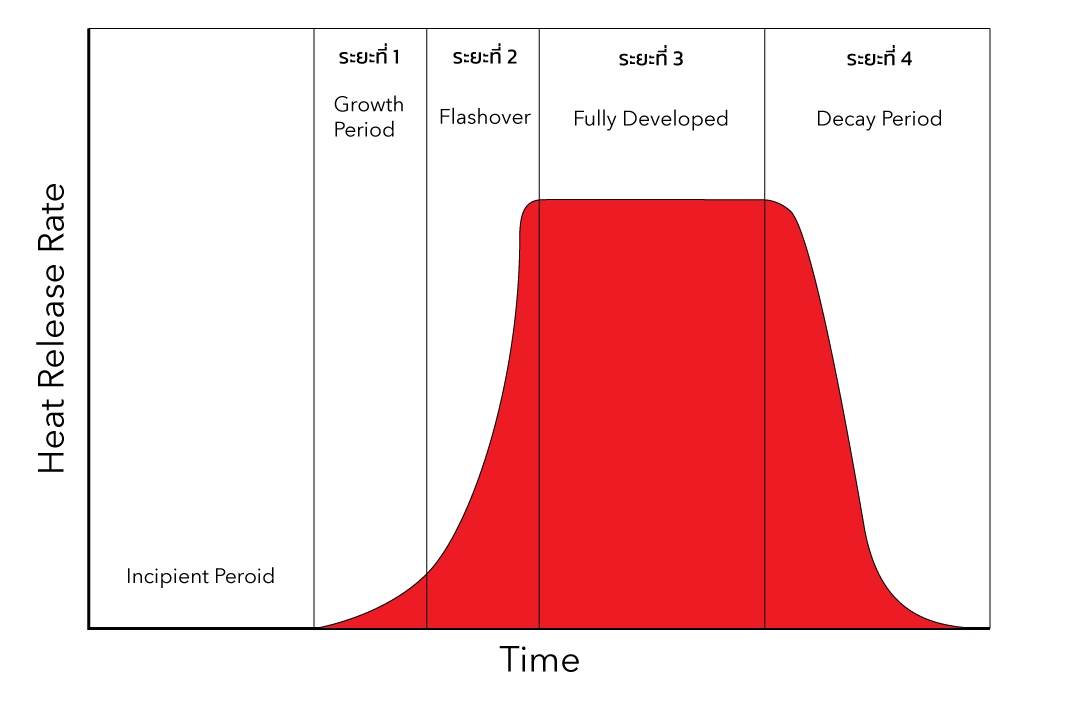
(Figure - Heat energy release and time duration in each stage of fire occurrence)
Stage 1: Growth Period
The initial stage of fire ignition. Fire occurs at the object. Hot smoke begins to rise due to buoyancy force. The combustion is similar to free burning in open areas.
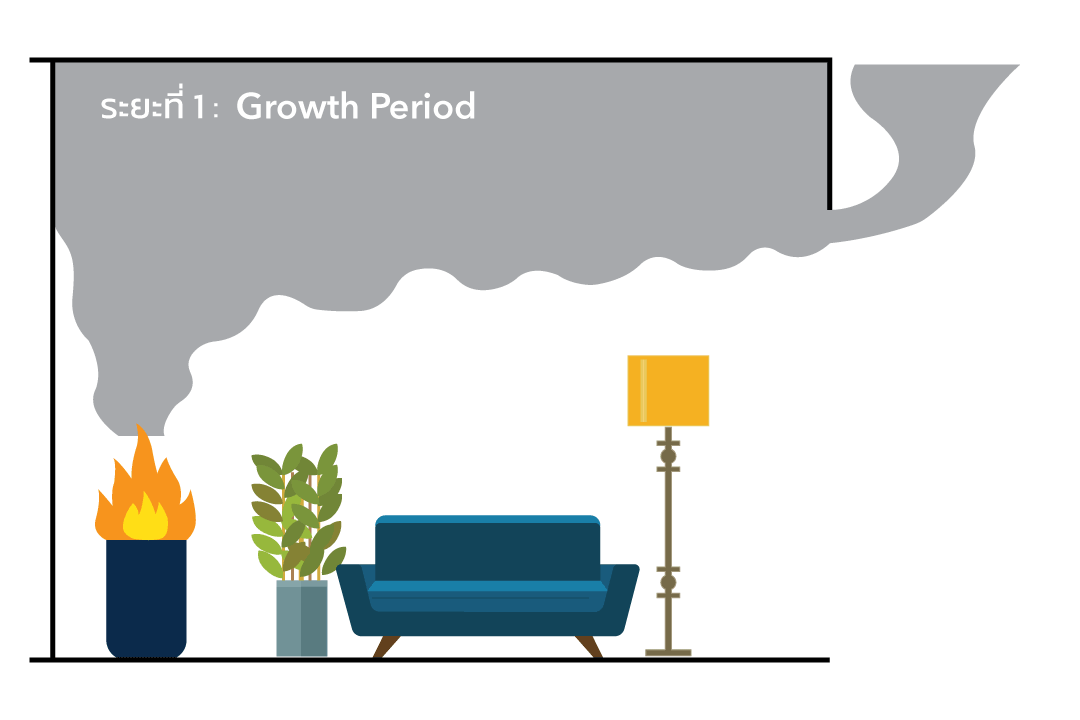
(Figure - Fire occurrence in Stage 1 Growth Period)
Stage 2: Flashover
Flashover refers to the condition where all objects in the room can ignite.
Indicators before the flashover stage include:
- Temperature at approximately 500-600°C
- Floor Heat Flux ~ 15 – 20 kW/m2
Ventilation inside is limited. If oxygen inside is insufficient for combustion, the fire may extinguish itself. However, fuel vapors remain inside the room. If there is opening for air entry or sufficient oxygen, there is a high chance of backdraft occurrence.
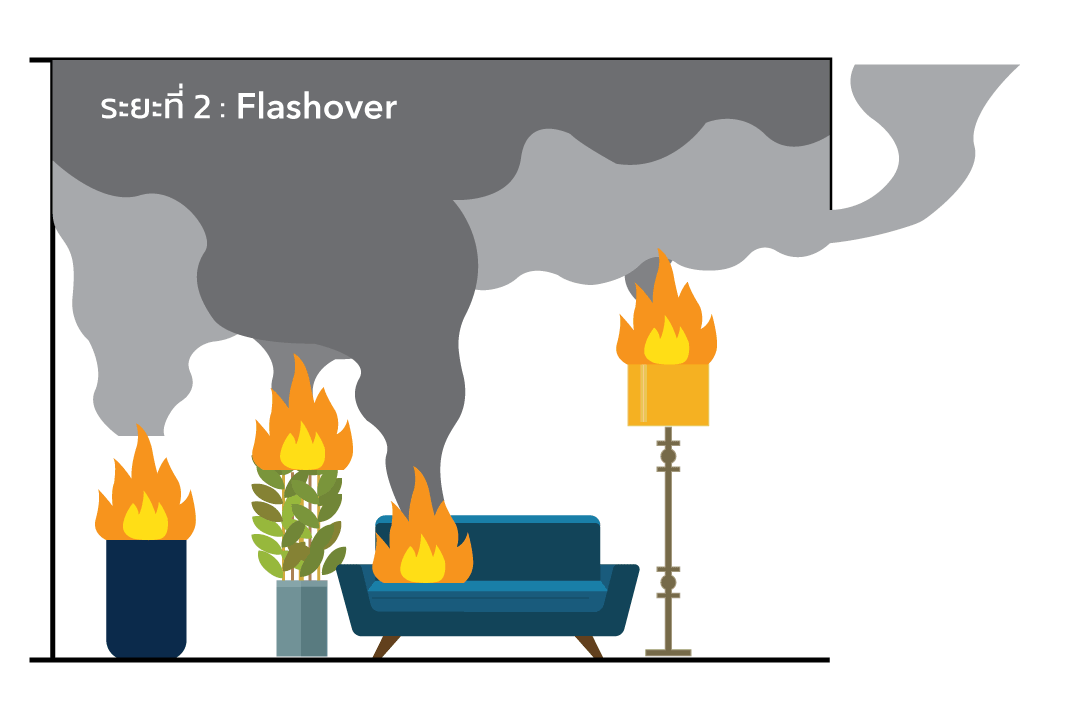
(Figure - Fire occurrence in Stage 2 Flashover)
Stage 3: Fully Developed
If oxygen inside the room is sufficient, the fire can progress to the fully-developed or post-flashover fire stage. In the fully-developed stage, we will see flames extending out through windows because the fire requires oxygen for combustion. The temperature inside the room is 800-1,000°C with a heat release rate of ~150 kW/m2.
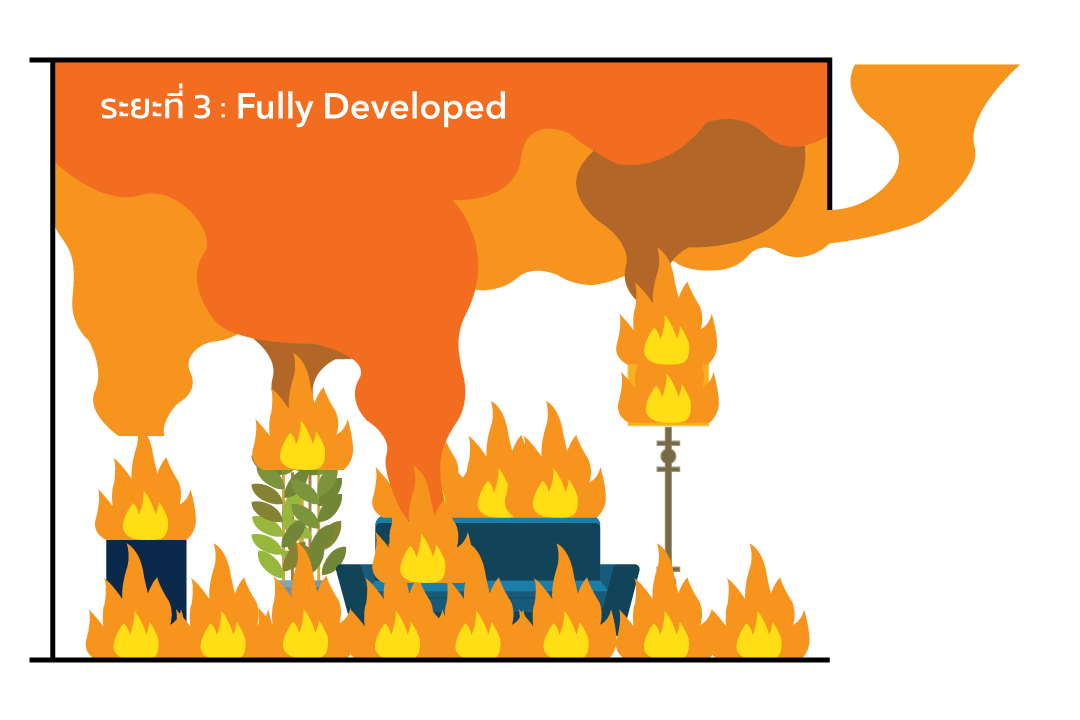
(Figure - Fire occurrence in Stage 3 Fully Developed)
Stage 4: Decay Period
This is the final stage of fire occurrence. When fuel is depleted, the fire will gradually extinguish itself. Temperature and heat energy release inside the room will decrease.
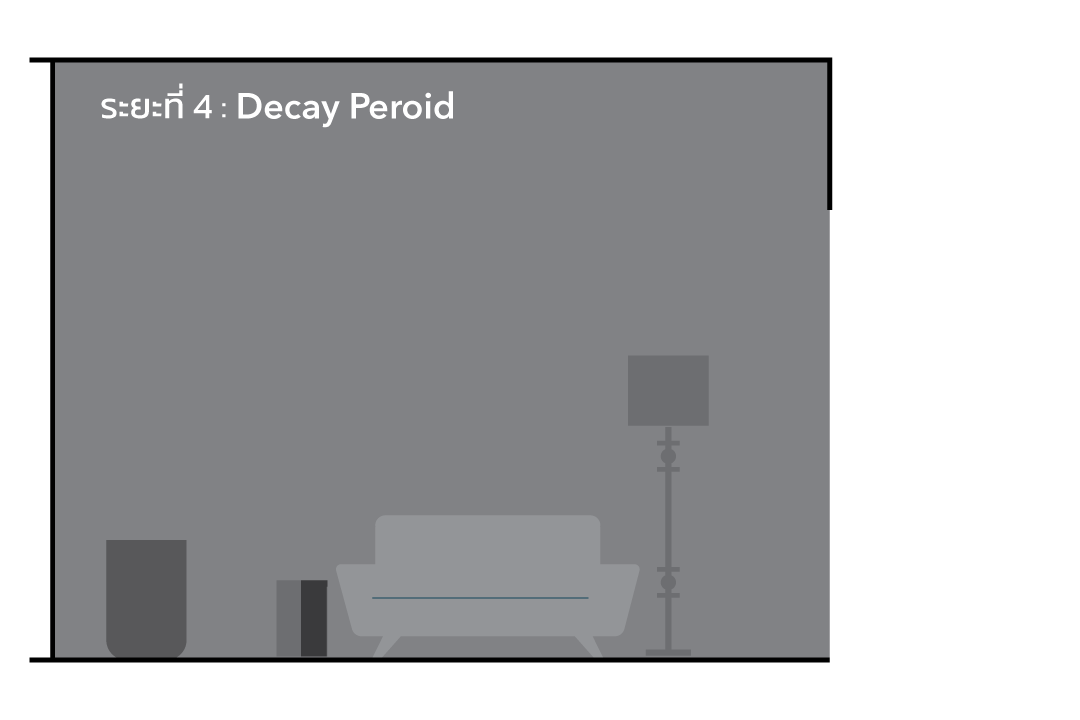
(Figure - Fire occurrence in Stage 4 Decay Period)
Backdraft Effect
Backdraft refers to when combustion occurs in a closed room, fuel releases vapors, and when the hot fire inside the room contacts air (opening doors or windows in the burning room), rapid ignition occurs leading to explosion.
Air from outside the room can enter inside through breaking doors or windows. Backdraft is another significant cause of firefighter fatalities during firefighting operations.
Heat Flux Values at Different Levels
|
Source |
kW/m2 |
|---|---|
| Solar radiation at Earth’s surface |
< 1 |
| Heat causing skin injury |
~ 1 |
| Heat causing danger |
~ 4 |
| Ignition of thin materials |
> 10 |
| Ignition of furniture |
> 20 |
| Inside room filled with fire (800 – 1,000 °C) |
75 – 150 |
| Inside large pool filled with fire (800 – 1,200 °C) |
75 – 267 |


