
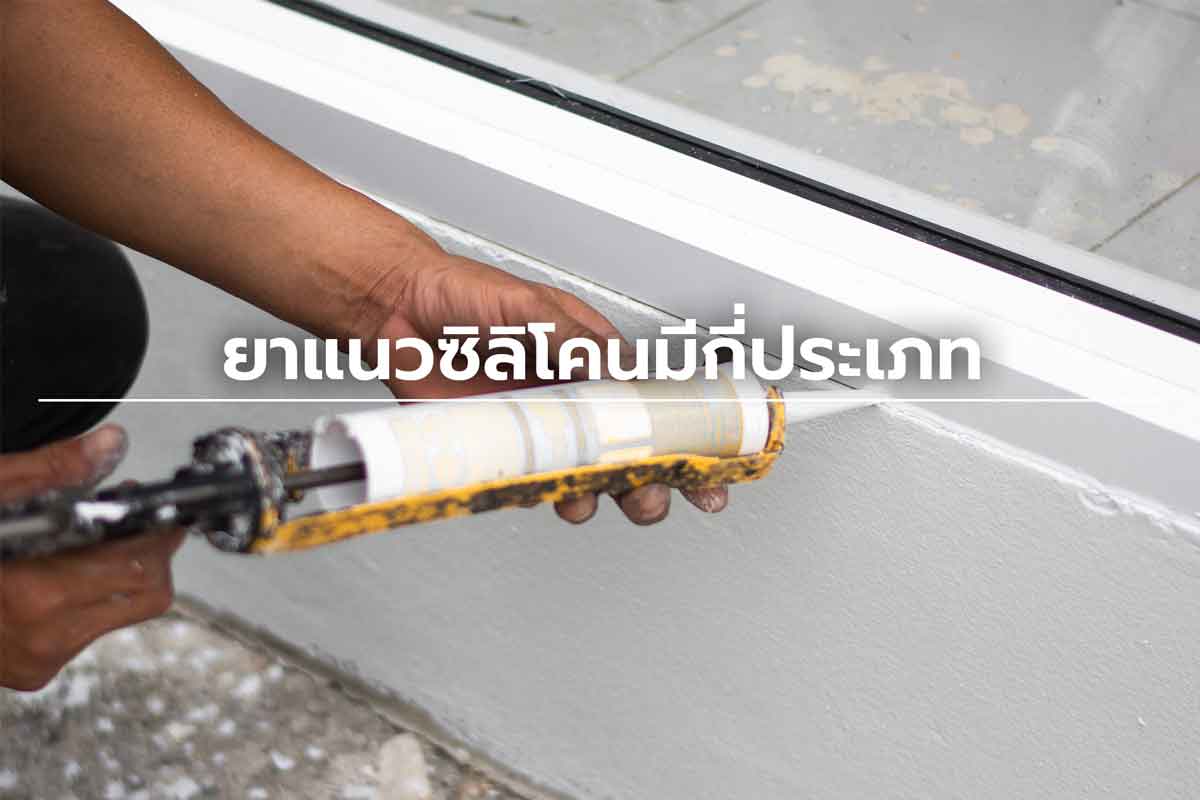
How many types of silicone sealants are there and how are they used?
What is silicone adhesive?
Silicone sealant or silicone adhesive is a bonding material made from synthetic polymers. It has very high flexibility (Elongation test = 300%), can withstand temperatures up to 180°C, and is UV resistant. After drying, the silicone surface becomes hard, tough, and strongly adhesive. It can effectively repel water and oil but cannot be painted over.
How many types of silicone sealants are there?
There are 2 types of silicone sealants: acidic silicone sealant and neutral silicone sealant (non-acidic type). There are also 100% silicone and silicone blend types, which can be produced at a lower cost.
Acidic Silicone (Acetic Cure Silicone)
Acidic silicone adhesive contains acid as a component. It has a sour smell similar to vinegar but provides high strength, quick drying, and strong adhesion.
Neutral Silicone (Neutral Cure Silicone)
Neutral silicone adhesive does not contain acid, has no strong odor, and does not corrode materials. Its outstanding property is higher flexibility than acidic silicone, but it has lower strength and dries more slowly.
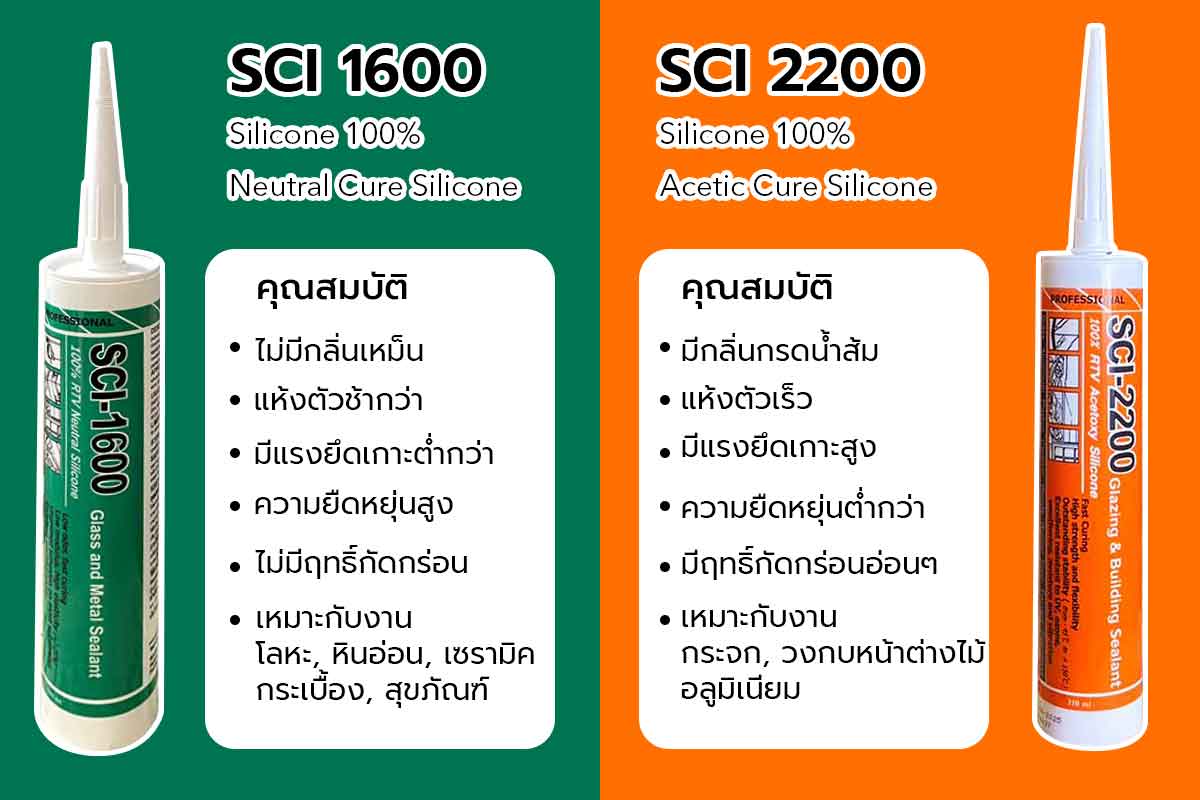
Differences between acidic and neutral silicone sealants
| Properties | Acidic Silicone
(Acetic Silicone) |
Neutral Silicone
(Neutral Silicone) |
|---|---|---|
| Odor | Has a sour vinegar-like smell | Odorless |
| Drying time | Dries quickly | Dries slowly |
| Adhesion | High adhesion strength | Lower adhesion strength |
| Flexibility | Lower flexibility | High flexibility |
| Corrosion | Mildly corrosive | Non-corrosive |
| Applications | Glass, wooden window frames, aluminum | Metal, marble, ceramic, concrete, tiles, sanitary ware |
How to use silicone sealant
Acidic Silicone (Acetic Cure Silicone) is typically labeled as GP or General Purpose on the tube, indicating it can be used for various general purposes. It is suitable for sealing door edges, glass edges, aluminum frames, and PVC, as well as for attaching aquarium glass.
Neutral Silicone (Neutral Cure Silicone) complements the applications where acidic silicone is not suitable, such as sealing marble floor joints, tile floors, ceramics, metal bonding, kitchen granite countertops, and bathroom fixtures.
How to use silicone sealant
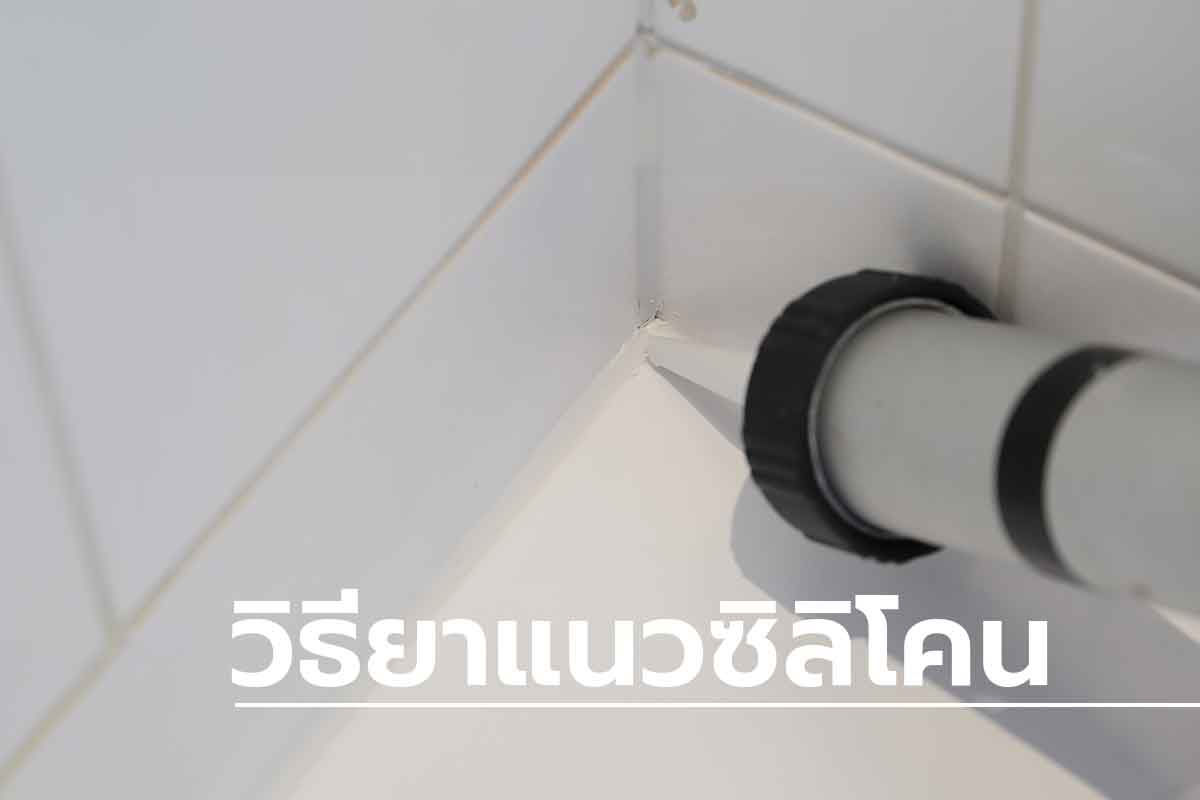
STEP 1: Prepare the surface before using silicone adhesive
Surface preparation involves cleaning off cement residue and dust. If there is old silicone sealant, use a scraper or cutter to remove it, or use a silicone adhesive remover to clean it off.
STEP 2: Prepare the silicone sealant
Load the silicone into the caulking gun and cut the tip at a 45-degree angle. Adjust the size of the opening to suit the joint you’re filling, then tighten securely.
STEP 3: Apply the silicone adhesive to the surface
Hold the caulking gun at a 45-degree angle to the joint and apply the adhesive, ensuring it adheres to the surface you’re sealing.
STEP 4: Finish the application
After applying the silicone adhesive, use a scraper or a finger dipped in soapy water to smooth the sealant. Clean any excess adhesive at this stage before it dries.
STEP 5: Allow the silicone sealant to set
This step involves waiting for the silicone adhesive to dry for 24 – 48 hours.


