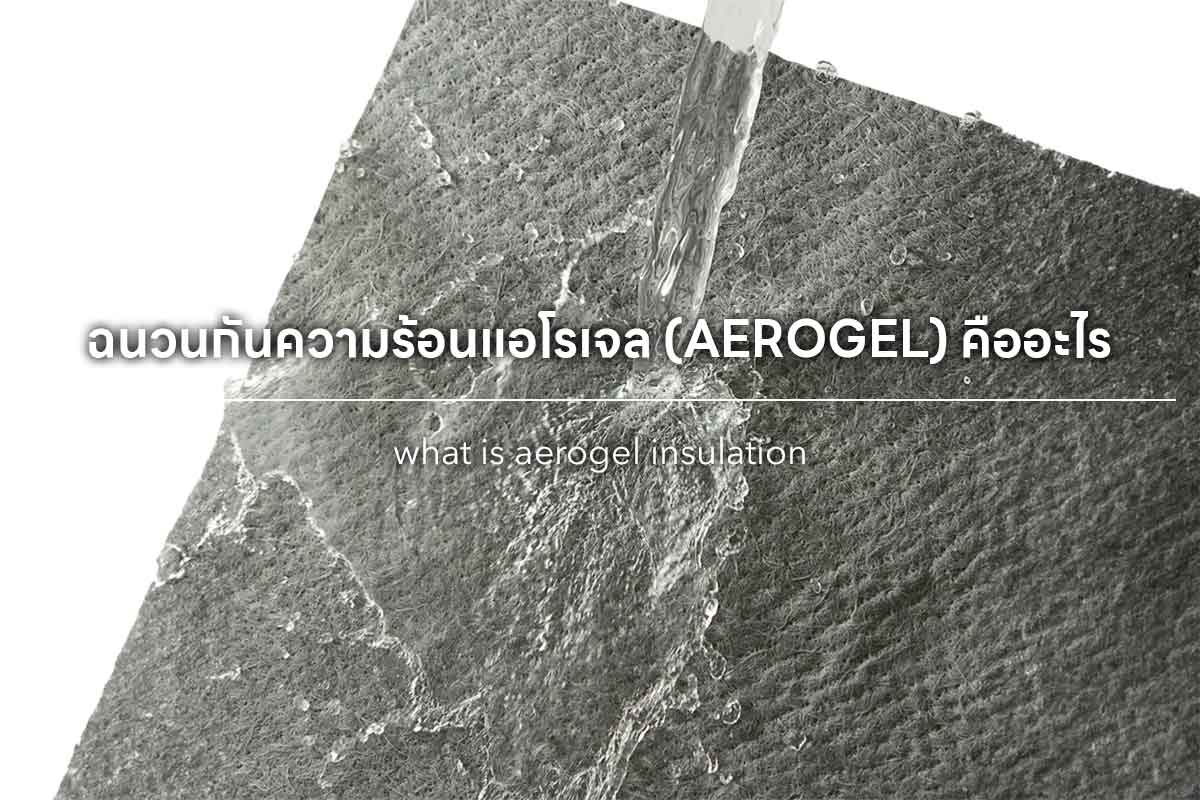
What is Aerogel Insulation and its Properties?
What is Aerogel Insulation?
AEROGEL is a thermal insulation material composed of heat-resistant fibers and silica aerogel powder. It is the world’s best thermal insulation, requiring less thickness compared to other types of insulation. It has a long service life, prevents external pipe corrosion, and provides long-term investment value
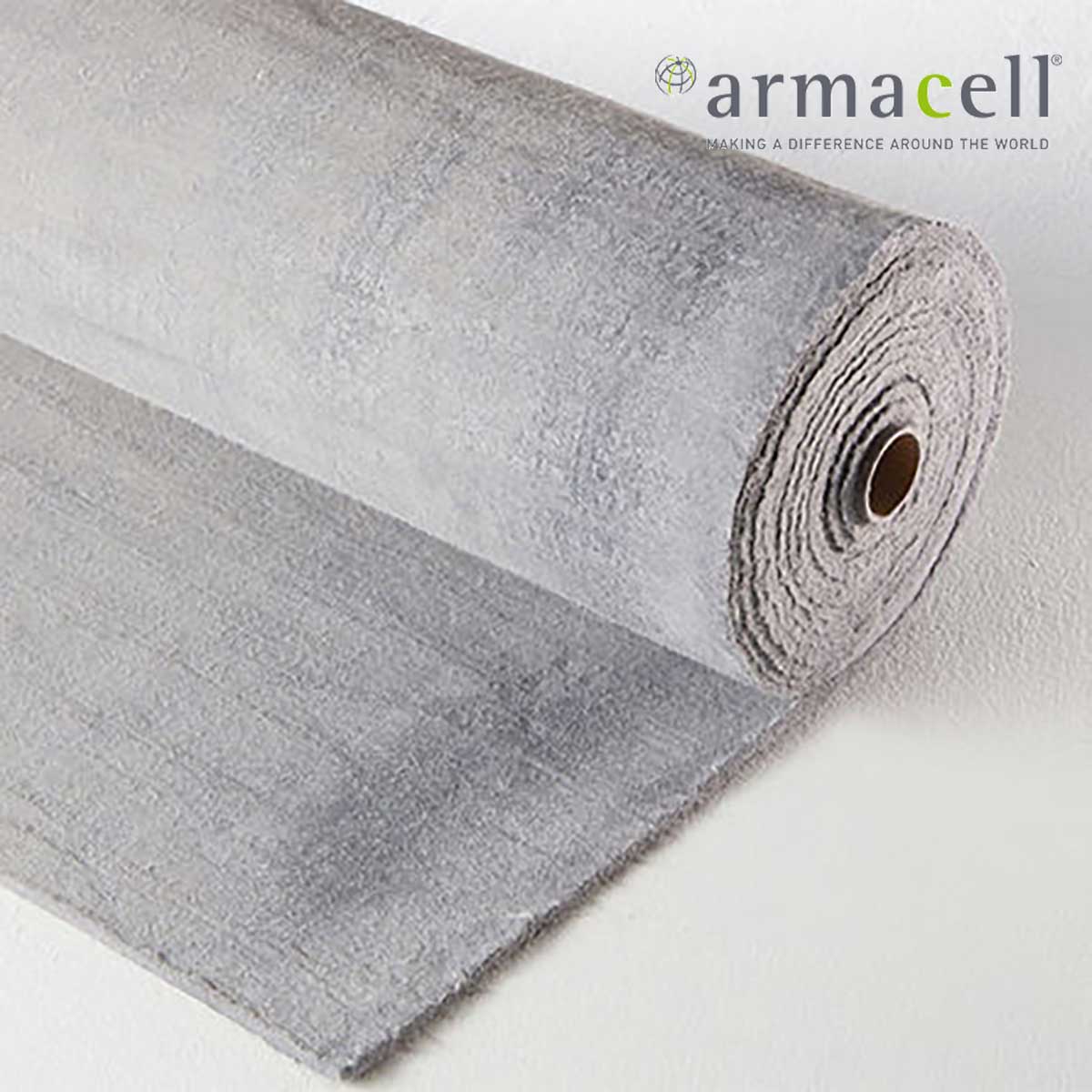
Image of Roll-type Aerogel Thermal Insulation
Armacell’s aerogel insulation is called ArmaGel Insulation
Aerogel Production
In 1930, aerogel was produced from gel in a solid jelly state where the liquid portion was replaced by air while maintaining its solid state. This resulted in an air volume of up to 90% within the gel, creating a highly complex porous structure, leading to low density and low thermal conductivity
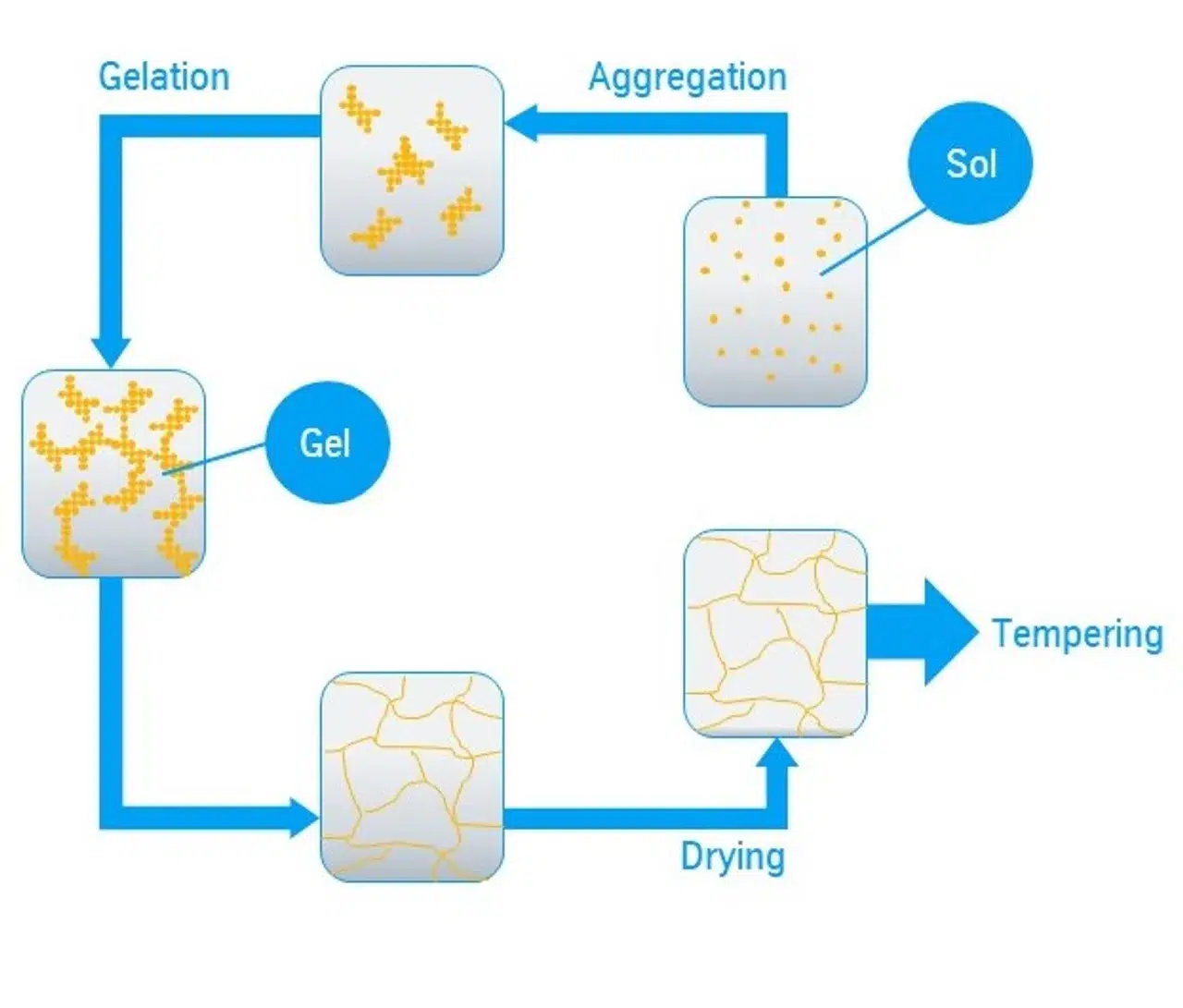
Image-Aerogel Production Process
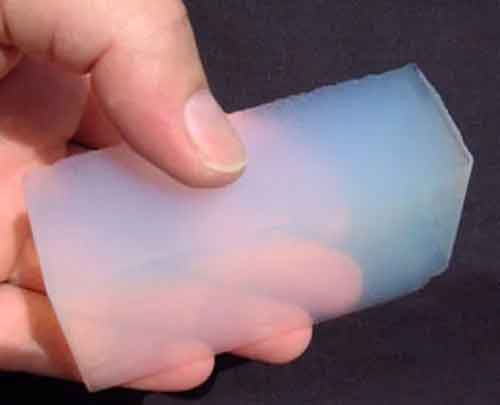
Image of Aerogel with Internal Porosity
Quality Control Standards for Aerogel Insulation
Aerogel Insulation is controlled by ASTM C1728 standard, which divides aerogel insulation into 3 levels
- Type I – 125 °C (257 °F)
- TYPE II – 200 °C (390 °F)
- Type III – 649 °C (1200 °F)
Within ASTM C1728, there are other standards for testing aerogel insulation to ensure specified quality
- ASTM C177 – Thermal Conductivity
- ASTM C165 – Compressive Strength
- ASTM C303 – Density
- ASTM C1101/C1101M – Flexibility or rigidity of mineral fiber blanket or board insulation
- ASTM C356 – Linear Shrinkage under soaking heat
- ASTM C411/C447 – Estimation of maximum use temperature
- ASTM E84 – Surface burning characteristics
- ASTM C1763 – Water Absorption
- ASTM C1104/C1104M – Moisture Resistance
- ASTM C795 – Corrosion test for austenitic stainless steel
- ASTM C1617 – Corrosion test for metal
- ASTM C1338 – Fungi resistance of insulation material and facing
Benefits of Aerogel Insulation
Lower labor cost
Due to aerogel insulation having the lowest thermal conductivity compared to other types of insulation, its thickness is less than other types, resulting in lower installation labor costs
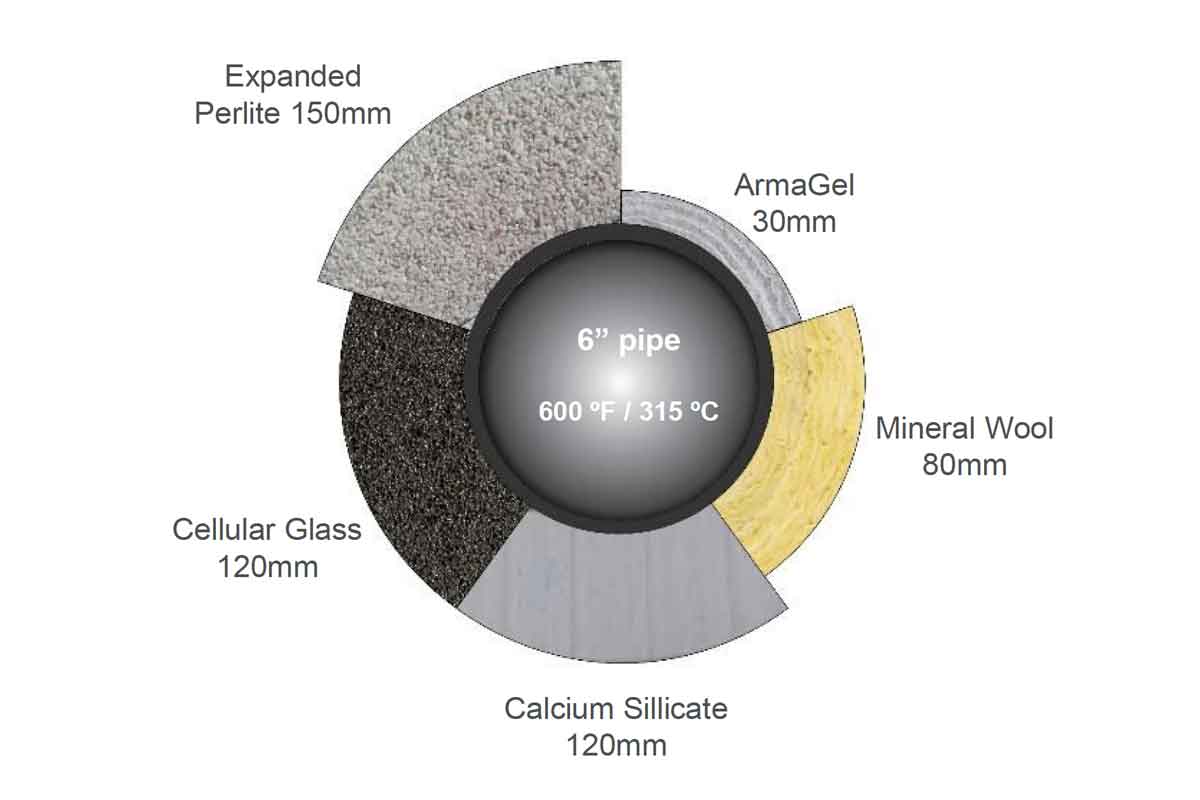
Armagel aerogel insulation has low thermal conductivity, allowing for thinner insulation than other types
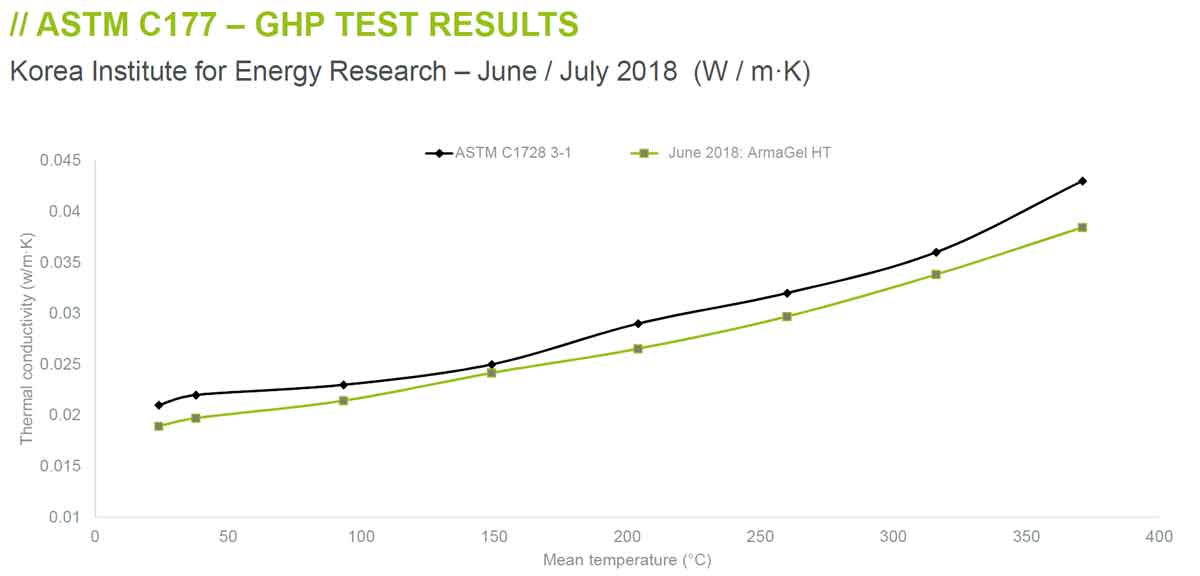
Image-Comparison of Thermal Conductivity with Other Insulation Types
Reduced Jacketing Area
Aerogel reduces the required insulation thickness, resulting in reduced jacketing area. For every 1mm reduction in insulation thickness, jacketing area is reduced by 0.4%
Comparison table of jacketing area for 6-inch pipe at 315°C temperature, 1 meter length
| Type of Thermal Insulation | Insulation Thickness | Jacketing Area |
|---|---|---|
| Armagel HT | 30 mm | 0.63 sq.m. |
| Mineral Wool | 80 mm | 0.78 sq.m. |
| Calcium Silicate | 120 mm | 0.91 sq.m. |
| Cellular Glass | 120 mm | 0.91 sq.m. |
| Expanded Perlite | 150 mm | 1.00 sq.m. |
When comparing aerogel with perlite insulation, the jacketing area is reduced by 47%, or when compared to the popular ROCKWOOL (Mineral Wool), it is reduced by 19%
Reduced Piping System Weight
When comparing Armagel (aerogel) with other types of thermal insulation, the weight of Armagel and jacketing is 80% lower than perlite, and 50% lower than mineral wool
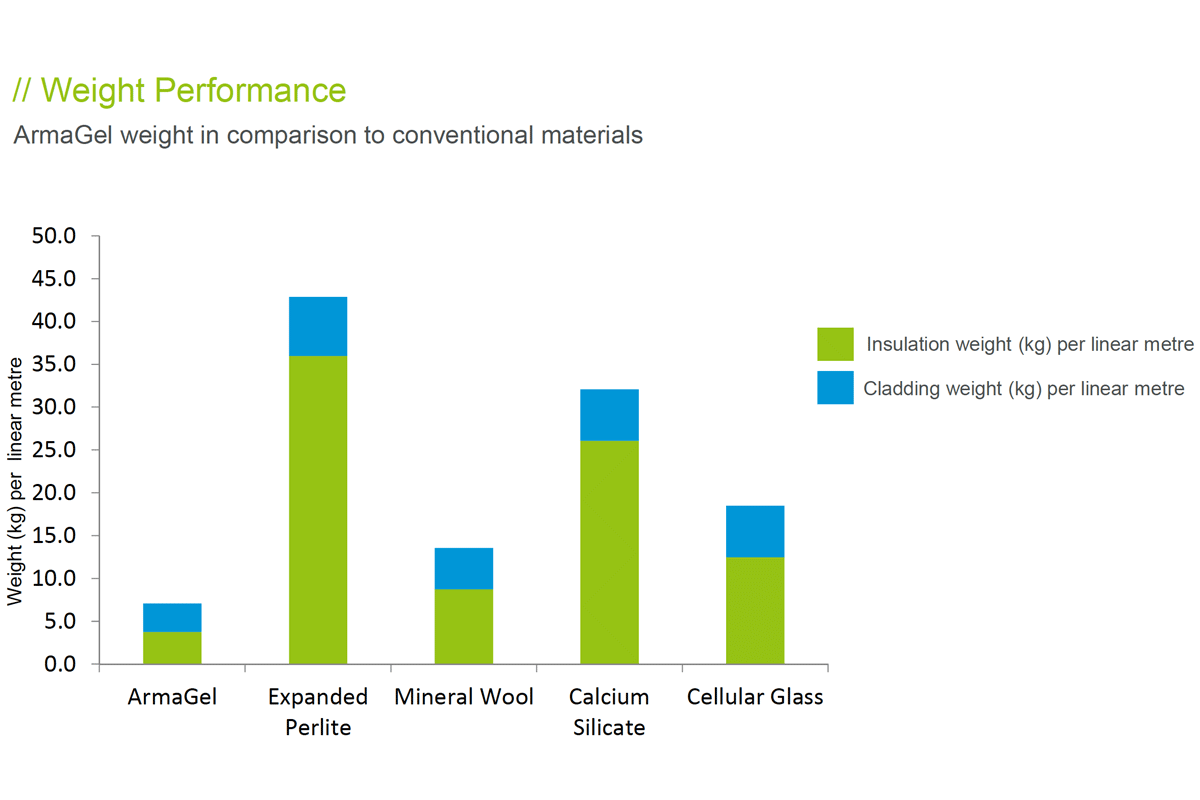
Image-Weight Comparison of Different Insulation Types per 1 Meter Length
Reduced Piping System Space
For limited spaces, choosing Armagel insulation reduces system space requirements (pipes can be placed closer together) due to reduced insulation thickness
Prevention of Corrosion Under Insulation
Most industrial piping systems use steel pipes with thermal insulation covering them. When insulation encounters water and moisture, it can cause corrosion on the steel pipes
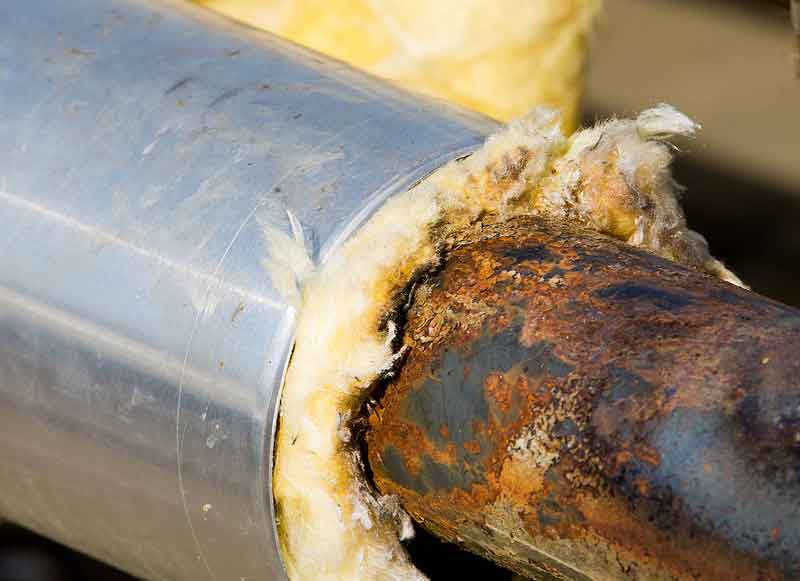
Image-Corrosion Under Thermal Insulation
ArmaGel thermal insulation has water-resistant properties, preventing water from penetrating through to the pipe surface. It also allows water vapor to pass through the insulation to prevent vapor accumulation and condensation under the insulation
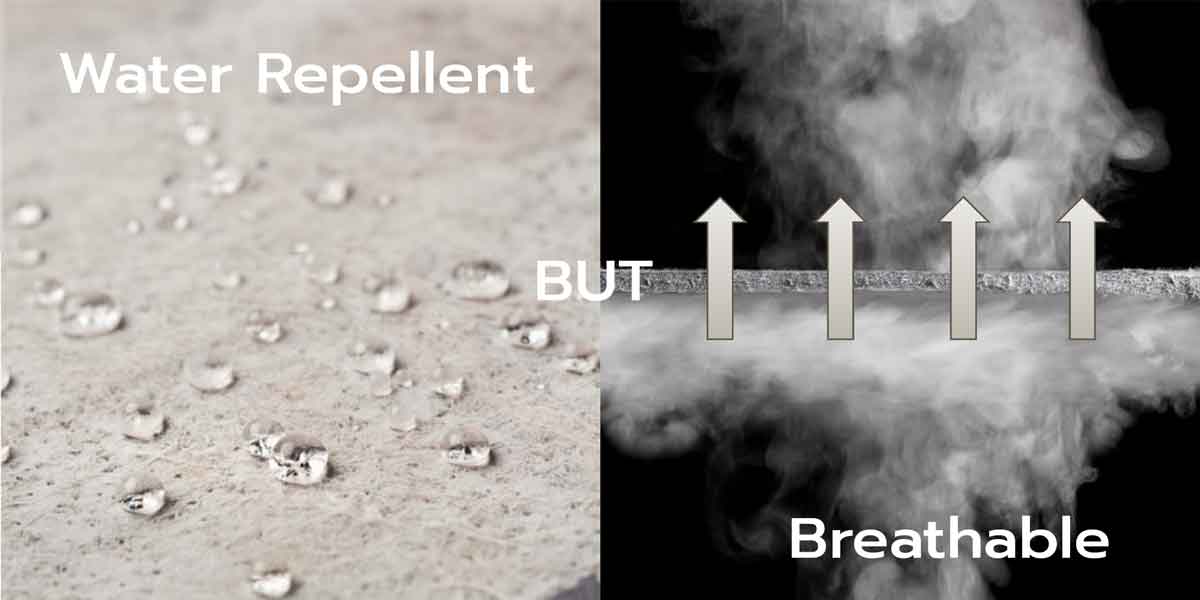
Armagel has hydrophobic properties


