Commercial buildings or offices typically have air conditioning systems installed. Some buildings use galvanized ductwork, while others use split-type air conditioners. The electricity costs from air conditioning usage are extremely expensive, especially during the hot season in March or April – this goes without saying… Besides the high electricity costs, the air conditioning is still not cool enough.
There are many methods to help solve these problems, including selecting high-efficiency air conditioning units, designing air conditioning systems with low pressure drop, choosing heat-reflective colors, or operating air conditioning only in areas being used. These methods maximize energy efficiency. However, if we look at it from another perspective:
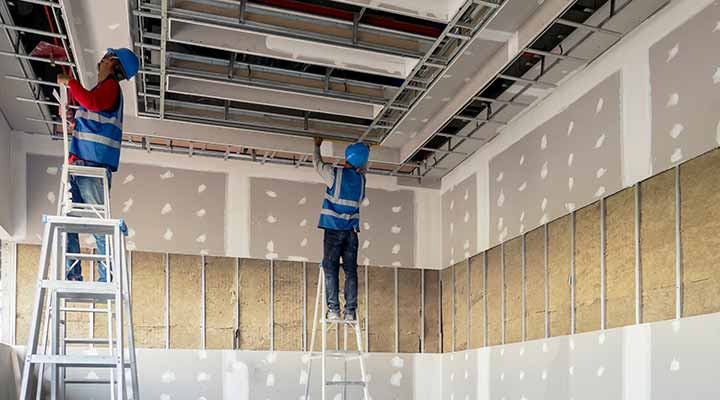
In commercial buildings or office buildings, the area that receives the most heat is the walls. Heat from external sunlight attempts to penetrate through walls from all sides. If we can retain the cool air inside the building for longer periods while slowing down the heat penetration from surrounding walls, we can reduce air conditioning costs.
What is thermal insulation for walls?
In office buildings or commercial buildings, 80% of electricity costs are for air conditioning. This represents a substantial amount, and heat penetrates through the walls from all sides of the building, causing our air conditioning to work harder to maintain the same cool temperature in our rooms.
How can we prevent heat from entering and retain cool air in the building for longer periods so we don’t have to pay high air conditioning costs? Wall thermal insulation comes in to fill this need. Thermal insulation helps prevent heat from penetrating through walls. If heat cannot enter, air conditioning costs will be reduced.
What types of wall thermal insulation are available and how do they differ?
Thermal insulation used for wall applications includes PE foam, rubber, glass wool, and rock wool. Material selection follows these principles:
Table showing properties of glass wool and rock wool insulation materials
| Material | Glass Wool Insulation | Rock Wool Insulation |
|---|---|---|
| Thermal Conductivity Thermal Conductivity |
0.032 – 0.042 W/m.K | 0.033 – 0.036 W/m.K |
| Density | 12 – 48 kg/m³ | 40 – 100 kg/m³ |
| Insulation Thickness | 25 – 100 mm | 25 – 100 mm |
| Price | 95 – 416 THB/m² | 180 – 1,130 THB/m² |
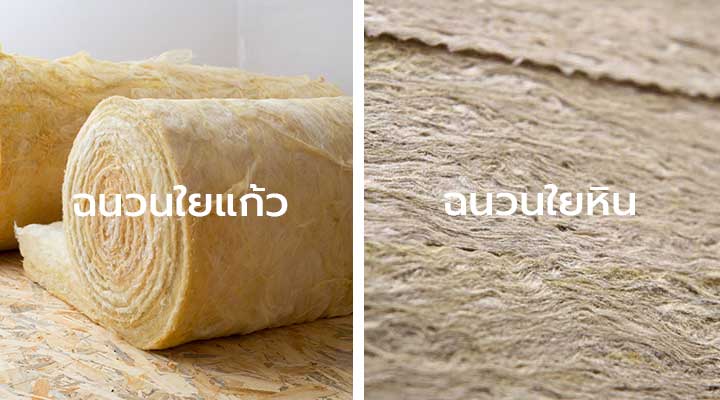
Table showing properties of rubber and PE insulation materials
| Material | Rubber | PE |
|---|---|---|
| Thermal Conductivity Thermal Conductivity |
0.033 W/m.K | 0.029 W/m.K |
| Insulation Thickness | 3 – 50 mm | 5 – 25 mm |
| Price | 165 – 1,750 THB/m² | 110 – 550 THB/m² |
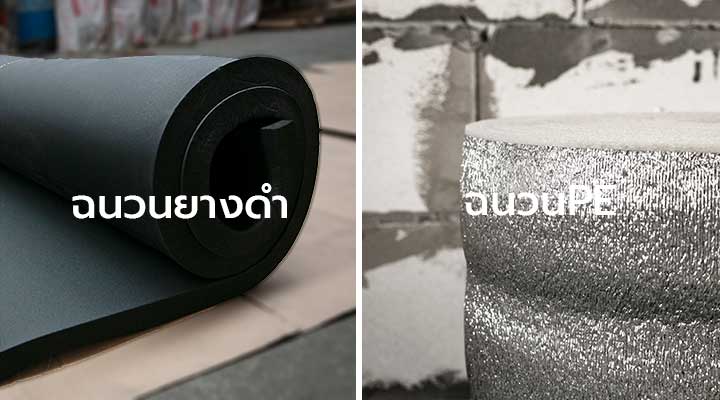
Considerations for selecting insulation for wall applications:
1.) Thermal conductivity must be low to minimize heat penetration.
2.) Wall insulation installation can be accomplished by adding an additional wall layer and placing insulation between the two walls, or by installing a framework and covering with smart board or gypsum board. Therefore, insulation thickness affects the increased or decreased structural costs.
3.) If the thermal barrier wall installation requires noise reduction properties, glass wool and rock wool insulation will be more effective for noise reduction. For example, buildings adjacent to busy roads with heavy traffic should use glass wool or rock wool insulation. However, if the installation is at height with minimal external noise and higher construction costs, rubber or PE foam insulation can be used.
Rubber and PE foam have lower sound insulation performance but are lighter than glass wool and rock wool insulation, helping to reduce structural costs.
Wall Thermal Insulation Installation
Wall thermal insulation installation has two main methods:
1.) Construct two layers of brick walls with gaps between walls according to the insulation thickness used (50 – 100 mm) and insert thermal insulation between the wall gaps. This method provides strong walls due to the solid brick structure, but has higher construction costs.
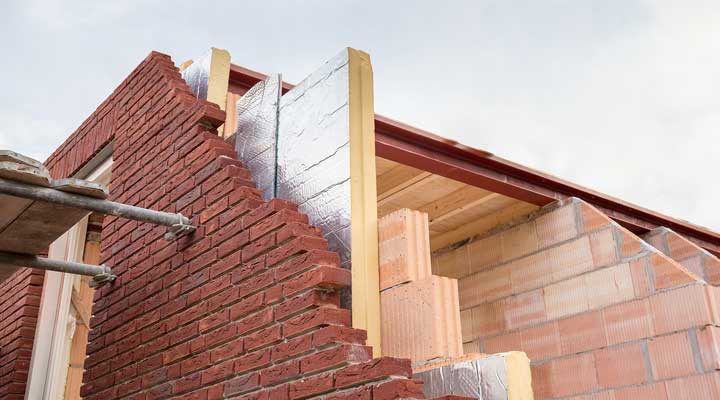
2.) Install wall framework 50 – 100 mm from the wall, install insulation within the wall framework, and cover the insulation surface with gypsum board or smart board. This method has less structural strength than method 1 but lower construction costs.