Buildings and residential homes have ceilings that conceal the complexity of electrical wiring and various systems. The ceiling helps hide system pipes and electrical wiring behind it, displaying a smooth surface or artistic ceiling patterns.
The ceiling doesn’t just conceal system work; it also helps “block” heat coming from the roof. For residential homes, the ceiling provides significant heat protection, but sometimes it’s not enough, especially during Thailand’s “hot season.”
What is Ceiling Thermal Insulation?
In Thailand, having a ceiling is highly beneficial as it significantly reduces heat from the roof. However, for buildings with top floor units directly under the roof, whether condominiums or houses, it can be “extremely hot.”
Ceiling thermal insulation is therefore widely used on the second floor of houses or top floors of condominiums, as it can reduce heat from the roof by up to 60% and is 4-6 times more effective than installing just a ceiling alone.
If the roof temperature is 65 degrees, the indoor temperature will be approximately 35 degrees without insulation, and with insulation, it will average 32 degrees. Besides reducing heat entering the house, it also helps save up to 50% on air conditioning costs because when indoor temperature decreases, the air conditioner doesn’t have to work as hard, resulting in lower electricity bills.
Most ceilings cannot support heavy loads, so the insulation we use should not be too dense. We recommend fiberglass insulation because it’s affordable, excellent at heat insulation, and readily available at general construction material stores.
Fiberglass insulation for ceilings comes in fixed thicknesses of 3 inches, 4 inches, and 6 inches. The thicker the insulation, the better the heat protection. Weight isn’t a major concern as ceiling fiberglass insulation has a density of only 12 kg/m³ compared to insulation used for other applications (other applications use fiberglass insulation with densities of 24-48 kg/m³).
| Details | Thickness 3 inches (75 mm) | Thickness 6 inches (150 mm) |
|---|---|---|
| Heat Insulation (Compared to ceiling without insulation) |
More than 4 times | More than 6 times |
| Weight per square meter (Regular ceiling can support 30 kg/m²) | 1.13 | 2.06 |
| Area per roll | 2.4 square meters | 2.4 square meters |
| Price per square meter | 160 – 190 | 270 |
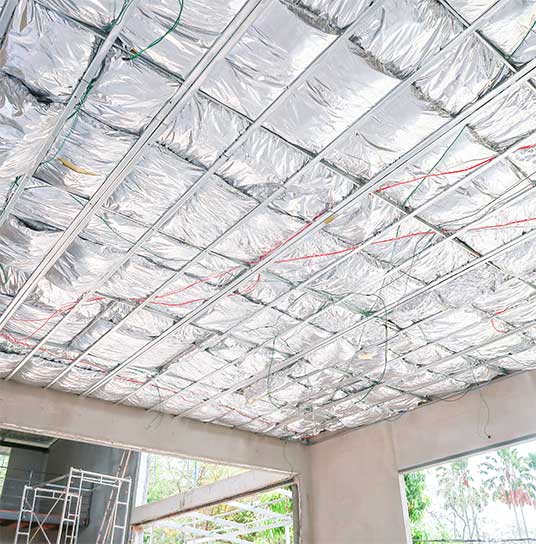
Ceiling insulation is covered on all sides with aluminum foil sheets. Since the installation is permanent for the building’s lifetime, over time, the fiberglass fibers may break down but will remain contained within the aluminum foil covering, preventing dust from spreading outside.
The aluminum foil sheets not only contain broken fiberglass dust but also enhance heat radiation reflection efficiency, reflecting up to 96% of heat radiation. Many people ask, “If it’s not exposed to direct sunlight, what’s the benefit?”
We need to explain about heat radiation first. As we know, heat travels in three ways:
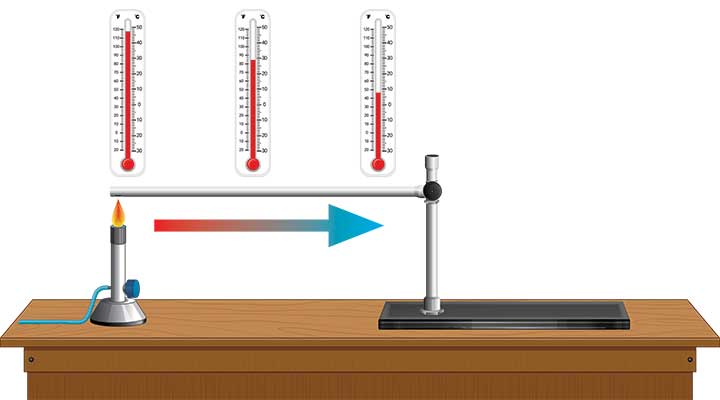
1.) Heat Conduction (through solid medium) – For example, when we place our hand on a wall and feel heat, the heat travels from the wall to our hand. This is called “heat conduction.”
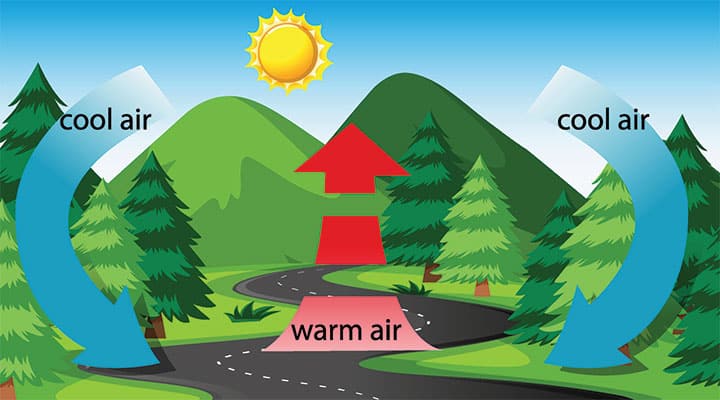
2.) Heat Convection (through liquid or gas medium) – For example, when we stand in front of an air conditioner and feel cool because the air from the AC hits our face. This is called “heat convection.”
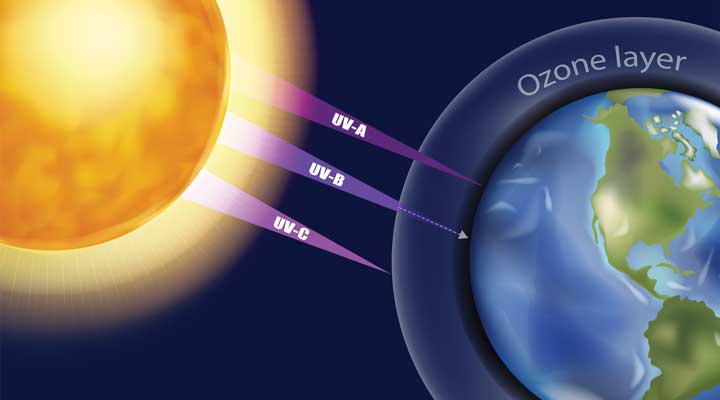
3.) Heat Radiation (no medium required) – For example, when the sun shines on us and feels very hot, the heat from the sun travels through space (vacuum with no medium) to reach our skin. Or when we sit close to another person and can feel their body heat. This is called heat radiation.
This occurs with all objects. Every object has its own temperature and constantly radiates heat. Objects that don’t radiate heat at all are called black bodies.
How to Install Thermal Insulation?
Ceiling thermal insulation is the easiest to install compared to roof or wall insulation. It can be done without professional help, following these steps:
1.) Locate the service access to get above the ceiling (usually located near the bathroom)
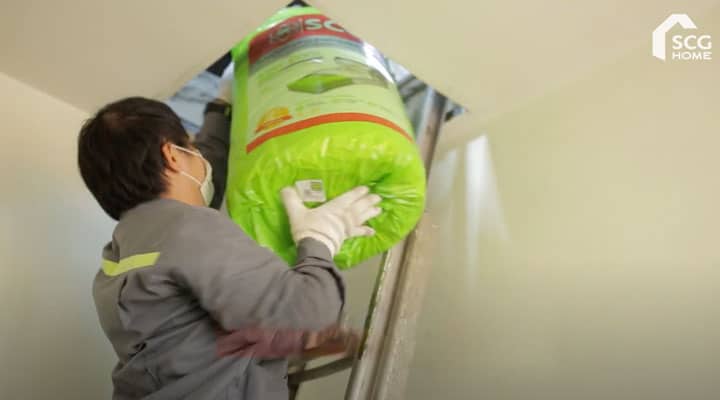
2.) Unwrap the insulation
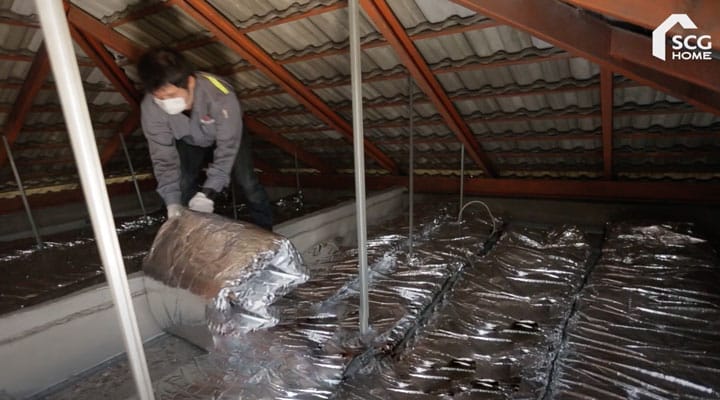
3.) Roll out the insulation along the ceiling
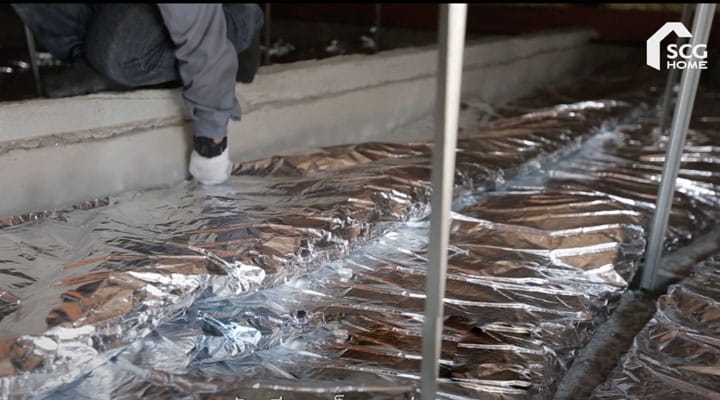
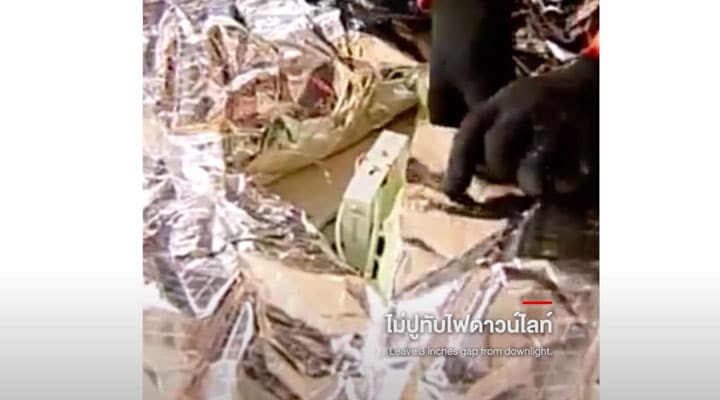
4.) Cut the insulation around downlight fixtures leaving a 3-inch gap and seal the cut edges with aluminum tape