
Insulation of Pressure Vessels
Pressure vessels are equipment used to store raw materials in liquid, solid, and gas forms for use in production processes. The products resulting from production are stored in large storage tanks.
Typically, pressure vessels store raw materials that require temperature control. If the temperature is too high or too low, it can spoil the raw materials, making them unusable. Therefore, pressure vessels need to be insulated.
- To maintain a constant temperature of the raw materials and prevent damage.
- To reduce heat loss from the raw materials.
- To prevent burns if someone accidentally touches the pressure vessel.
- To prevent solidification (when temperature changes occur).
Standards and Regulations for Pressure Vessel Insulation
- ASTM C1696 “Standard Guide for Industrial Insulation Systems”
- NACE SP0198 Control of Corrosion Under Thermal Insulation and Fireproofing Materials – A System Approach
- ASME “Boiler and Pressure Vessel Code”
- MICA “National Commercial & Industrial Insulation Standards”
- DIN 4140 Insulation Works on Industrial Plants and Building Services Installations
- AGI Q05 Construction of Industrial Plants
- AGI Q101 Insulation Works on Power Plant Components
- CINI-Manual “Insulation in Industry”
- BS 5970 (Code of Practice for Thermal Insulation of Pipework, Equipment and Other Industrial Installations) PIP (Process Industry Practices)
Thermal Insulation System for Pressure Vessels
The insulation for pressure vessels consists of the following materials:
- Thermal Insulation
- Support structure and spacers
- Water vapor retarder
- Cladding or jacketing
When insulating pressure vessels, it’s essential to know the vessel’s temperature to design the insulation system. In this article, we will focus on thermal insulation.
Method for Selecting and Installing Insulation for Pressure Vessels
Selecting appropriate thermal insulation for pressure vessels depends on several factors such as the process, vessel temperature, vessel size, and installation location.
ROCKWOOL insulation used for pressure vessels is either the roll type with aluminum foil facing (ProRox BL938) or rigid board type with a density of 60 kg/m³ (ProRox SL930).
Typically, pressure vessels are installed outdoors, exposing them to constantly changing weather conditions including rain and sun. Therefore, the insulation used should have low thermal conductivity (to maintain internal temperature) and good water resistance properties (non-absorbent and quick-drying when wet).
Table showing ROCKWOOL insulation thickness for pressure vessels of various diameters
| ROCKWOOL Insulation Thickness (mm) | 25 mm | 40 mm | 50 mm | 60 mm | 70 mm | 80 mm | 100 mm | 120 mm |
|---|---|---|---|---|---|---|---|---|
|
ProRox SL930 |
800 | 1 ,000 | 1,400 | 2,000 | 2,400 | 3,000 | 3,800 | 4,800 |
| ProRox SL960 | 1,000 | 1,400 | 2,000 | 3,000 | 4,000 | 5,000 | 5,000 | 5,600 |
According to CINI standards, each layer of pressure vessel insulation must be secured with 13 mm wide, 0.5 mm thick stainless steel bands every 300 mm, fastened with butterfly nuts or quick-release fasteners.
If multiple layers of insulation are used, the joints should be staggered to prevent water droplets from penetrating to the metal surface of the pressure vessel.
For horizontal pressure vessels, ROCKWOOL roll insulation with one-sided foil facing (ProRox BL938) is used for faster installation. For vertical pressure vessels, we use insulation pins welded to the tank wall, then insert ROCKWOOL board insulation (ProRox SL930) through the pins, and finally cover with washers (6 insulation pins/m² in normal areas and 10 pins/m² in the lower part of the vessel).
- For insulation thicknesses less than 120 mm, we use insulation pins with a diameter of 4 mm (4 mm nails).
- For insulation thicknesses greater than 240 mm, we use insulation pins with a diameter of 6 mm (6 mm nails).
- If there is no gap between the jacket and the insulation during installation, the insulation pins should be 10 cm shorter than the insulation thickness (for 100 mm thick insulation, the nail should be 90 mm long).
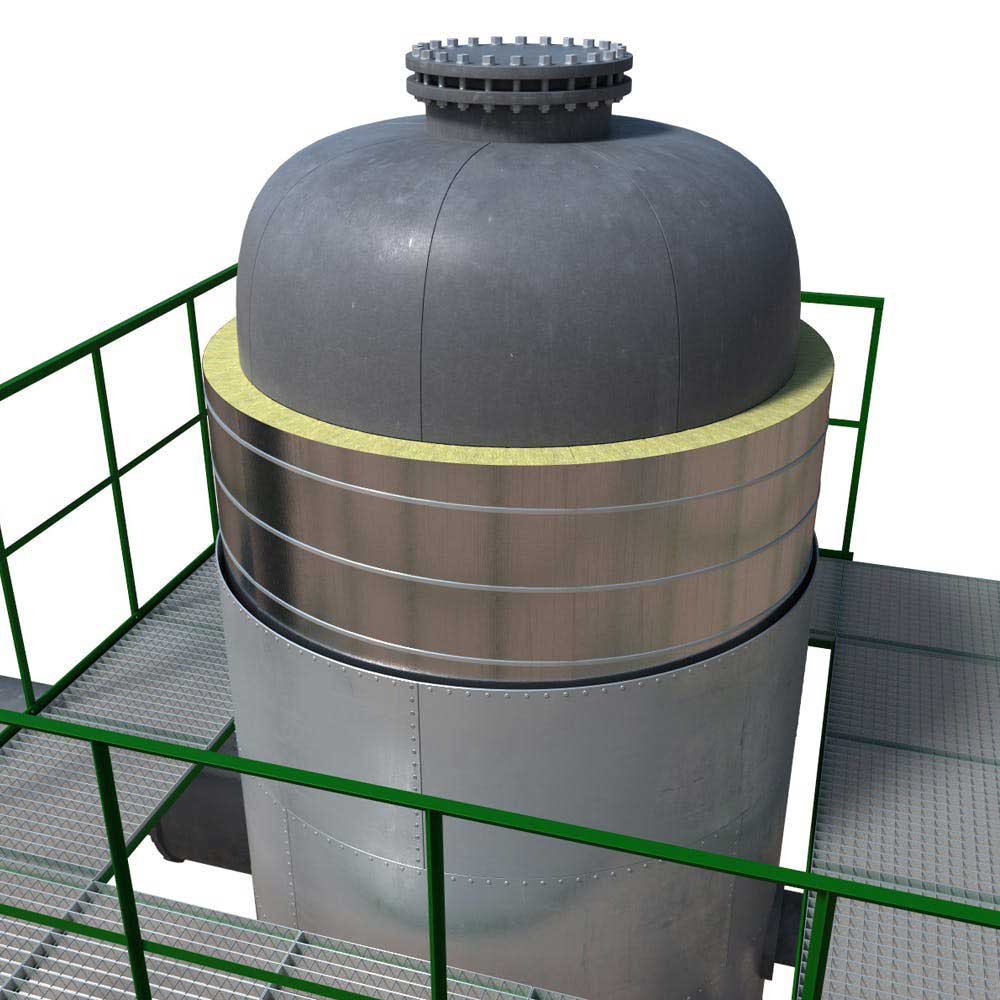
ProRox SL930 ROCKWOOL insulation for vertical pressure vessel
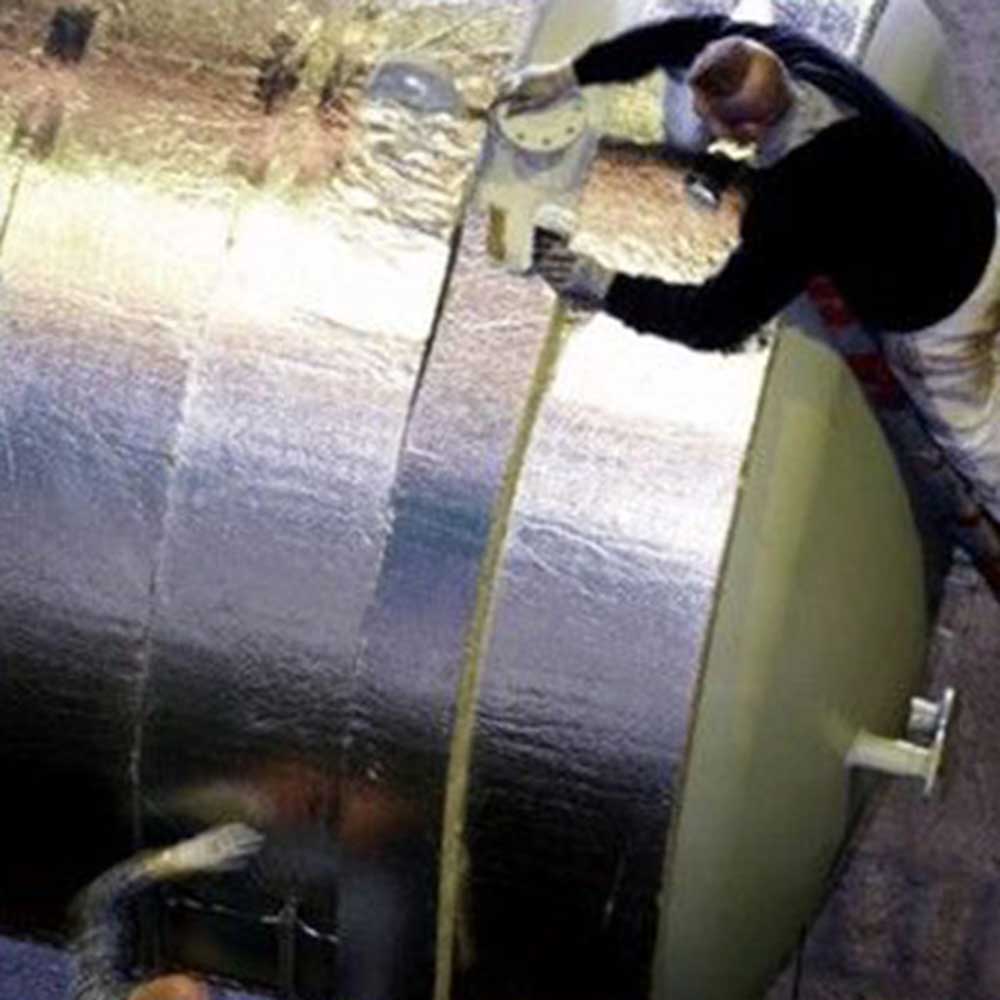
ProRox SL930 ROCKWOOL insulation for horizontal pressure vessel
Insulating pressure vessel hooks
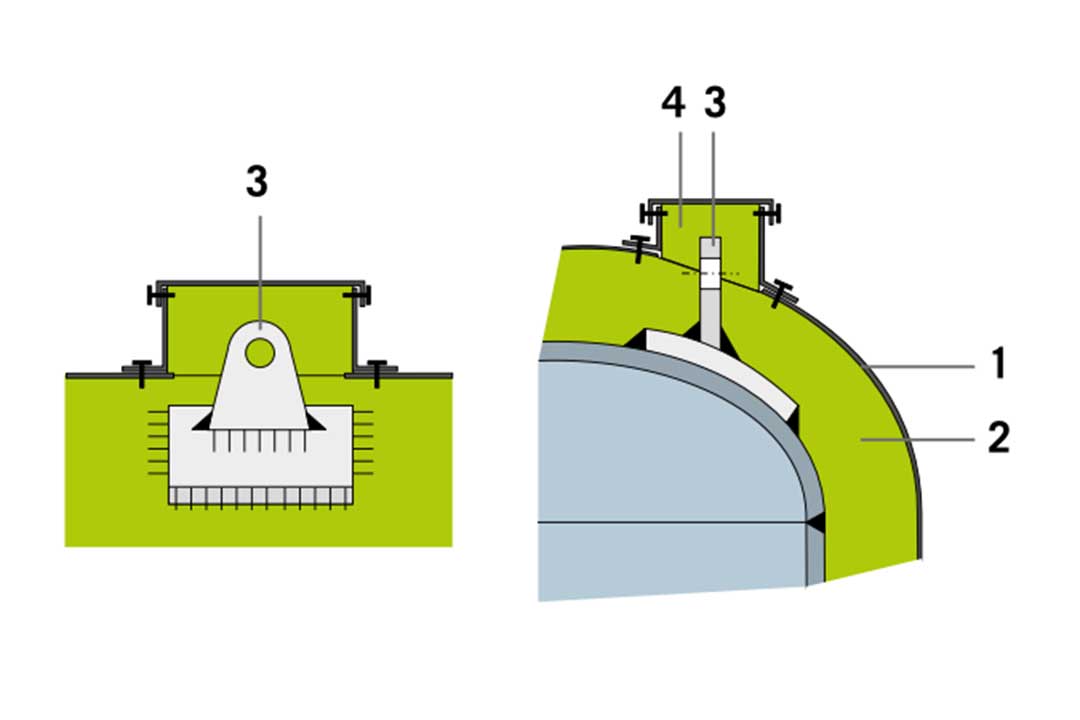
Insulating pressure vessel hooks
1. Jacket sheet 2. ROCKWOOL insulation 3. Pressure vessel hook 4. ROCKWOOL insulation for hook covering
Insulating the Base of Pressure Vessels
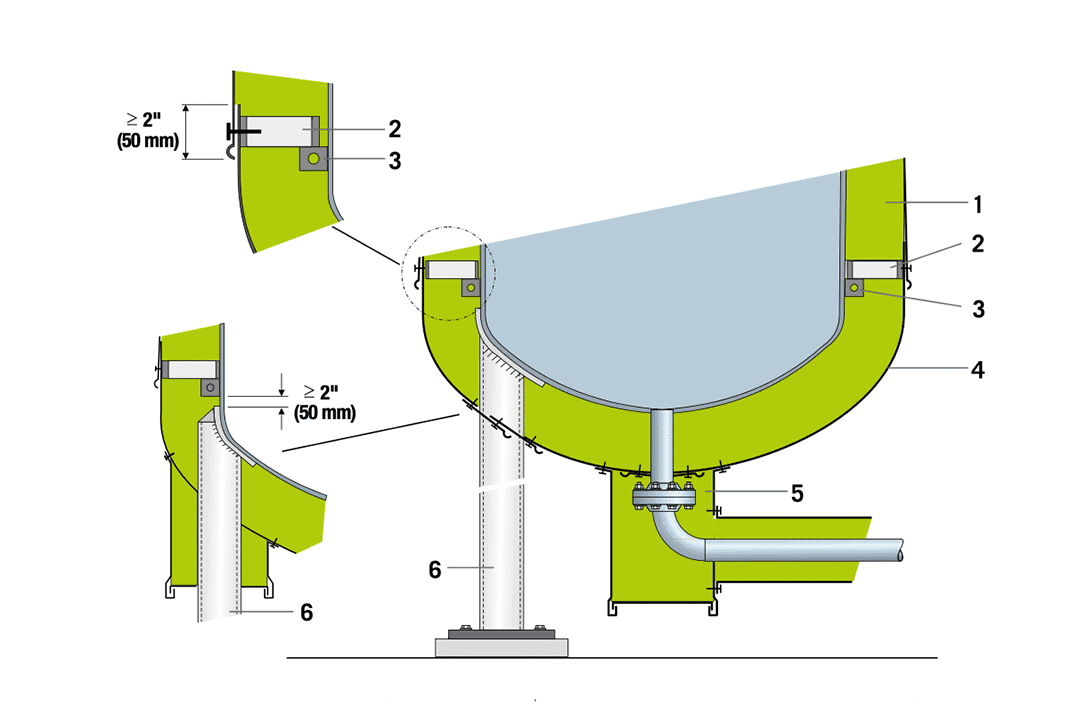
Insulating the base of a pressure vessel
1. ROCKWOOL insulation 2. Support construction 3. Mounting support 4. Curved section of pressure vessel head 5. Outlet (discharge point) 6. Pressure vessel legs
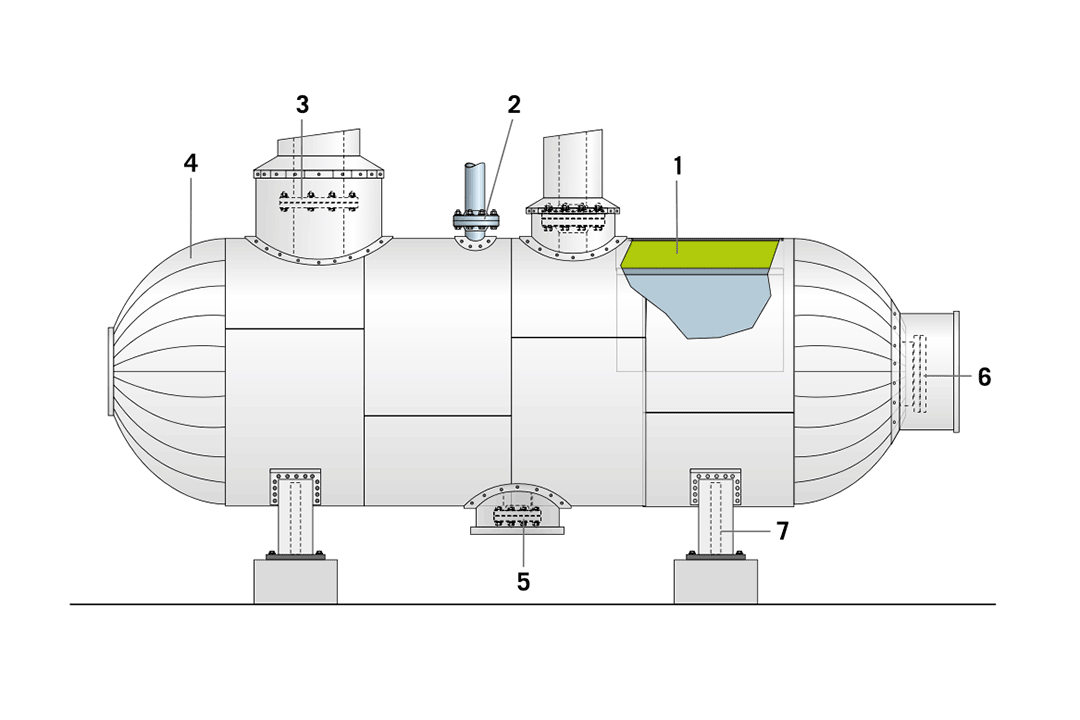
Insulating the base of a horizontal pressure vessel
1. ROCKWOOL ProRox BL938 insulation 2. Inlet flange 3. Pressure vessel inlet pipe 4. Conical head of pressure vessel 5. Pipe under the vessel 6. Vessel head with drain pipe 7. Pressure vessel legs
Insulating the Pressure Vessel Head
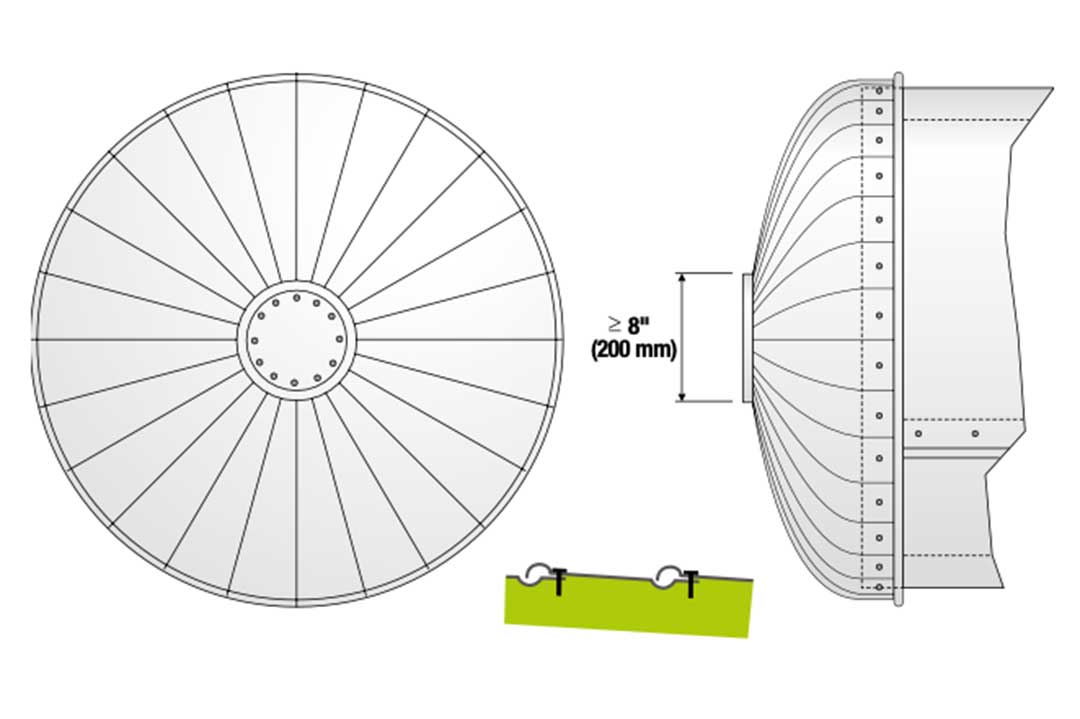
Image of insulating a pressure vessel's conical head
Insulating a pressure vessel head with attached pipes
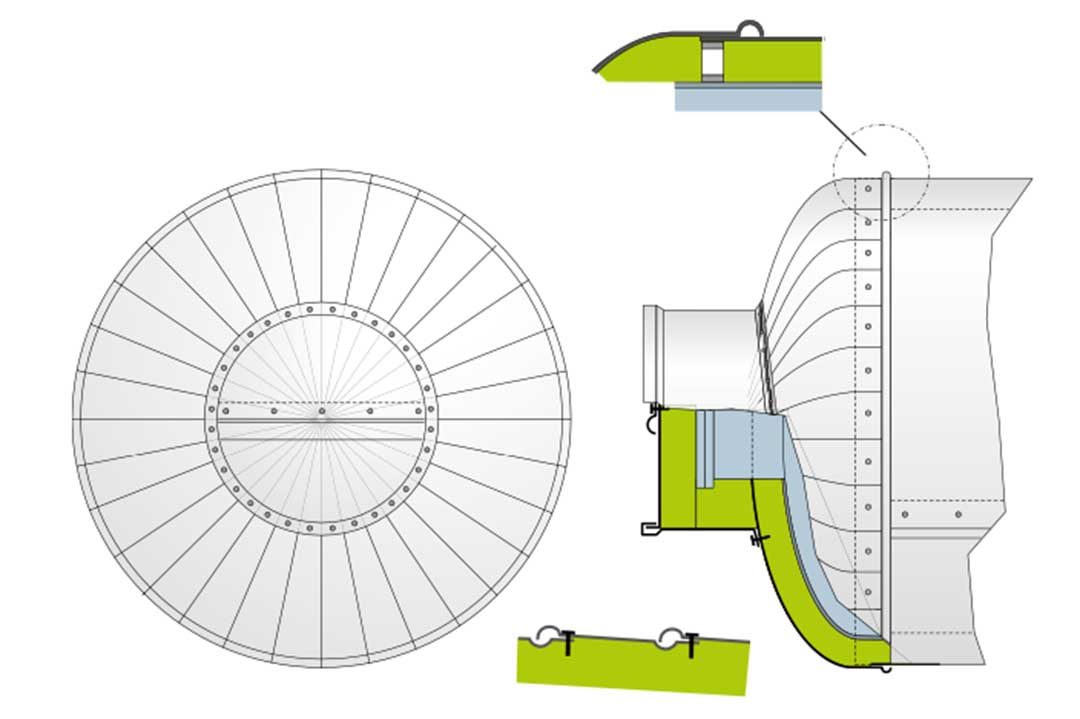
Insulating a pressure vessel head with attached pipes
Insulating pipes exiting the pressure vessel
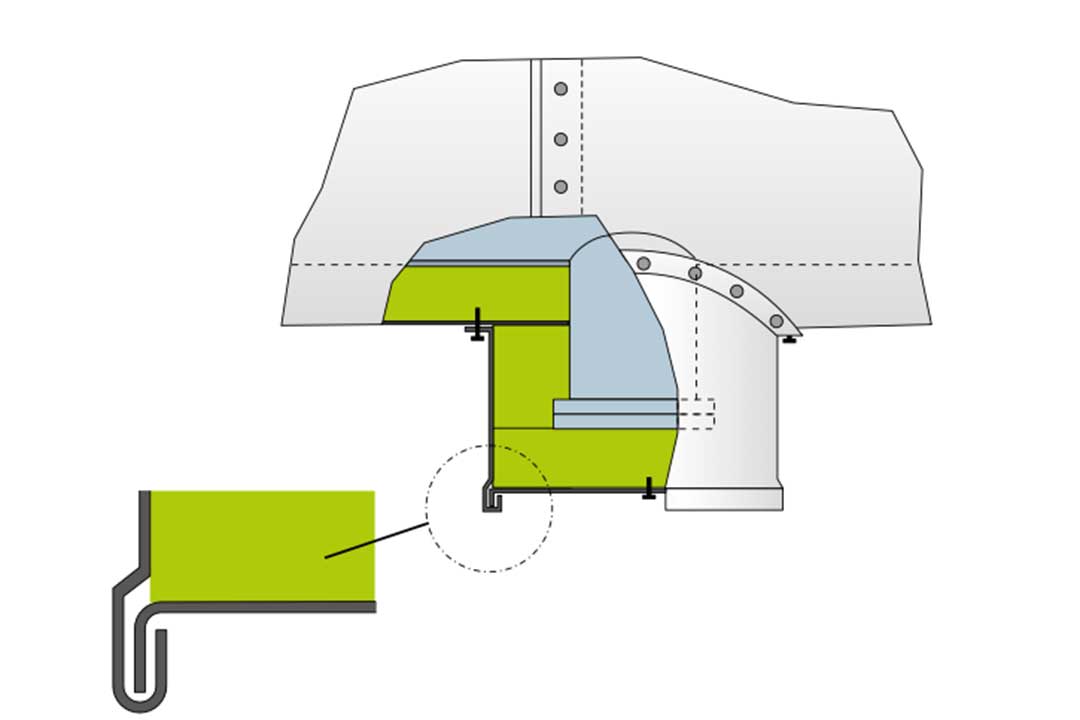
Insulating pipes exiting the pressure vessel
Support Structures and Spacers for Pressure Vessels
Installing support constructions and spacers is done to bear the weight of the insulation system and maintain the designed insulation thickness.
If we install insulation without supports, the weight of the insulation could damage the equipment. If we don’t install spacers, the weight of the jacket sheets will compress the insulation, reducing its thickness from the design specifications.
Jacketing Pressure Vessels
Jacketing pressure vessels protects the insulation from weather conditions such as rain, wind, and sun, and prevents scratches that could reduce the insulation’s lifespan.


