Air conditioning is essential for every home and building in Thailand. Without it, people would have to endure the country’s intense heat. As Thailand is a tropical country, the air conditioning industry has grown significantly. Many may not know that Thailand is the world’s second-largest air conditioner manufacturer, resulting in fierce competition among various brands.
While homes typically use wall-mounted air conditioners that release cool air for our comfort, how do large buildings and shopping malls distribute cool air?
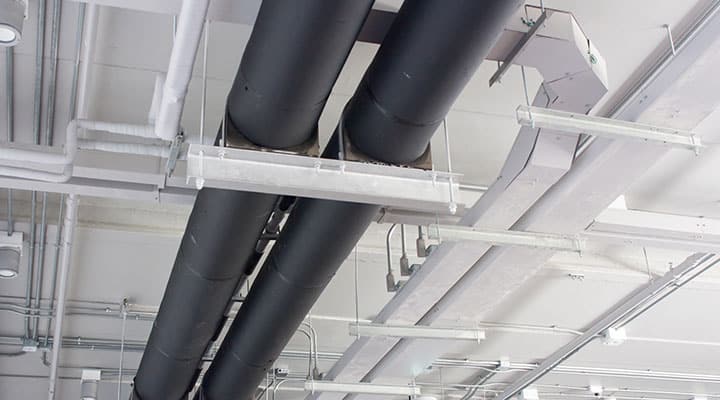
Commercial buildings and shopping malls mainly use chillers, which are large cooling units that exchange heat between water and air. The cooled air flows through galvanized ducts and is distributed through installed air outlets.
However, the distance between the chiller and air outlets is considerable, and without proper insulation, the air would lose its coolness before reaching the outlets. Therefore, air ducts must be insulated to prevent cool air from escaping.
What is Air Conditioning System Insulation?
Both small and large air conditioning systems require various types of thermal insulation. Small wall-mounted units using refrigerant use black rubber insulation to cover refrigerant pipes to prevent cooling loss.
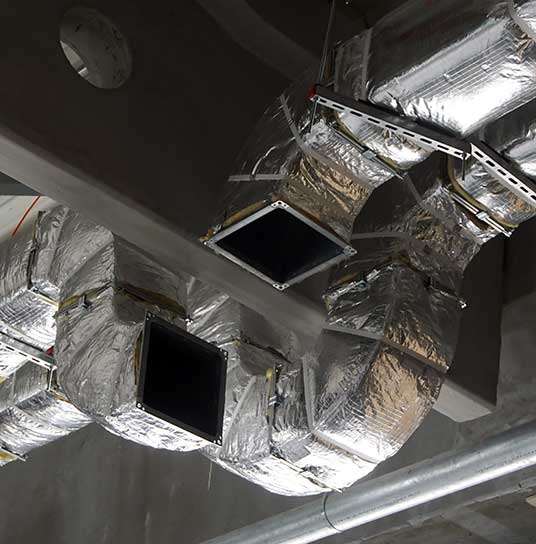
For larger systems like chillers or VRF systems, black rubber insulation is used on cold pipes. When galvanized air ducts are installed, they are covered with either black rubber or fiberglass insulation to maintain cool air temperature.
In cases where duct noise is a concern, fiberglass insulation is applied inside the ducts to reduce air noise.
How Does Condensation Form in Air Conditioning Systems?
Sometimes we notice water droplets or condensation forming on cool air ducts. How does this happen? We need to first understand how air behaves.
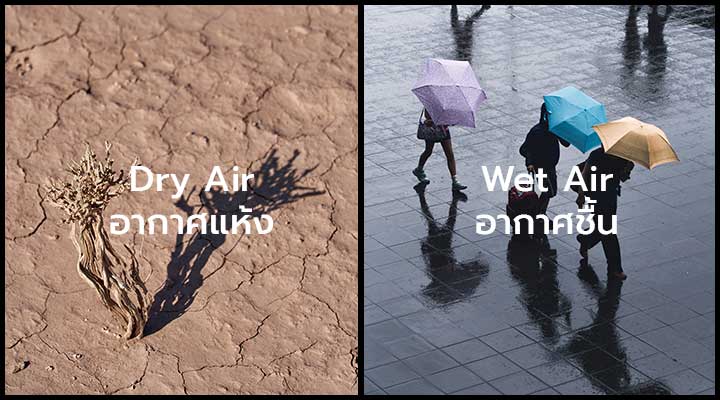
As we know, air contains water vapor, which we call “humidity.” Air at different temperatures can hold different amounts of moisture.
Cold air has less capacity to hold water vapor, which is why we say the air is “dry” in winter. Warm air can hold more water vapor, and on hot, rainy days, the air becomes hot and humid, making us feel uncomfortable and sticky.
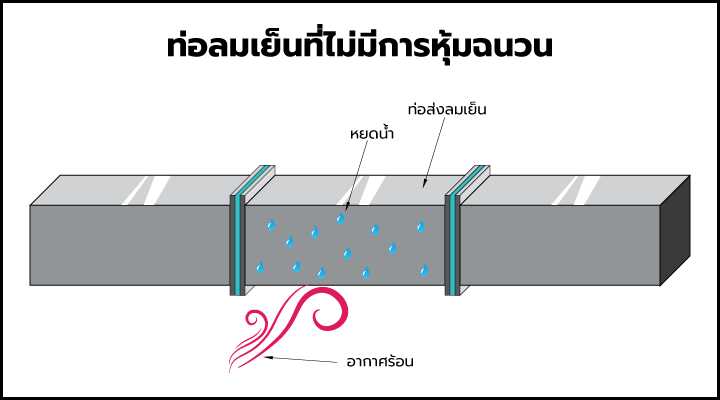
Now that we understand humidity and air’s moisture-holding capacity, let’s explain why condensation forms on duct surfaces. The air flowing inside galvanized ducts is cool because it comes from the cooling unit.
The air outside the duct is naturally warmer. When this warm air contacts the cool duct surface, it cools down. This cooled air can hold less moisture, and at a certain temperature point, the excess moisture condenses into water droplets on the duct surface.
This phenomenon can be clearly observed when we pour cold water into a glass – after a while, water droplets form on the glass’s exterior.
How can we solve this condensation problem? The solution is simple – prevent the duct surface from becoming cold enough to cause condensation when it meets warm air. This is where air conditioning insulation comes in.
Air conditioning insulation helps keep the cold air inside the duct from escaping, preventing the outer surface from forming condensation. Many people question if this really works.
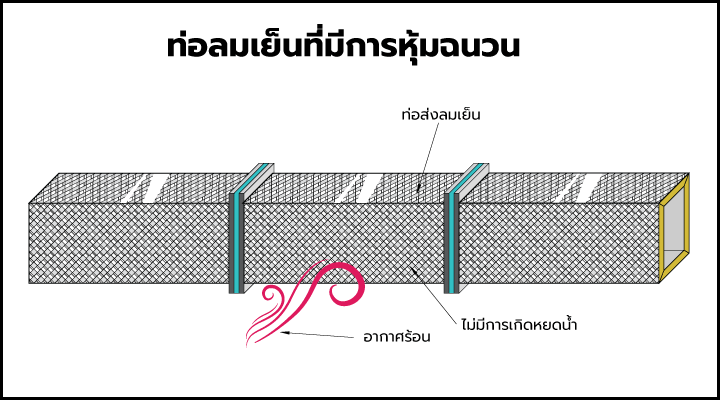
Let’s use a simple example: a “thermal mug.” These mugs have double walls with either a vacuum or insulation between them. That’s why you don’t see condensation on the outer surface, even when the liquid inside is at 0-1 degrees Celsius.

Where and How is Air Conditioning Insulation Installed?
For residential split-type air conditioners, we insulate the refrigerant pipes entering and exiting the compressor unit. Both pipes operate at low temperatures, and without insulation, the compressor would work harder, consuming more electricity and wearing out faster.
For chiller systems, we insulate three main areas:
1.) The chiller unit
2.) Cold water pipes
3.) Cold air ducts, both internal and external
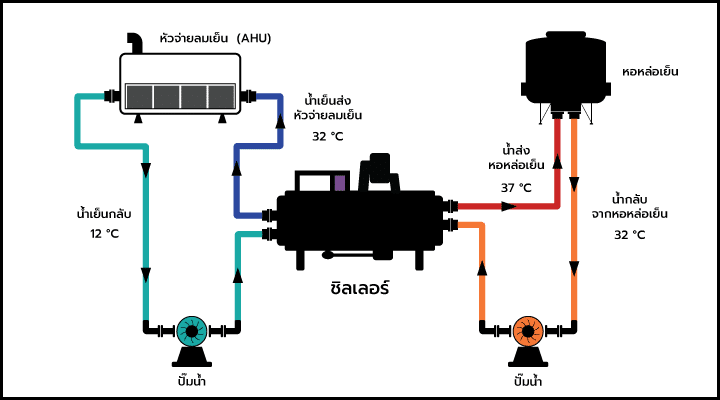
The chiller unit must be completely covered with black rubber insulation because it’s where the chiller refrigerant exchanges heat with the cold water that will be sent to the air ducts. The water enters the chiller at 12 degrees Celsius and exits at 7 degrees Celsius. Without insulation, significant energy would be wasted.
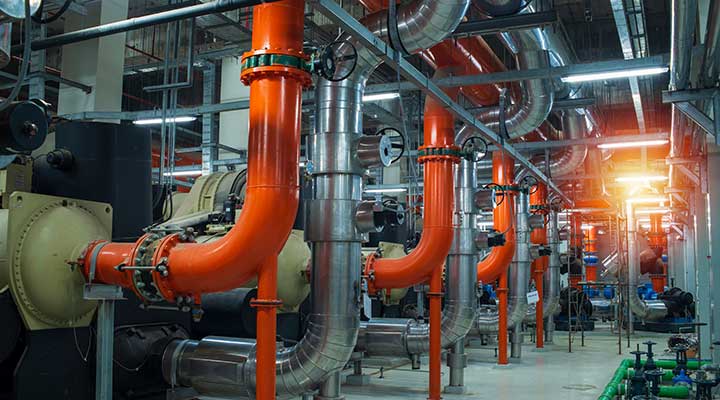
Cold water pipes connect to the water pump and Air Handling Units (AHU). The cold water from the chiller at 7 degrees Celsius flows through these pipes to the cooling coils, and after passing through the cooling coils, it returns to the chiller.
We must insulate all cold water pipes, both supply and return lines. The supply temperature is 7 degrees Celsius while the outside air temperature is 28-30 degrees Celsius, so black rubber insulation is necessary to prevent energy loss.
Similarly, the return pipes carrying 12-degree Celsius water must also be insulated with black rubber. Otherwise, the chiller would need to work harder to cool the water.
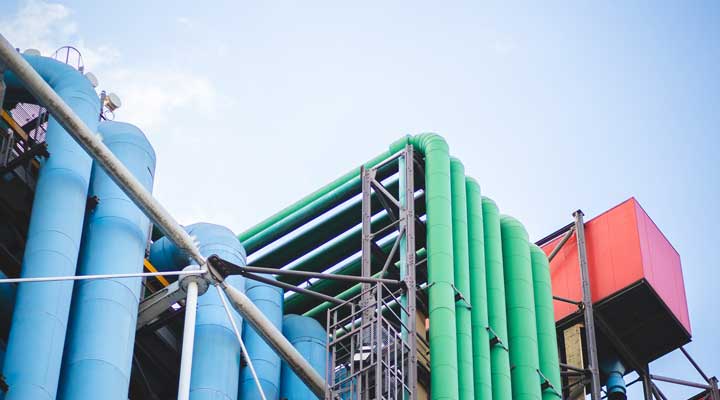
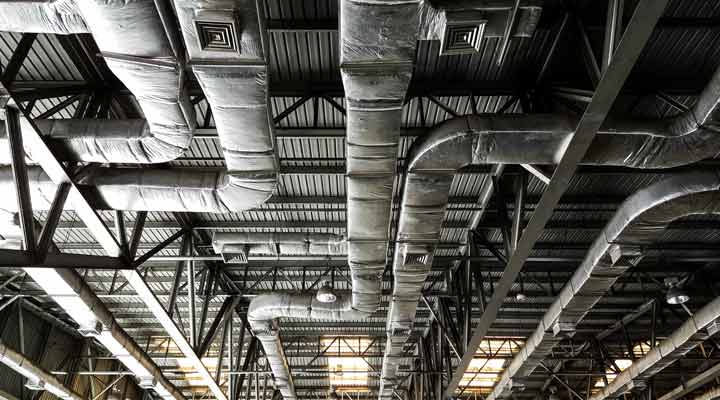
Cold air ducts are galvanized ducts that extend from the air handling units to distribute cool air throughout the building. These ducts carry low-temperature, high-humidity air and must be insulated with aluminum foil-faced fiberglass insulation or black rubber insulation on the exterior. The interior is lined with aluminum foil-faced fiberglass insulation to maintain temperature and reduce air noise.
What Types of Insulation are Used in Air Conditioning Systems?
Air conditioning systems primarily use two types of insulation: fiberglass and black rubber insulation.
Fiberglass insulation is used both inside and outside galvanized air ducts, faced with aluminum foil on one side. The duct space must account for the internal insulation thickness, as fiberglass effectively absorbs sound, preventing air noise from escaping.
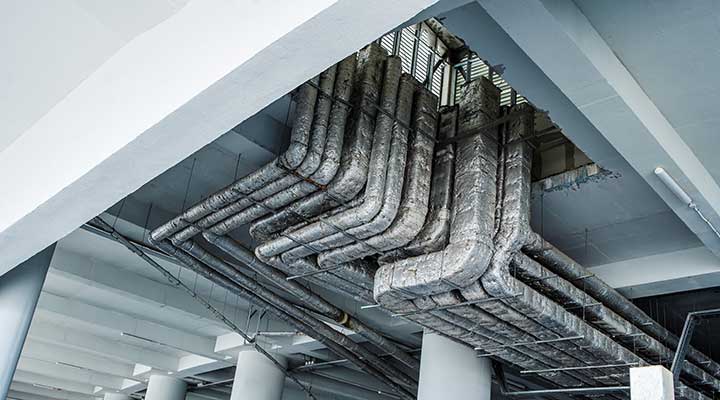
Black rubber insulation is installed on chiller units and cold water pipes because it’s more effective for cooling applications. Sometimes it’s also used on cold air ducts, and in cases where noise calculations have been considered, it can be used as the sole insulation solution.