
Hot Water Supply Systems Design
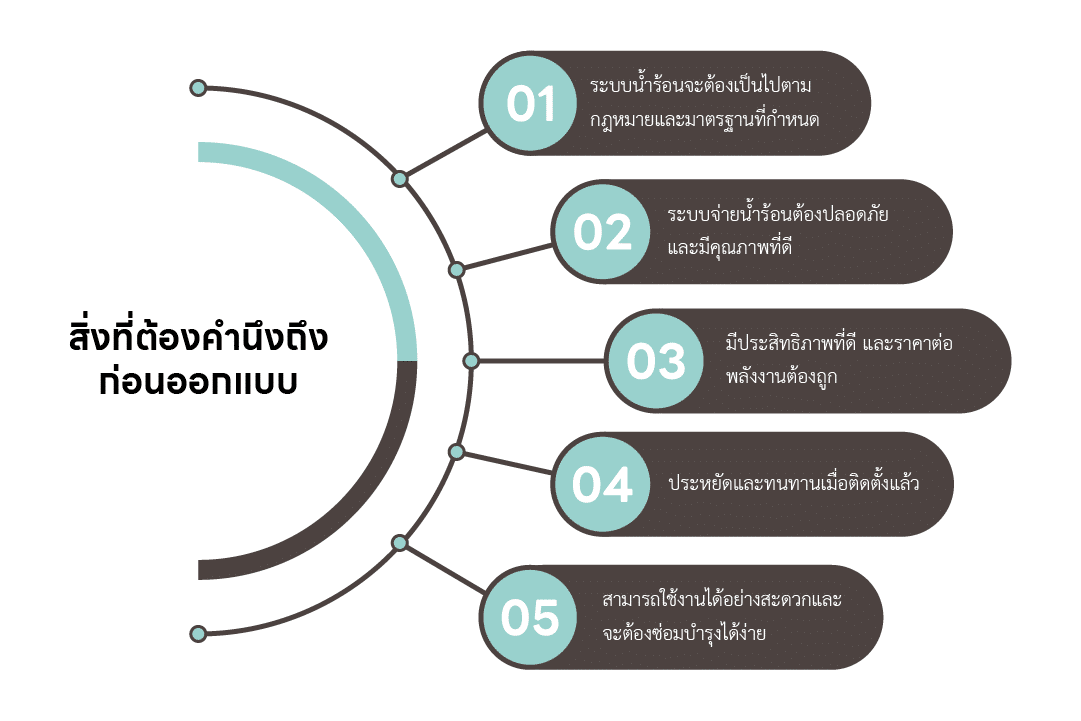
Before designing a hot water supply system
When designing a hot water supply system, we must consider
- The hot water system must comply with applicable laws and standards
- The hot water supply system must be safe and of good quality
- Must be efficient with low energy costs
- Must be economical and durable after installation
- Must be convenient to use and easy to maintain
The designed hot water system must be suitable for use and safe for users. Most sanitary fixtures use hot water at 55-60°C, while washing equipment like dishwashers and hot water washing machines use water at 82-88°C.
Considerations before designing hot water system
Equipment used in hot water supply systems
There are 4 main components in a hot water supply system installation:
- Storage Heater – A device for heating water and storing hot water. It may use fuel from LPG, oil, or electricity. When the water reaches the desired temperature, it is stored in an insulated tank to prevent heat loss.
- Hot water supply system (piping) – The piping network that distributes hot water throughout the building to sanitary fixtures or washing equipment.
- Hot water circulating pump – A pump that replenishes hot water into the system. When the water temperature drops to 55°C, the pump starts working to exchange water to maintain 60°C.
- Control valve and accessories – Valves and other control equipment in the system to ensure normal operation of the hot water supply system.
Hot water distribution system
The hot water distribution system can be divided into 3 types:
- Up-feed system
- Down-feed system
- Combination of up and down feed system
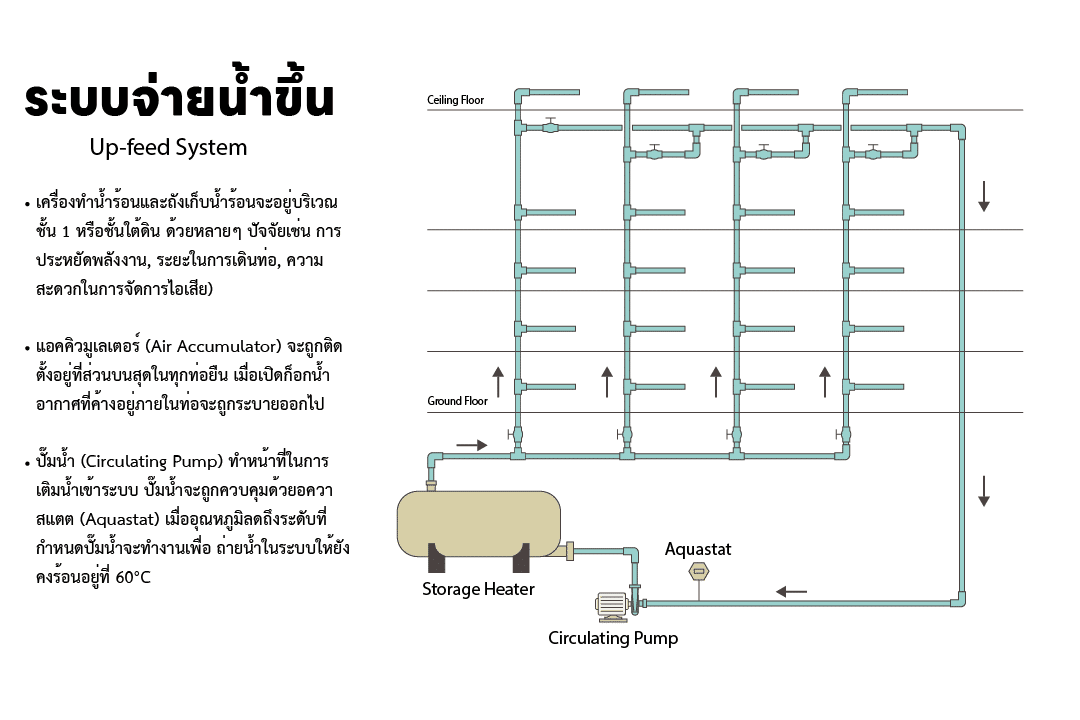
Up-feed system
- The water heater and storage tank are located on the 1st floor or basement due to various factors such as energy savings, piping distance, and exhaust management convenience.
- Air Accumulators are installed at the top of every riser. When a faucet is opened, trapped air in the pipes is released.
- The Circulating Pump replenishes water into the system. The pump is controlled by an Aquastat – when temperature drops to the set level, the pump operates to maintain water temperature at 60°C.
Up-feed system
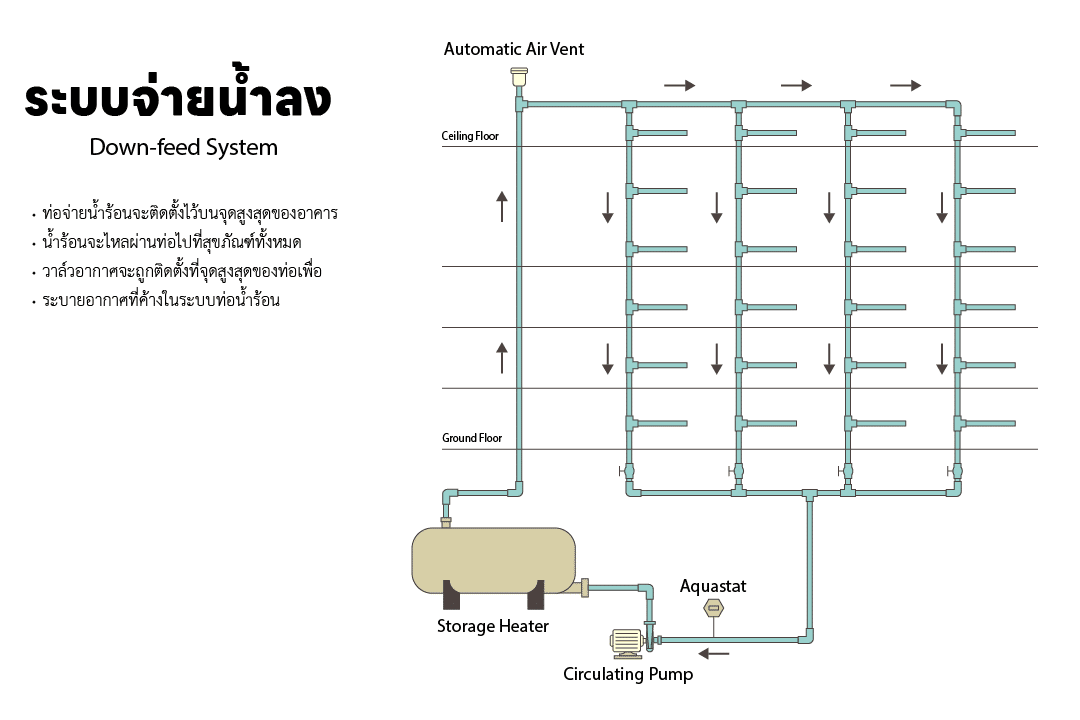
Up-feed system
- Hot water supply pipes are installed at the highest point of the building
- Hot water flows through pipes to all sanitary fixtures
- Air valves are installed at the highest point of pipes to release trapped air in the hot water piping system
Down-feed system
Selecting the distribution system
- The Down-feed system is smaller than the Up-feed system because the pressure drop in the down-feed system follows static head by gravity, while the pressure drop in the up-feed system follows flow friction.
- Normally friction is greater than gravity, which is why the down-feed system is smaller than the up-feed system.
Flow Balance Principles
- Flow in each riser and return pipe is controlled by Globe valves or Balancing valves.
- The circulating pump must use minimal energy while maintaining hot water temperature (pump operates when temperature falls below 55°C).
Circulation pump calculation
Table 1.1 specifications are:
- Iron Steel Pipe SCH 40
- Hot water temperature in pipe 60°C
- 25mm thick glass wool insulation
- Insulation Thermal Conductivity is 0.038 W/m.K
Table 1.1 shows hot water volume, heat loss rate, and temperature drop for SCH40 steel pipes
|
Pipe Size |
Water Volume l/m |
Heat Loss Rate W/m |
Temperature Drop |
|---|---|---|---|
|
15 (1/2″) |
0.258 | 4.9 |
59.72 |
|
20 (3/4″) |
0.452 | 5.69 |
59.83 |
|
25 (1″) |
0.745 | 6.6 |
59.89 |
|
30 (1-1/4″) |
1.225 | 7.61 |
59.89 |
|
40 (1-1/2″) |
1.62 | 8.36 |
60 |
|
50 (2″) |
2.55 | 9.84 |
60 |
|
65 (2-1/2″) |
4.15 | 11.8 |
60 |
|
80 (3″) |
5.7 | 13.26 |
60 |
|
100 (4″) |
9.62 | 16.41 |
60 |
Recommended hot water temperatures for other purposes
- Hot water for showers and sinks is at 60°C, after mixing with cold water the temperature will be 35-40°C.
- Hot water normally should not be below 50°C, except for mixed water pipes with temperatures above 40°C.
- Pipes with higher temperature hot water use less water volume than pipes with lower temperature hot water.
- Pipes with higher temperature hot water use smaller pipe sizes than pipes with lower temperature hot water.
- Pipes with higher temperature hot water have higher heat loss than pipes with lower temperature hot water.
- Normal hot water is recommended at 60°C. For higher temperature applications like dishwashers and washing machines, use 82°C and install separate hot water pipes from normal hot water pipes.
Considering AQUASTAT selection
- Aquastat is a device used in hot water systems to control water temperature and prevent continuous pump operation. Aquastat can be set to prevent water temperature from exceeding the High Temperature Limit and falling below the Low Temperature Limit.
- If using a Thermostat, it can only set one temperature (High Temperature Limit). When water temperature falls below 60°C, the pump adds hot water to raise system temperature above 60°C.
- However, we don’t want the pump to add water when temperature falls below 60°C, but rather when it falls below 55°C and stop when temperature reaches 60°C.
- In reality, hot water usage depends on user timing. During daytime with fewer users, the pump operates less frequently as less water replenishment is needed. During evening peak usage, the pump operates more frequently.
- Some calculate when temperature will drop to 55°C and set pump operation intervals, like every hour, thinking frequent pump cycling causes faster wear. However, this approach can’t meet peak demand periods and actually wastes more energy than installing an Aquastat.
Hot Water Piping System Design Considerations
Hot water piping layout depends on the location of hot water equipment, which may be grouped together like washing machines or installed individually.
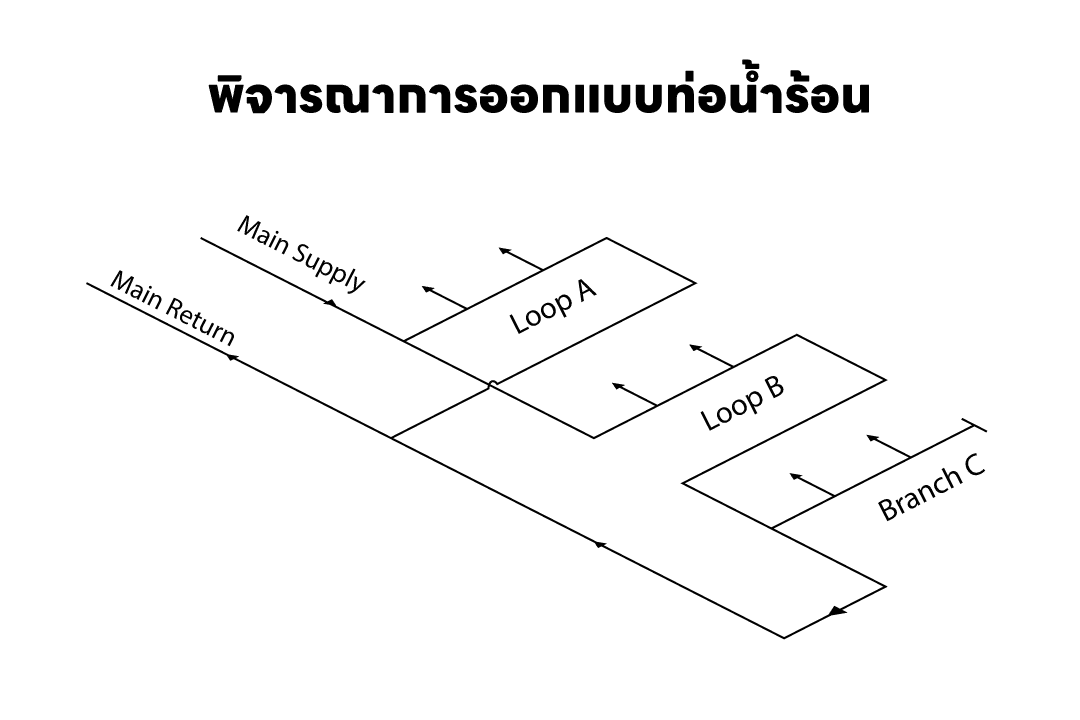
Hot water piping design considerations
Loop A – Loop A piping branches off from the main supply to serve equipment and returns to the main return line. This configuration allows using smaller pipes, reducing pipe costs.
Loop B – Loop B connects equipment directly to the main pipe. Loop B pipes are the same size as the main pipe and longer than Loop A. Longer pipes increase friction, requiring larger pumps and higher costs, but installation and water balancing are easier.
Branch C – Branch C pipes connect directly to equipment without return lines. This saves half the piping cost by eliminating return pipes. However, initial water use may be cold instead of hot as designed. Branch C is suitable only when hot water equipment is within 10 meters of the main pipe.
Hot Water Pipe Size Specification
Hot water pipe size depends on hot water usage volume and water velocity in pipes. Calculation and selection are similar to cold water pipes, but there are no specific requirements for return pipe sizes.
Normally, hot water return pipes should be as small as possible to save costs. If pipes are too small, friction increases requiring larger pumps. If pipes are too large, heat energy loss increases. Return pipe design must balance these costs.
- Costs increase with larger return pipe sizes
- Energy loss increases when pipes are too large
- Making pipes too small increases friction, requiring larger pumps
Here are guidelines for selecting return pipes
- For main supply pipes smaller than 50mm (<2 inches), return pipes should be half (1/2) the main pipe size
- For main supply pipes larger than 50mm (>2 inches), return pipes should be half (1/2) or slightly smaller than half size
Hot Water Heater
A hot water heater is equipment for heating water (to 60°C) for building use. We can divide water heaters into 4 types based on energy source:
1. Gas water heaters are the oldest type. Gas pipes run throughout buildings to heat water. Common in rural areas or mountain resorts due to lower gas costs versus electricity. Not suitable for hotels or hospitals due to exhaust management requirements and gas leak safety concerns.
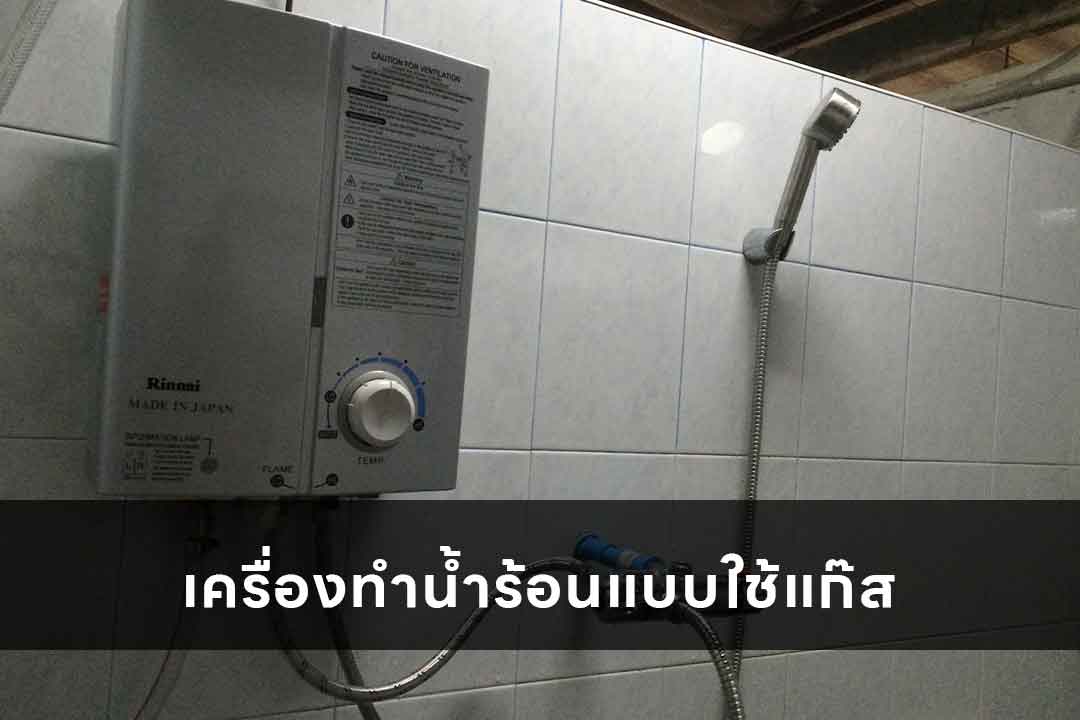
Gas water heater
2. Electric water heaters are the most familiar and easy to use – just turn on and use. The market has 2 types: storage heaters and instantaneous heaters.
Storage water heaters heat water directly with heating elements and store hot water in an insulated tank for safety. The advantage is having hot water readily available, making them suitable for showers, washing machines, and bathtubs.
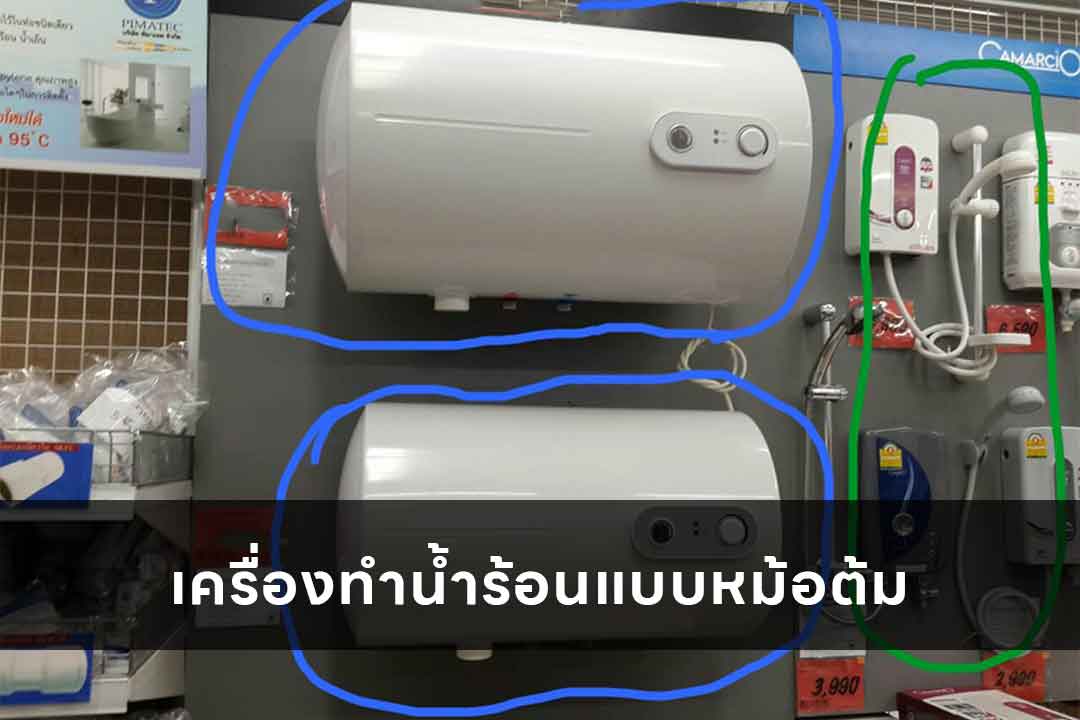
Storage water heater
Instantaneous water heaters or water warmers are easy to use and safe, suitable for homes but not hotels due to high energy consumption.
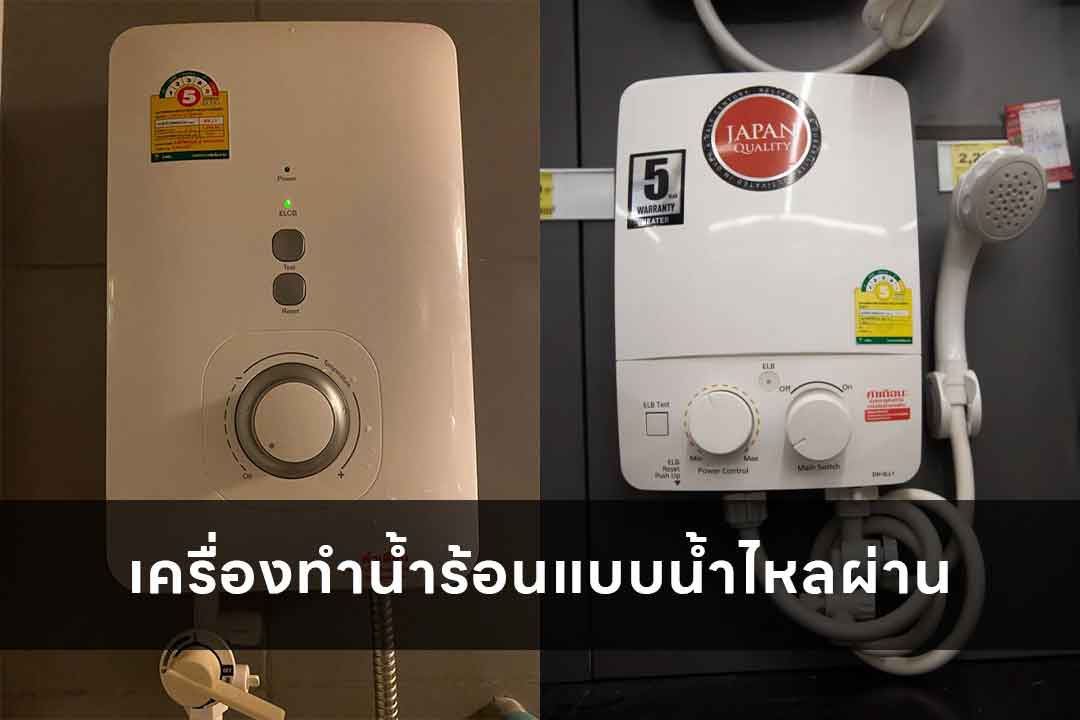
Instantaneous water heater
3. Solar water heaters use free solar heat in two types: flat plate and vacuum tube.
Solar water heaters flat plate type were the first commercial type. They have a metal frame with clear glass front panel. Inside are steel or copper water pipes. When metal absorbs solar heat, water in pipes heats up. Maximum temperature is 80°C. Easy to install on roofs or balconies but prone to scale buildup and relatively heavy.
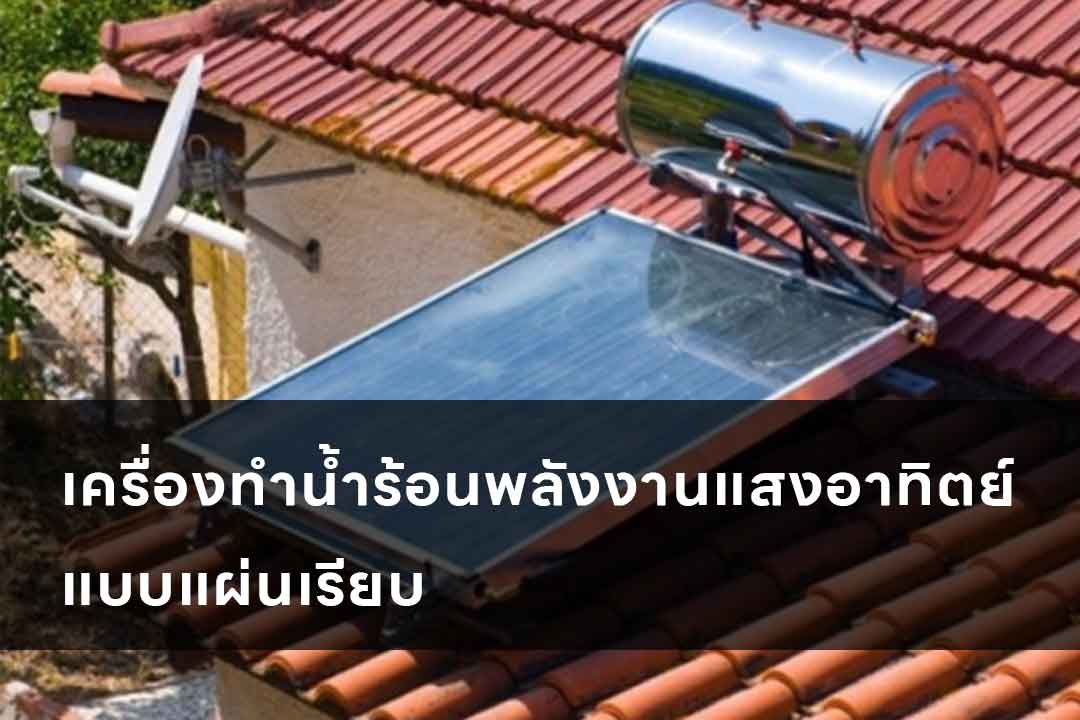
Solar Water Heater - Flat Plate Collector
Solar water heaters vacuum tube type evolved from flat plate. Uses same principle of solar heat absorption. Double-wall glass tubes have solar-absorbing inner coating and vacuum outer layer (excellent insulation). Inside can reach 100°C while outside stays cool. Uses less space and more efficient but harder to install.
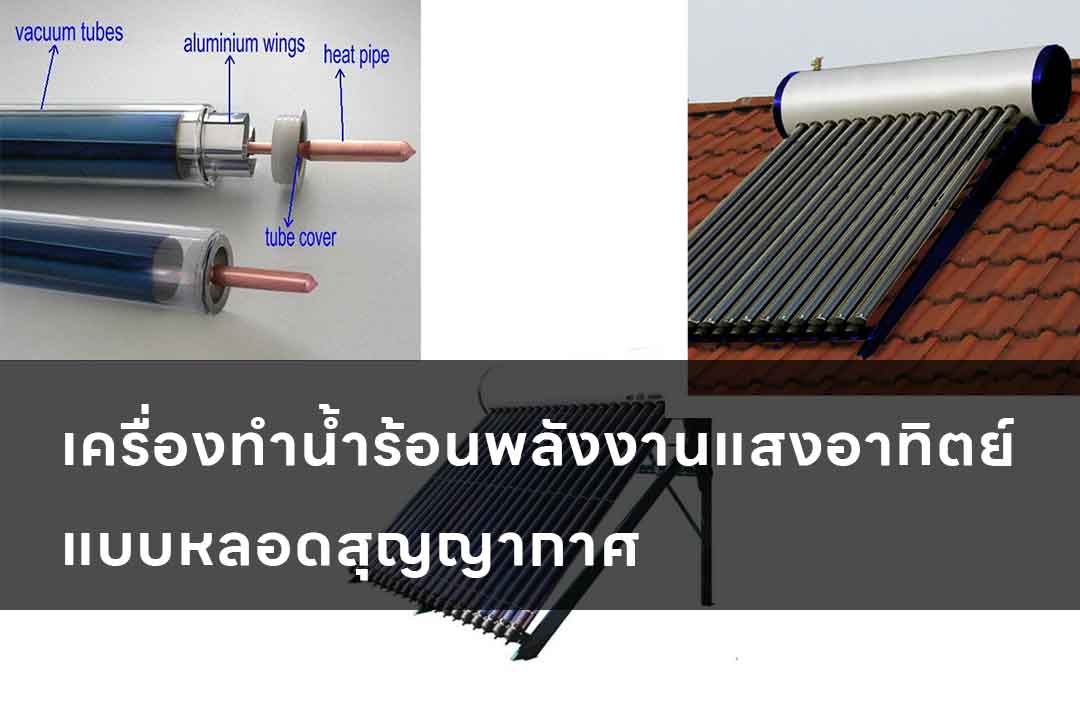
Solar Water Heater - Evacuated Tube Collector
However, both flat plate and vacuum tube depend on sunlight availability and aren’t suitable for nighttime use without additional storage tanks.
Solar water heaters are ideal for laundry or industrial operations using heat during daytime as energy is free. Can be combined with other heating systems for cloudy days or rain.
4. Heat Pump Water Heaters (Heat Pump) are the most energy efficient (excluding solar). One unit of electricity input produces 3-4 units of heat output (3-4 times savings). Works opposite to air conditioning.
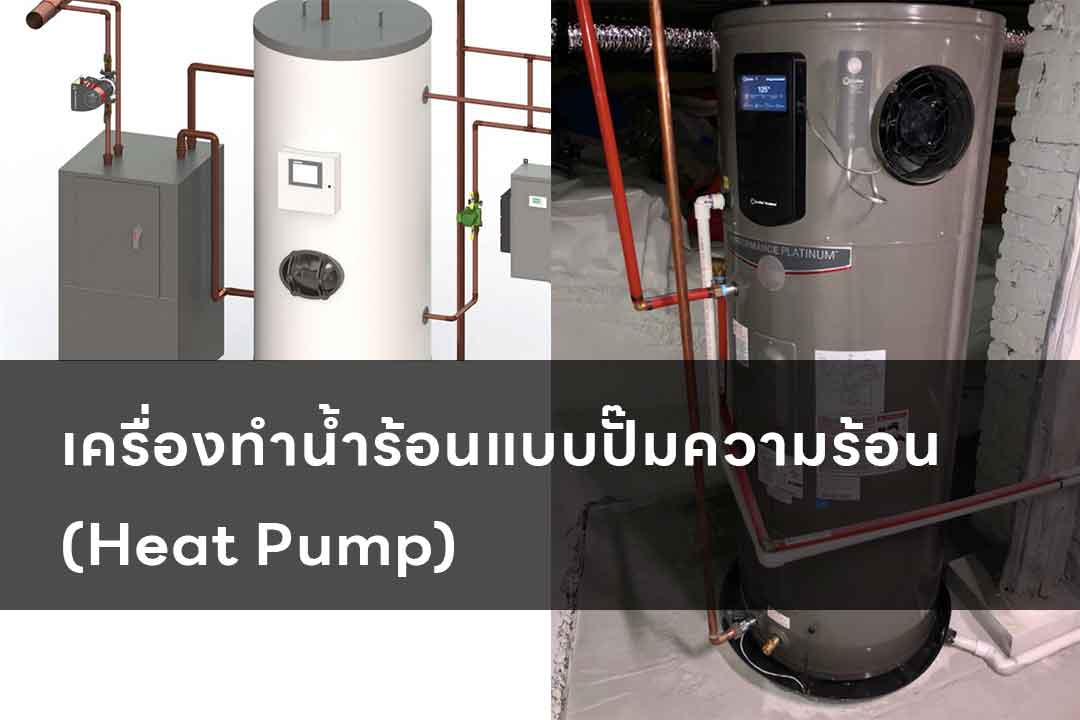
Heat Pump Water Heater
Evaporator (Evaporator) installed outside. From stage 1 to 2, refrigerant in copper pipes at low temperature absorbs heat from outside and carries it to compressor.
Compressor (Compressor) next to evaporator. From stage 2 to 3, compresses refrigerant from evaporator increasing pressure and temperature before entering condenser.
Condenser (Condenser) from stage 3 to 4, high-temperature refrigerant releases heat to water tank. Heated water rises (hotter water rises). Refrigerant after releasing heat becomes liquid and flows to valve.
Valve (Expansion Valve) from stage 4 back to stage 1, valve reduces refrigerant pressure and refrigerant returns to absorb heat at evaporator, continuing the cycle.
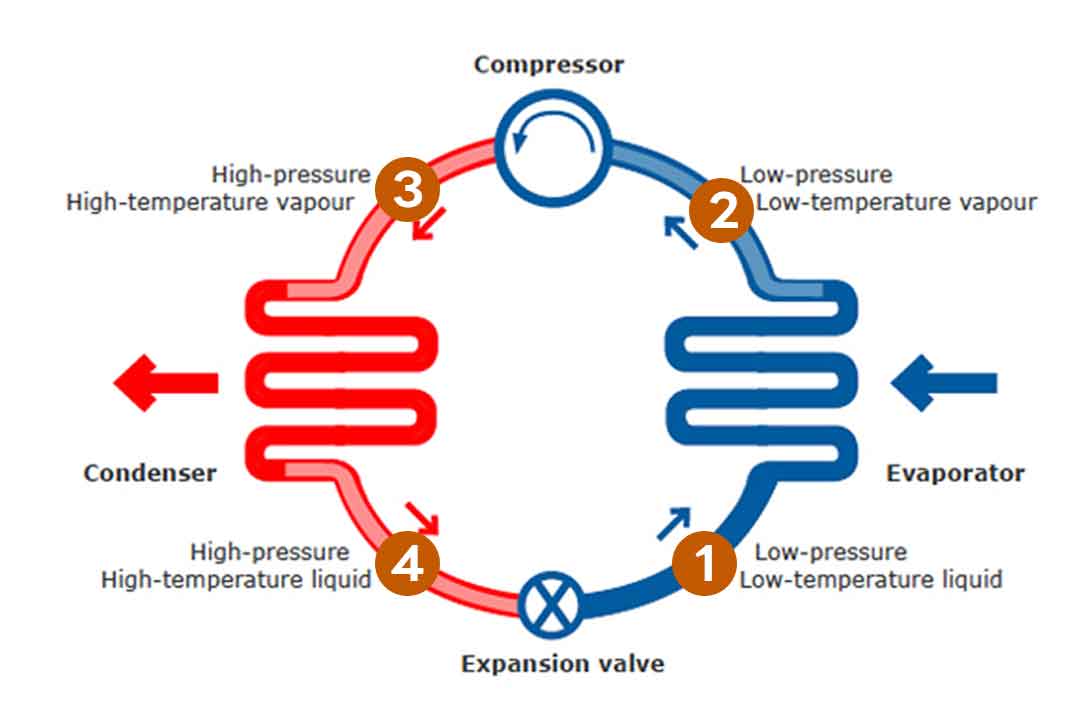
Heat Pump Operating Principles
Water Heater Size Calculation
After designing the hot water system and piping layout, we select the water heater size using this information:
- Required hot water per day
- Maximum demand per hour
- Maximum continuous usage duration
- Storage tank size
- Water heater installation space
For buildings with intermittent hot water use like hotels or resorts, where usage varies with occupancy or seasons, installing large storage tanks to supply peak demand can reduce water heater size.
We typically design for the largest possible storage tank size, limited by available space.
We store hot water at 70% tank capacity because when used, cold water fills the bottom to push hot water up. Hot and cold water mix, reducing 60°C water to suitable usage temperature.
We have 2 methods for selecting water heater size:
- Known building occupancy – provides appropriate heater size without over/undersizing
- Known fixture count – used when occupancy unknown. Results in larger than actual size (not all fixtures used simultaneously).
Method 1 Known Building Occupancy
Hot water demand varies by building type depending on factors like:
- Building class (5-star hotel, 3-star hotel, spa)
- Season
- Fixture type (eco-labeled or standard products)
Estimated hot water demand for hotels and condominiums uses these values:
- Daily hot water demand per person = 75-150 liters
- Maximum hourly demand = 1.5 times
- Maximum continuous usage period = 1-3 hours
- Storage factor = 0.1-0.2
Hourly hot water usage = Daily demand per person x Number of people x Maximum hourly demand factor
Hourly hot water required = Daily hot water per person x number of persons x maximum hourly demand factor
- Maximum hourly demand factor (Maximum hourly demand factor) is used to calculate hourly hot water usage
- Storage factor (Storage factor) multiplies daily hot water usage to determine appropriate storage tank size
- Duration of continuous maximum demand (Duration of continuous maximum demand) depends on building type’s hot water usage pattern
Example 1 Calculate water heater size for 300-room hotel
-
- Design assumes 1-2 people per room, averaging 1.5 people/room
- Average daily hot water demand 120 liters/day (from above recommendations)
- Water heater size calculated from:
- Maximum occupancy = 1.5 x 300 = 450 people
- Daily water usage = 450 x 120 = 54,000 liters
- Maximum hourly water usage = (3/24) x 54,000 = 8,100 liters/hour
- 3-hour maximum continuous usage = 8,100 x 3 = 24,300 liters
- Hot water tank volume = 0.15 x 54,000 = 8,100 liters
- Storage tank size (at 70% capacity) = 8,100/0.7 = 11,571 liters
- Water heater size = (24,300 – 8,100) /3 = 5,400 liters/hour
Method 2 Known Fixture Count
When occupancy is unknown, estimate from fixture quantity. This method overestimates required hot water. Hot water usage by fixture type shown in Table 2.
Table 2 Hot water usage by equipment at 60°C (liters/hour)
| Equipment | Hotel | Hospital | Condominium |
|---|---|---|---|
| Private lavatory | 7.6 | 7.6 | 7.6 |
| Public lavatory | 30 | 23 | 15 |
| Bathtub | 75 | 75 | 75 |
| Shower | 284 | 284 | 114 |
| Dishwasher | 190 – 760 | 190 – 570 | 57 |
| Sink | 114 | 75 | 38 |
Demand Factor (Demand Factor) multiplies water usage to calculate maximum hourly usage
Maximum hourly usage = Equipment hourly usage x Demand Factor
Storage factor (Storage factor) is multiplied by maximum hourly usage to determine tank size
Tank size = (Maximum hourly usage x Storage Factor)/0.7
See Table 3 for Demand Factor and Storage Factor values
Table 3 Demand Factor and Storage Factor values by building type
|
Factor |
Hotel | Hospitals | Condominium |
|---|---|---|---|
|
Demand Factor |
0.25 | 0.25 |
0.30 |
|
Storage Factor |
0.8 | 0.6 | 1.25 |
Water Heater Size Calculation
To determine water heater heating rate, calculate from maximum hourly hot water usage, storage tank size, and maximum continuous usage duration.
Larger storage tanks allow smaller water heater size. We calculate heating rate:
q = wcpΔT
- q = Water heater heating rate in kilowatts (kW)
- w = Hot water production rate in kilograms/second (kg/s)
- cp = Specific heat capacity of water 4.186 kilojoules/kilogram-Celsius (kJ/kg°C)
- ΔT = Water temperature increase in Celsius (°C)
When sizing water heaters, add 15% capacity for system heat losses through piping, storage tank, and fittings.
Example Calculate water heater size to heat water from 10°C to 60°C
- Using data from Example 1:
- Water heater capacity = 5,400 liters/hour
- Using 8,100 liter tank
- Water heater heating rate = ( 4.186 x 5,400 x (60 – 10) ) /3,600 = 314 kW
- Select heater 15% larger than calculated = 1.15 x 314 = 361.1 kW


